Why Do I Have Dark Circles? The Different Types, Explained
Dark circles come in three broad types: vascular (bluish), pigmented (brown), and structural (hollow/shadow).
Most come down to thin skin, genetics, and anatomy — not something you did wrong.
They're an appearance matter, not a health problem — and completely normal.
This article is for educational purposes only and is not medical advice. It relates to the appearance of the skin. If you're concerned about a change around your eyes, see a qualified professional.
Dark circles are usually grouped into three broad types: vascular (bluish, where vessels show through thin skin), pigmented (brown, related to the skin's natural tone), and structural (hollow — really a shadow cast by the eye socket). Many people have a mix. The common thread is that under-eye skin is some of the thinnest on the body, so whatever sits beneath it shows through easily. Most of it comes down to genetics, natural tone, and facial anatomy — not tiredness or anything you did wrong. Sleep and hydration may influence how noticeable they appear, but dark circles are commonly a normal variation of facial appearance.
- Three broad types: vascular (bluish), pigmented (brown), structural (hollow/shadow).
- Under-eye skin is very thin, so vessels, tone, and shadow show through easily.
- Most dark circles are down to genetics, tone, and anatomy — often a mix of types.
- Sleep affects the look, but doesn't cause structural or genetic circles.
- They're a normal appearance matter, not a health problem — concealer is fair game.
- Being gentle, hydrated, well-rested, and sun-protected helps them look their best.
Almost everyone has, at some point, looked in the mirror and wondered where their dark circles came from — and whether they mean anything. The reassuring answer: they're one of the most common, most harmless things about the face, and understanding which type you have takes most of the mystery out of them. This is a plain-English guide to the three broad types of dark circles and why each appears. It's part of our guide to the eye area, and pairs with our honest look at dark circles and the "drainage" claims around them.
Why the Under-Eye Area Is Prone to This
The single most important fact about dark circles is this: the skin under your eyes is some of the thinnest on your entire body. That thinness means whatever lies just beneath it — blood vessels, the skin's natural tone, or the shadow of the eye socket — shows through far more easily than it would elsewhere on the face.
That's why dark circles are so common, and why they can look so different from one person to the next. What's showing through, and how, is what defines the type — and there are three broad ones.
"Dark circles aren't a flaw to fix so much as thin skin honestly showing what's underneath it."
Boldpurity Science TeamVascular (Bluish) Circles
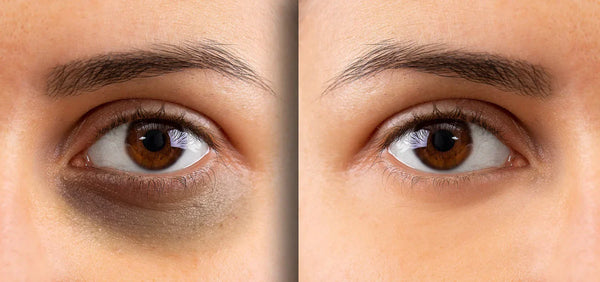
Vascular circles have a bluish or purplish cast. They appear when the small blood vessels beneath the thin under-eye skin become more visible — the vessels and the blood in them simply show through the surface.
Several everyday things can make them more noticeable: tiredness, which can leave skin looking paler so vessels stand out more; dehydration; and simply having fair or thin skin, where there's less to obscure what's underneath. Because so much of this is about anatomy and how light hits the area, vascular circles can look different from morning to evening.
Vascular circles often shift with how rested, hydrated, and well-lit you are — which is why a good night's sleep and a glass of water can genuinely make them look better, even though they don't change the underlying anatomy.
Pigmented (Brown) Circles
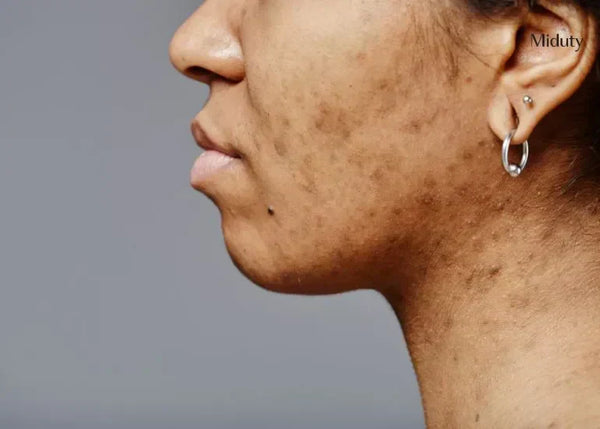
Pigmented circles are brown rather than blue, and relate to the skin's natural tone around the eye — the everyday pigment (melanin) that gives all skin its colour, which can simply be a little more concentrated in the under-eye area for some people.
This type is often genetic and is more common in medium-to-deep skin tones — it's a natural feature of the skin, not a sign of damage or ill health. Sun exposure can make the area look more pronounced over time, which is one reason daily sun protection around the eyes (as covered in our eye-area SPF guide) is a sensible habit.
Pigmented circles are simply about the skin's natural colour in a delicate spot — nothing more. They're a normal, common feature, especially in richer skin tones, and having them says nothing about your health or your habits.
The kindest, most effective everyday approaches are the gentle ones: sun protection to keep the area looking even, being gentle (no vigorous rubbing), and concealer if and when you want to even out the look.
Structural (Hollow) Circles
Structural circles are the trickiest to recognise, because they're not really about colour at all — they're a shadow. The natural contour of the eye socket creates a slight hollow, and that hollow casts a shadow that reads as a "dark circle", especially under overhead light.
This type is largely down to facial structure and is often genetic. It can become a little more noticeable with age, as the face naturally changes over time. Because it's a shadow, it's very lighting-dependent: harsh overhead light deepens it, while soft, even light softens it — which is why it can look dramatic in one photo and barely there in another.
The tell for a structural circle is that it changes a lot with the angle of light and often looks better when you gently lift the skin or tilt your face up. It's something skincare alone may not change because it is related to natural facial structure.
Common Myths
Tiredness can make them look worse, but most dark circles are down to thin skin, genetics, tone, and anatomy — plenty of well-rested people have them.
Fact: Mostly anatomy and genetics, not sleep alone.
For the vast majority of people, dark circles are a normal appearance feature — not a health warning. They're commonly seen across many age groups.
Fact: A common appearance feature for many people.
Because the three types have different causes — and much is genetic anatomy — there is no single approach that changes the appearance of every type. Gentle habits and concealer help the look; the rest is just you.
Fact: Different types, no universal fix.
Frequently Asked Questions
- Boldpurity Science Team. Understanding the eye-area: why the skin around your eyes is different. Boldpurity Skin Science.
- Boldpurity Science Team. Dark circles and the "drainage" question: an honest look. Boldpurity Skin Science.
Khatija Shabana
Certified cosmetic scientist · IFSCC-affiliated training
Co-founder, Boldpurity®
Reviewed by the Boldpurity Science Team.
© 2026 Boldpurity · For educational purposes only · Not to be reproduced without permission.