Sebaceous Filaments, Explained: What They Are (and Why They're Not Blackheads)
Sebaceous filaments are a normal, healthy part of your skin — tiny structures that channel oil up through your pores.
They are not blackheads — blackheads are a clog; filaments are natural anatomy.
You can minimise the look, not eliminate them — and please don't squeeze.
This article is for educational purposes only and is not medical advice. It relates to the appearance and feel of the skin. For persistent concerns about your pores or skin, consult a dermatologist.
Sebaceous filaments are natural, microscopic structures inside your pores that channel sebum (your skin's oil) to the surface. They're made of sebum, dead-cell fragments, and the microbes that live on skin, and they show up as fine grey or white lines in oilier areas like the nose. The big point: they are not blackheads — blackheads are a clog, while filaments are normal anatomy everyone has. You can't eliminate them (they refill), only minimise the look with a gentle, consistent routine. Squeezing is best avoided — they're a normal feature of healthy skin, not a flaw.
- Sebaceous filaments are natural pore structures that channel oil to the surface.
- They're made of sebum, dead cells, and microbes — and everyone has them.
- They are not blackheads: blackheads are a clog; filaments are normal anatomy.
- More visible on oilier skin and with natural hormonal shifts.
- You can minimise the look, not eliminate them — they refill within about a month.
- Don't squeeze — be gentle; a dermatologist can advise if pores really bother you.
If you've ever peered very closely in the mirror at your nose and spotted tiny greyish dots or lines in your pores, you've met your sebaceous filaments — and probably wondered if they were blackheads you needed to attack. Good news: they're almost certainly not, and they're a completely normal part of healthy skin. This is a plain-English guide to what they are, why they show up, and how to care for their look without doing your skin any harm. It pairs closely with our guide to blackheads and whiteheads, and our overview of what causes breakouts.
What Sebaceous Filaments Are
Sebaceous filaments are tiny, natural structures that sit inside your pores and help channel sebum — the oil your skin makes — up to the surface. Sebum itself is useful: it helps keep skin comfortable and forms part of its protective surface. So these filaments are doing a genuine, everyday job.
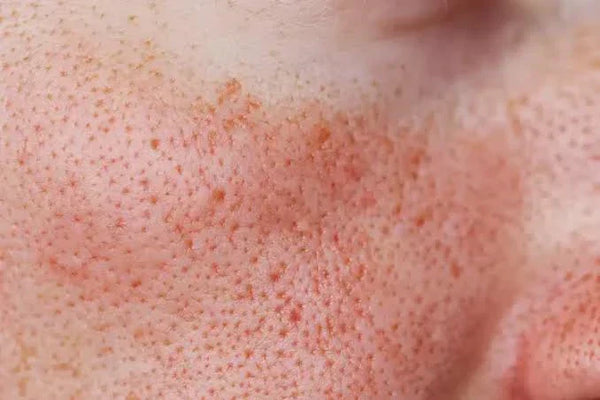
They're made up of sebum, fragments of dead skin cells, and the microbes that naturally live on skin. To the eye, they show up as small grey or white lines within the pores, most often in the oilier T-zone — the nose, forehead, and chin. And here's the key reassurance: everyone has them, they're harmless, and they don't signal anything wrong with your skin.
"Sebaceous filaments aren't a problem your skin developed — they're part of how a healthy pore is built."
Boldpurity Science TeamFilaments vs Blackheads
This is the distinction that trips almost everyone up. It's worth getting right, because it changes how you treat the area:
- Sebaceous filaments are natural structures of the pore lining that everyone has. They look like fine grey or light lines and sit flush within the pore.
- Blackheads (open comedones) are a type of blemish — a pore that's become clogged, with the trapped contents darkening as they oxidise in the air. They look like darker, more distinct plugs.
The reason they're so easily confused is that the tip of a sebaceous filament can darken slightly through oxidation too — the same air-exposure process that colours a blackhead. But the underlying thing is different: a filament is normal anatomy, a blackhead is a clog. Our guide to comedones covers blackheads (and the oxidation-not-dirt myth) in full.
Why They Become More Visible
Everyone has sebaceous filaments, but they're more noticeable on some people than others. They tend to show up more when pores are fuller with sebum and look more dilated — which is simply more common with oilier skin.
A few everyday things can make them more visible:
- Oily skin — more sebum means fuller, more visible pores.
- Natural hormonal shifts — such as during adolescence or at certain points in the menstrual cycle, when oil activity can rise.
- Products that are too heavy or too harsh — over-stripping can prompt skin to produce more oil in response, as we discuss in does washing cause breakouts?
None of this is cause for alarm — it's just how oil-rich skin behaves.
Can You Get Rid of Them?
Here's the honest answer: no, not permanently. Because sebaceous filaments are natural structures that channel your skin's oil, they refill and reappear even if you clear a pore — often within about a month, sooner on oily skin.
So the realistic goal is to minimise how noticeable they look, not to eliminate them. Chasing their complete removal is a losing game — and, importantly, the aggressive methods people reach for tend to do more harm than good.
Caring for the Look, Gently
The single most important rule: don't try to squeeze or extract them. Because filaments are natural structures rather than clogs, manual extraction is even less worthwhile than it is for blackheads — it can irritate the skin, disrupt the barrier, and potentially encourage the very clogging (comedones) you're trying to avoid. And since they refill, any result is short-lived.
What genuinely helps the look is a gentle, consistent routine:
- Cleanse gently, morning and/or evening, to remove the day's oil and impurities — without harsh, stripping products.
- Don't over-strip. As counterintuitive as it sounds, being too aggressive can prompt more oil.
- Don't skip moisturiser, even on oily skin — comfortable, well-hydrated skin is less likely to overproduce oil. See our gentle-routine guide.
That's really the heart of it: consistent, gentle care that keeps skin balanced — not a battle against a normal feature of your face.
Common Myths
They're different. Filaments are natural pore structures everyone has; blackheads are a clogged pore (a blemish). They're easy to confuse because both can darken through oxidation.
Fact: Normal structure vs clog.
Because they channel your skin's oil, they naturally refill and reappear — usually within about a month. You can minimise the look, not eliminate them.
Fact: Minimise, don't eliminate.
Squeezing natural structures can irritate skin, disrupt the barrier, and encourage clogging — and they refill anyway. Gentle is far better than forceful.
Fact: Don't squeeze — be gentle.
Frequently Asked Questions
- Dabbas, D. et al. Sebaceous filaments. Dermatology Practical & Conceptual (2021).
- Adler, J. et al. A case report of sebaceous filaments. Cureus (2023).
© 2026 Boldpurity · For educational purposes only · Not to be reproduced without permission.