

Key Research Findings
- Published research describes snail mucin (snail secretion filtrate) as a complex mix including humectants, glycoproteins, glycosaminoglycans, and soothing compounds
- Published dermatology literature indicates its best-supported cosmetic role is the appearance of hydration and skin comfort
- Published research on broader "repair" and "anti-ageing" claims is early, limited, and mixed — often small studies or in-vitro work
- Published literature indicates composition alone does not prove efficacy; the amount, processing, and formulation of the filtrate all matter
- Published dermatology literature documents that some individuals may react to snail mucin, so patch testing is commonly discussed
- Published research indicates snail mucin behaves broadly like other humectant/soothing ingredients — useful, but not uniquely "miraculous"
- Published commentary indicates much of snail mucin's fame is trend-driven (K-beauty popularity) rather than evidence-driven
- Published literature emphasises individual response varies; realistic, hydration-focused expectations fit the evidence best
In This Article
- What Snail Mucin Actually Is
- What's Inside It — and Why That's Not the Whole Story
- What the Evidence Does and Doesn't Support
- Hydration vs "Repair & Regeneration" Claims
- Snail Mucin vs Other Humectants
- The K-Beauty "Miracle" Trend Myth
- The Boldpurity Composition-Isn't-Proof Framework
- How to Use Snail Mucin, Per Published Science
- Common Myths About Snail Mucin
- Frequently Asked Questions
What Snail Mucin Actually Is
Published research describes snail mucin — labelled on ingredient lists as snail secretion filtrate — as the filtered, processed secretion produced by snails. Published dermatology literature notes it is a complex mixture rather than a single active, containing water-binding and soothing components. Its rise to fame came largely through K-beauty popularity, which is where the "science vs trend" question begins.
What's Inside It — and Why That's Not the Whole Story
Published research indicates snail secretion filtrate can contain humectants (including hyaluronic acid-type molecules and glycosaminoglycans), glycoproteins, allantoin, zinc, and trace peptides. Marketing often lists these to imply power. But published dermatology literature cautions that having an impressive-sounding ingredient list is not the same as delivering a benefit.
Published Research on Composition vs Efficacy
Published dermatology literature indicates that the concentration of each component in snail filtrate varies widely by snail species, harvesting method, and processing, and is often low. Published research notes that a compound present in trace amounts, or one too large to penetrate, may contribute little. This is the same "composition ≠ efficacy" principle seen with other trend ingredients — impressive on paper, variable in practice.
What the Evidence Does and Doesn't Support
Published research reports the most consistent cosmetic finding for snail mucin is support for the appearance of hydration and skin comfort. Published dermatology literature indicates evidence for broader claims — "regeneration", "scar repair", "anti-ageing" — is early, limited, often from small studies or laboratory settings, and should be read with caution.
Evidence Review: A Balanced Read
Reviewing the published literature, a consistent pattern emerges: snail mucin performs reliably as a hydrating, soothing, film-forming ingredient, while the more dramatic repair and anti-ageing claims rest on thinner, earlier evidence. Published research frames it as a pleasant, reasonable hydrator with interesting but unproven extras. This is an evidence synthesis, not a Boldpurity claim; findings are attributed to the cited research, and individual response varies.
For how hydration actually works, see skin hydration explained, and the related hyaluronic acid myth.
04 —Hydration vs "Repair & Regeneration" Claims
Published research indicates the core snail mucin myth is conflating hydration and soothing (well supported) with structural repair and regeneration (not well supported topically). Published dermatology literature notes that much of the "regeneration" narrative is extrapolated from how the secretion functions for the snail — which does not translate directly to a rinse-through cosmetic on human skin.
Snail Mucin vs Other Humectants
A useful reality check: how does snail mucin compare with well-established hydrating ingredients? Published dermatology literature places it in the same broad functional family:
| Ingredient | Main cosmetic role (published research) | Evidence maturity |
|---|---|---|
| Snail mucin | Humectant + soothing + film-forming | Emerging; strongest for hydration/comfort |
| Hyaluronic acid | Humectant (water-binding) | Well established for surface hydration |
| Glycerin | Humectant (water-binding) | Very well established, low cost |
| Panthenol | Humectant + barrier-soothing | Well established for comfort |
The K-Beauty "Miracle" Trend Myth
Published commentary indicates a large part of snail mucin's reputation is trend-driven — powered by K-beauty popularity, striking textures, and viral before-and-afters — rather than by a deep evidence base. Published research indicates virality and efficacy are not the same thing; an ingredient can be genuinely pleasant and also over-hyped at once. This mirrors the pattern in our natural and organic marketing myth article.
The Boldpurity Composition-Isn't-Proof Framework
Snail mucin is a perfect example of a wider skincare trap: a great-sounding ingredient list that may or may not translate to benefit. We summarise the check as a simple, named framework.
The Composition-Isn't-Proof Framework
- Composition — what's in it is a starting point, not a conclusion.
- Concentration — is the useful component present at a meaningful level, or a trace?
- Corroboration — is there real evidence for this benefit, or is it extrapolated/marketed?
This is an educational framework for evaluating trend ingredients, not a prescriptive regimen. Individual response varies.
How to Use Snail Mucin, Per Published Science
If you enjoy snail mucin, published dermatology literature commonly discusses using it for what it does best — hydration and comfort.
Commonly discussed snail-mucin principles
- Use it as a hydration step, not a replacement for treatment actives, sun protection, or a moisturiser.
- Apply to clean, slightly damp skin and seal with a moisturiser, as with other humectants.
- Patch test first — published literature documents that some people react to it.
- Set hydration-level expectations — comfort and a dewy look, not structural "repair".
- Consider value — compare against cheaper, well-evidenced humectants before paying a premium.
A commonly discussed approach; individual response varies.
The Boldpurity Science Team's view
In our view, snail mucin is a case study in how a genuinely nice ingredient gets oversold. It hydrates, it soothes, it feels lovely — and none of that requires the "miracle regeneration" story wrapped around it. We think the honest pitch is actually more appealing than the hype: it's a pleasant, gentle hydrator with an interesting origin. Where we'd push back is on paying luxury prices expecting it to rebuild your skin — because glycerin, sitting in almost every moisturiser, does the core job for a fraction of the cost. Enjoy the trend; just don't mistake popularity for proof.
— An editorial opinion from the Boldpurity Science Team, offered for discussion. Individual response varies.
Common Myths About Snail Mucin
Published research indicates the strongest cosmetic evidence for snail mucin is hydration and soothing, not structural repair. Published dermatology literature notes "regeneration" claims are largely extrapolated and rest on early, limited evidence in a cosmetic context.
Published dermatology literature indicates composition alone doesn't prove efficacy — concentration, processing, and formulation decide. Published research notes many listed components are present in trace amounts or too large to penetrate.
Published research places snail mucin in the same functional family as glycerin, panthenol, and hyaluronic acid. Published dermatology literature indicates its dependable benefits overlap heavily with these cheaper, better-evidenced ingredients.
Published commentary indicates snail mucin's fame is largely trend-driven. Published research notes virality and evidence are different things; popularity doesn't validate the bigger claims.
Published dermatology literature documents that some individuals may react to snail mucin. Published research indicates patch testing is commonly discussed, as with any new ingredient.
Published dermatology literature frames snail mucin as a hydration step, not a complete routine or a treatment active. Published research indicates it works best alongside a moisturiser and daily sun protection.
Frequently Asked Questions
Explore Boldpurity
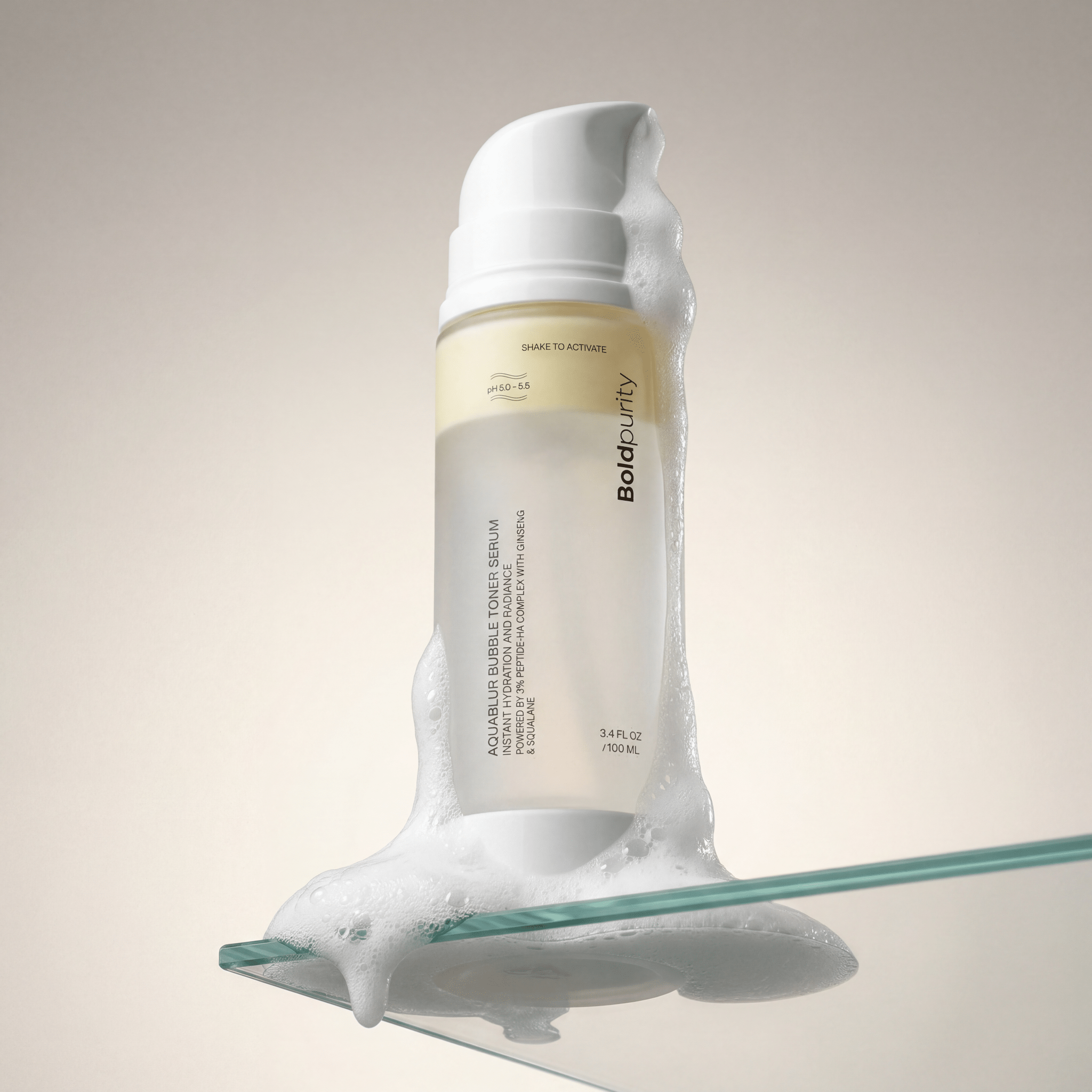
If it's the hydration you're after, AquaBlur™ delivers it with well-evidenced humectants — multi-molecular hyaluronic acid, peptides, and squalane — in a lightweight, vegan formula. Supports the appearance of hydrated, calm-looking skin; no therapeutic claims.
Discover AquaBlur™References
- Trapella, C., Rizzo, R., Gallo, S., et al. (2018). HelixComplex snail mucus exhibits pro-survival, proliferative and pro-migration effects on mammalian fibroblasts. Scientific Reports, 8, 17665.
- Fabi, S. G., Cohen, J. L., Peterson, J. D., et al. (2013). The effects of filtrate of the secretion of the Cryptomphalus aspersa on photoaged skin. Journal of Drugs in Dermatology, 12(4), 453–457.
- Tribó-Boixareu, M. J., Parrado-Romero, C., Rais, B., et al. (2009). Clinical and histological efficacy of a secretion of the mollusk Cryptomphalus aspersa. Cosmetic Dermatology, 22(5), 247–252.
- Cilurzo, F., Vistoli, G., Selmin, F., et al. (2012). An insight into the characterisation of snail secretion filtrate for cosmetic applications. International Journal of Cosmetic Science, 34(3), 273–278.
- El Mubarak, M. A., et al. (2022). Composition and biological activity of snail secretion filtrate. Molecules, 27(15), 4696.
- Gentili, V., et al. (2020). HelixComplex snail mucus as an antimicrobial and wound-healing agent. Scientific Reports, 10, 1015.
- Rawlings, A. V., & Harding, C. R. (2004). Moisturization and skin barrier function. Dermatologic Therapy, 17(S1), 43–48.
- Verdier-Sévrain, S., & Bonté, F. (2007). Skin hydration: A review on its molecular mechanisms. Journal of Cosmetic Dermatology, 6(2), 75–82.
- Draelos, Z. D. (2018). The science behind skin care: Moisturizers. Journal of Cosmetic Dermatology, 17(2), 138–144.
- Fabi, S. G., & Goldman, M. P. (2014). Hphotoaging and the role of topical antioxidants and secretion filtrates. Journal of Cosmetic Dermatology, 13(1), 62–66.
- Brieva, A., Philips, N., Tejedor, R., et al. (2008). Molecular basis for the regenerative properties of a secretion of the mollusk Cryptomphalus aspersa. Skin Pharmacology and Physiology, 21(1), 15–22.
- Purnamawati, S., Indrastuti, N., Danarti, R., & Saefudin, T. (2017). The role of moisturizers in addressing various kinds of dermatitis. Clinical Medicine & Research, 15(3–4), 75–87.
- Fluhr, J. W., Darlenski, R., & Surber, C. (2008). Glycerol and the skin. British Journal of Dermatology, 159(1), 23–34.
- Baldwin, S., et al. (2017). Efficacy claims in cosmetic ingredients: Evidence considerations. Journal of Cosmetic Dermatology, 16(3), 314–320.
- Draelos, Z. D. (2015). Cosmeceuticals: What's real, what's not. Dermatologic Clinics, 33(4), 715–724.
- Antignac, E., Nohynek, G. J., Re, T., et al. (2011). Safety of botanical and animal-derived ingredients in cosmetics. Food and Chemical Toxicology, 49(2), 324–341.
