Panthenol for Skin | Benefits, Uses & Barrier Repair Science | Boldpurity
Effects described are based on cosmetic use and published research. Results may vary depending on formulation, concentration, and individual skin type.
Panthenol for skin is one of the most clinically evidenced hydration and barrier-support ingredients in cosmetic science. If you are searching for whether panthenol is good for acne, how it differs from hyaluronic acid, whether it can support barrier function, or what side effects to expect — this guide covers the complete science, honestly.
Panthenol (Provitamin B5) is a skin-active humectant and emollient precursor that converts to Vitamin B5 in the skin. It draws water into the stratum corneum, feeds the skin’s own barrier lipid synthesis, and soothes irritation — making it one of the most genuinely multi-functional hydration ingredients available.
- Panthenol converts to pantothenic acid (Vitamin B5) via skin enzymes — then to Coenzyme A — which supports ceramide and fatty acid synthesis in the stratum corneum.
- It acts as both a humectant (attracting water into the skin) and an emollient precursor (supporting the barrier lipid structure that retains that water) — a dual role most single hydration ingredients do not have.
- Multiple clinical studies confirm measurable improvements in hydration (corneometer) and barrier function (TEWL) at 1–5% concentration.
- It is suitable for all skin types including acne-prone — non-comedogenic, non-irritating, and actively helps skin tolerate potent actives.
- Side effects at cosmetic concentrations are extremely rare — it is one of the most safety-reviewed ingredients in dermatological formulation.
- What is panthenol — and why is it called Provitamin B5?
- How does panthenol work? The mechanism explained
- Panthenol’s dual role: humectant AND emollient precursor
- Panthenol benefits for skin
- Can panthenol support skin barrier function?
- Is panthenol good for acne-prone skin?
- Panthenol by skin type
- Panthenol vs hyaluronic acid
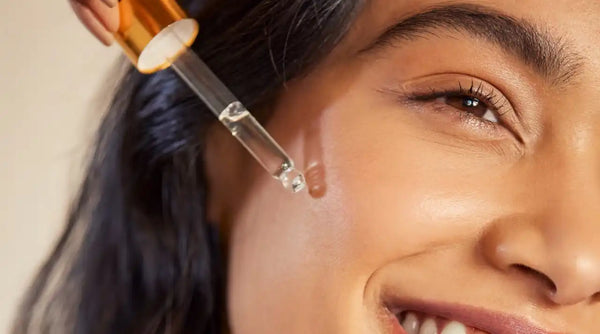
- How to use panthenol in skincare
- What to combine panthenol with
- Side effects of panthenol
- Frequently asked questions
Panthenol is one of those skincare ingredients that shows up everywhere — in moisturisers, serums, barrier creams, and post-procedure formulas — and for good reason. It is not a trend ingredient. Provitamin B5 skincare formulations have been developed and refined for decades, and the clinical evidence is among the strongest for any cosmetic hydration ingredient.
What makes panthenol for skin genuinely interesting is that it does not work as a simple humectant. It converts inside your skin, feeds a metabolic pathway, and ends up building the structural materials your barrier is made of. That level of biological integration is rare in cosmetic ingredients.
What Is Panthenol — and Why Is It Called Provitamin B5?
Panthenol is the stable, topically usable precursor to Vitamin B5 — technically pantothenic acid. It is also called Provitamin B5, dexpanthenol, or D-panthenol, and appears on ingredient labels as Panthenol. The name comes from the Greek pantothen — meaning “from everywhere” — a reference to Vitamin B5’s presence in almost every living cell.
Pure Vitamin B5 (pantothenic acid) is not stable enough for most skincare formulations. Panthenol is its alcohol derivative — chemically stable, water-soluble, and readily converted to Vitamin B5 by skin enzymes after application. This is why it is called Provitamin B5: it is the vitamin in its deliverable, pre-conversion form.
D-Panthenol vs DL-Panthenol
Panthenol comes in two forms. D-panthenol (dexpanthenol) is the biologically active form — only this form converts to Vitamin B5 in the skin. DL-panthenol is a racemic mixture containing both D and L forms — only the D portion is biologically active, providing humectant and sensory benefits. For barrier-active applications, D-panthenol is the more potent choice. At typical cosmetic concentrations of 1–5%, both forms are safe and effective.
How Does Panthenol Work? The Mechanism Explained
How does panthenol work in skincare? The full mechanism is more sophisticated than simple moisturisation.
Step 1 — Penetration. Panthenol’s small molecular weight and water solubility allow it to penetrate the stratum corneum readily after topical application.
Step 2 — Enzymatic conversion. Skin enzymes convert panthenol to pantothenic acid (Vitamin B5). This conversion is the biological basis for calling it Provitamin B5 — it only becomes fully active after this transformation.
Step 3 — Coenzyme A synthesis. Pantothenic acid is a precursor to Coenzyme A (CoA) — a central molecule in cellular metabolism. In the skin, CoA is involved in the synthesis of fatty acids and sphingolipids.
Step 4 — Barrier lipid support. Fatty acids and sphingolipids are the structural building blocks of ceramides — the primary lipids in the stratum corneum that form the skin’s moisture barrier. By feeding this synthesis pathway, panthenol supports the structural foundation that keeps water in and irritants out.
Panthenol → Vitamin B5 → Coenzyme A → fatty acid & sphingolipid synthesis → ceramide production → stronger skin barrier.
Panthenol’s Dual Role: Humectant AND Emollient Precursor
Most hydration ingredients do one thing. Panthenol does two — and understanding both is key to understanding why it appears in so many formulations.
| Role | What It Means | Effect on Skin |
|---|---|---|
| Humectant | Attracts and binds water molecules from the environment and deeper skin layers into the stratum corneum | Immediate and sustained surface hydration; plumper, softer skin feel |
| Emollient precursor | Converts to Vitamin B5 → CoA → supports ceramide and fatty acid synthesis — the structural lipids of the barrier | Stronger, more resilient barrier; reduced TEWL; better ability to retain moisture long-term |
Hyaluronic acid is a humectant. Squalane for barrier support is an emollient. Panthenol does both — attracting water at the surface and supporting the lipid architecture that retains it. This is what makes it uniquely valuable in barrier-focused formulations.
Panthenol is not just a moisturiser. It is a metabolically active ingredient that participates in the skin’s own barrier construction pathway. That biological depth is what distinguishes it from most cosmetic humectants.
Panthenol Benefits for Skin
Skin hydration
● Strong EvidencePanthenol skin hydration is its most consistently demonstrated benefit. Multiple clinical studies confirm measurable improvements in corneometer readings (stratum corneum water content) at 1–5% concentration. The humectant mechanism draws water in from the environment and prevents it from escaping through increased TEWL.
Barrier function support
● Strong EvidenceThrough its conversion to Vitamin B5 and subsequent involvement in ceramide synthesis, panthenol supports the structural lipid matrix of the stratum corneum. Clinical studies show reduced TEWL with panthenol-containing formulas, indicating improved barrier integrity. A study by Zhang et al. (2024) in a 110-participant sensitive skin RCT confirmed 100% comfort rating with panthenol-containing formula.
Skin soothing and anti-inflammatory support
● Strong EvidencePanthenol is well-documented for its ability to reduce the visible appearance of redness and skin discomfort. It modulates inflammatory pathways and is specifically recommended for post-procedure, post-active, and sensitive skin applications. Its soothing properties complement those of allantoin for skin comfort — the two are one of the most clinically supported soothing pairings in cosmetic science.
Skin surface smoothness
● Moderate EvidenceThe emollient contribution of panthenol — via barrier lipid support — contributes to a smoother-feeling skin surface over consistent use. Well-hydrated, structurally intact skin reflects light more evenly and feels more supple to the touch.
AquaBlur features panthenol as a core active alongside glycerine for hydration and squalane for barrier support — combining all three hydration mechanisms in one formula.
Can Panthenol Support Skin Barrier Function?
Yes — and this is one of panthenol’s most clinically supported properties. The mechanism is direct: panthenol converts to Vitamin B5, which enters the CoA synthesis pathway, which feeds ceramide and fatty acid production — the two lipid families that make up the structural “mortar” between skin cells.
When this lipid matrix is depleted — by harsh cleansers, environmental stress, or potent active ingredients — TEWL increases, skin becomes reactive, and the barrier’s ability to protect against irritants decreases. Panthenol addresses this at the metabolic level by supporting the skin’s own lipid replenishment capacity.
Clinical evidence supports this: multiple studies show panthenol-containing formulas produce significant improvements in TEWL measurements, confirming reduced water escape through a more intact barrier.
Ceramides applied topically replenish the lipid matrix directly. Panthenol supports ceramide synthesis from within by feeding the Coenzyme A pathway. Both approaches are valid — panthenol is the metabolic route; ceramides are the direct delivery route. Used together they address barrier lipid replenishment from two complementary directions.
Is Panthenol Good for Acne-Prone Skin?
Yes — panthenol is good for acne-prone skin, and is specifically recommended for it. Here is why:
- Non-comedogenic — it does not block pores or contribute to breakouts
- Anti-inflammatory — its soothing properties help reduce the visible redness associated with acne lesions and post-acne irritation
- Tolerance support — acne treatments including retinoids, salicylic acid, and benzoyl peroxide can be drying and irritating; panthenol helps maintain skin comfort and barrier integrity during these routines
- Hydration without oil — panthenol provides moisture through humectant action, not occlusive oils, so it does not add to congestion
A double-blind trial combining panthenol with allantoin in subjects with mild acneiform lesions showed significant improvements in skin comfort and surface condition after 4 weeks — supporting its use specifically in acne-adjacent skin concerns.
Panthenol by Skin Type
| Skin Type | Suitability | Primary Benefit | Best Used With |
|---|---|---|---|
| Dry / very dry | Excellent | Humectant hydration + barrier lipid synthesis support | Squalane, ceramides, glycerine |
| Combination | Excellent | Lightweight moisture balance; barrier support in dry zones | Niacinamide, hyaluronic acid |
| Oily / acne-prone | Excellent | Non-comedogenic; anti-inflammatory; tolerability support with acne actives | Allantoin, niacinamide |
| Sensitive / reactive | Excellent | Core soothing agent; barrier repair support; anti-inflammatory | Betaine, allantoin, glycerine |
| Mature skin | Excellent | Barrier integrity support; hydration; skin comfort maintenance | Adenosine, peptides, ceramides |
| Post-procedure | Highly recommended | Soothing, barrier-supporting; reduces post-active discomfort | Allantoin, betaine |
Panthenol vs Hyaluronic Acid — Which Is Better for Your Skin?
Panthenol vs hyaluronic acid is one of the most searched skincare comparisons — and the answer is that they are not alternatives. They are complementary ingredients that work at different depths and through different mechanisms.
| Property | Panthenol (Provitamin B5) | Hyaluronic Acid |
|---|---|---|
| Type | Humectant + Emollient precursor | Humectant |
| Molecular weight | Low — penetrates stratum corneum | High (surface) to medium (LMW) — works at/near surface |
| Mechanism depth | Surface hydration + metabolic barrier support via CoA pathway | Surface and upper-layer water attraction |
| Barrier lipid support? | Yes — via ceramide synthesis pathway | No direct barrier lipid activity |
| Anti-inflammatory? | Yes | Mild at high MW |
| Acne-prone safe? | Yes | Yes |
| Immediate plumping? | Moderate | Strong — binds up to 1000x its weight in water |
| Best used together? | Yes — HA for immediate surface hydration; panthenol for barrier-level structural support | |
If you want immediate surface plumping — hyaluronic acid. If you want barrier-level structural support that builds with consistent use — panthenol. If you want both, use both. They do not compete; they fill in each other’s gaps.
How to Use Panthenol in Skincare
Harsh surfactants deplete the barrier lipids that panthenol supports. Starting with a gentle cleanser means panthenol is supporting rather than compensating.
Panthenol’s humectant action draws moisture from surroundings — slightly damp skin gives it an immediate water source to bind into the stratum corneum.
Apply panthenol serums before squalane for barrier sealing or heavier creams. Water-based actives before oil-based layers always.
Panthenol does not increase photosensitivity — AM and PM use is safe and beneficial. Evening use supports the skin’s natural overnight barrier renewal. Morning use provides anti-inflammatory buffering ahead of daily environmental exposure.
Panthenol is particularly valuable after retinoids, AHAs, or brightening actives. Apply it immediately after actives — or choose a formula that co-formulates both. Its anti-inflammatory and barrier-support mechanisms directly counteract the irritation and TEWL increase those actives can cause.
What to Combine Panthenol With
- Glycerine for hydration — both are humectants but panthenol adds barrier lipid support that glycerine does not; together they provide layered humectant + structural hydration
- Allantoin for soothing — one of the most clinically supported pairings; a double-blind RCT confirmed significant improvements in skin comfort with the combination; allantoin soothes via anti-inflammatory pathways, panthenol via barrier support
- Squalane for barrier function — panthenol supports barrier lipid synthesis from within; squalane replenishes the lipid matrix from without; layered barrier repair from two directions
- Betaine for osmotic balance — betaine provides cellular osmolyte regulation; panthenol provides structural barrier support; complementary hydration depth
- Ceramides — ceramides replenish barrier lipids directly; panthenol supports their synthesis; complementary approaches to barrier restoration
- Hyaluronic acid — HA for immediate surface plumping; panthenol for structural barrier depth; the most commonly recommended hydration pairing
- Adenosine for skin renewal — adenosine supports collagen synthesis in the dermis; panthenol maintains the stratum corneum barrier above; layered support from surface to dermis
Side Effects of Panthenol — Is It Safe?
Panthenol has an exceptional safety profile. At cosmetic concentrations of 1–5%, side effects are extremely rare. Here is the honest picture:
| Concern | Reality |
|---|---|
| Irritation | Very rare at cosmetic concentrations. Multiple clinical trials report no adverse reactions. If irritation occurs, it is almost always caused by other ingredients in the formula. |
| Allergic reaction | Rare. Patch testing recommended as standard before any new active ingredient, but panthenol-specific allergy is uncommon in the literature. |
| Comedogenicity (pore clogging) | Non-comedogenic. Does not contribute to breakouts. Safe for daily use on oily and acne-prone skin. |
| Photosensitivity | None — safe for morning use without SPF risk increase. |
| Pregnancy safety | Generally considered safe; always consult your healthcare provider before introducing any new actives during pregnancy or breastfeeding. |
| Drug interactions | No known drug interactions at cosmetic concentrations. |
The CIR Expert Panel and EU SCCS have both reviewed panthenol’s safety and confirmed it is suitable for cosmetic use at standard concentrations. It is used in baby skincare, sensitive skin formulations, and post-procedure protocols globally — a testament to its tolerability across vulnerable skin populations.
Frequently Asked Questions
- Ebner, F., et al. (2002). Topical use of dexpanthenol in skin disorders. American Journal of Clinical Dermatology, 3(6), 427–433.
- Proksch, E., & Lachapelle, J.M. (2005). The management of dry skin with topical emollients. JDDG, 3(10), 768–774.
- Camargo, F.B., et al. (2011). Skin moisturizing effects of panthenol-based formulations. Journal of Cosmetic Science, 62(4), 361–370.
- Heise, R., et al. (2012). Dexpanthenol modulates gene expression in skin barrier recovery. Skin Pharmacology and Physiology, 25(5), 266–273.
- Zhang, Y., et al. (2024). Randomised controlled trial of panthenol formulation in 110 participants with sensitive skin. Journal of Cosmetic Dermatology (panthenol RCT, 100% comfort rating).
- Cosmetic Ingredient Review Expert Panel. Safety assessment of panthenol as used in cosmetics. International Journal of Toxicology (CIR dossier).
- Draelos, Z.D. (2010). The science behind skin care: Moisturisers. Journal of Cosmetic Dermatology, 9(3), 233–239.
© 2025 Boldpurity · For educational purposes only · Not to be reproduced without permission.