
Boldpurity · Science Journal
Skin Science
Journal
Peer-reviewed mechanisms, formulation science, and ingredient research — written for skin that expects more.
130 articles

 best pdrn serum
Best PDRN Serum in the World: 5 Formulas Compared (2026)
We ranked the 5 most significant PDRN serums in the world on concentration, delivery, and clinical evidence — not star ratings. See who actually earns the claim.
 bubble toner
Toner vs Toner-Serum vs Essence: What Does Dehydrated Skin Actually Need?
Toner, toner-serum or essence - which does dehydrated skin actually need? These categories overlap more than the labels suggest. Here's what each one does, why hydrating toners now blur into esse...
 cellmorph 500
CellMorph 500 for Beginners: What the Tingle Means & How to Start (3x a Week)
Put off by the "tingle" everyone mentions with spicule serums? It's normal, temporary and easy to manage. Here's what the tingle actually means, what it doesn't, and how to start CellMorph 500 ge...
 exosomes
PDRN vs Salmon DNA (PN) vs Exosomes — What to Buy
PDRN, "salmon DNA," polynucleotides, exosomes — the "regenerative" aisle has never been louder. But most dramatic results come from injectables and in-clinic procedures, not a serum you apply at h...
 AquaBlur
How to Use a PDRN Serum (with Retinol, Vitamin C, Cellmorph)
A PDRN serum is one of the easiest actives to layer. Here's exactly where it fits, how to use it with vitamin C (AM) and retinol (PM), how it pairs with CellMorph, the correct order, and a simple ...
 cost per use
Is PDRN Worth the Price? SkinReset™ Cost-Per-Application
A PDRN serum can look pricey next to a basic hydrator — so is it worth it? We break SkinReset down to the per-night rupee (about ₹50), explain PDRN serum pricing in India, and give an honest take ...
 Boldpurity
Boldpurity SkinReset™ Review — 8-Week Hydration Results
A straight, first-party look at how SkinReset performed in an 8-week study on the finished product — what improved for skin hydration and the barrier, who it suits, and (just as importantly) what ...
 encapsulation
Best PDRN Serum in India | Dual-Encapsulated Nano-PDRN
PDRN is one of the most talked-about serum ingredients in India — but most topical PDRN never really gets into your skin. It's a large molecule, and without a real delivery system, much of it sits...
 baby acne
Baby Acne — Recognise & Soothe It Gently
You've been gazing at your newborn's perfect skin — and suddenly there are little red bumps across those soft cheeks. It's a common worry, and the reassuring news is this: baby acne is usually har...
 atopic dermatitis
Atopic Eczema in a Baby — How to Recognise It
Dry, red, itchy patches on your baby's cheeks can be worrying — but atopic eczema is very common in babies (around one in five children), and it's manageable. Knowing how to recognise it — and whe...
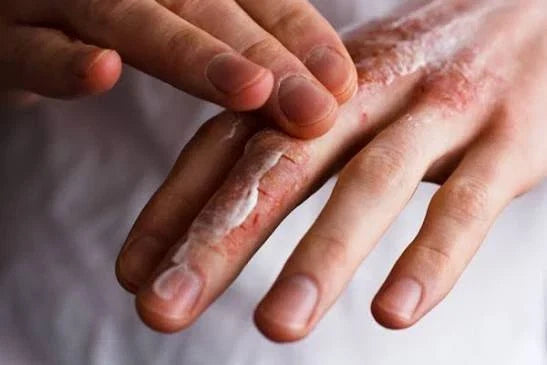
How to Wash With Atopic Eczema
When your skin is dry, itchy and prone to flares, even a shower can feel like a risk. But washing doesn't have to hurt your eczema — done gently, and sealed with moisturiser, it can actually sooth...
 atopic dermatitis
What Are the Causes of Eczema?
Eczema is often spoken about as though it has one cause — but it's really the result of several things overlapping: your genes, your skin barrier, your immune system and your environment. Understa...
 atopic dermatitis
Eczema vs Seborrheic Dermatitis (how to tell)
Red, scaly, flaky patches that flare and settle — eczema and seborrheic dermatitis can look almost identical, which makes them easy to mix up. But they have different drivers and different treatme...
 anti-TNF
Biologics (Biotherapy) for Psoriasis
For moderate-to-severe psoriasis that topicals and phototherapy can't control, biologics have been genuinely transformative — targeted medicines that switch off specific immune signals rather than...
 chronic skin hydration
Psoriasis — Why Does It Recur?
One of psoriasis's most frustrating habits is its tendency to come back — often in the very same spots, sometimes years later. It's not bad luck or anything you did wrong: there's a real biologica...
 ceramides
Psoriasis — The Role of Skin Hydration
If there's one everyday habit that makes living with psoriasis more comfortable, it's moisturising. Psoriasis leaves the skin barrier leaky and dry, which feeds the itch-and-flake cycle — and keep...
 exfoliation
Psoriasis: How to Exfoliate Your Skin Safely
Psoriasis scale is one of the most uncomfortable — and frustrating — parts of the condition, so it's natural to want to buff it away. But with psoriasis, how you exfoliate matters enormously: the ...
 narrowband UVB
UVB Phototherapy for Psoriasis: How It Works & Is It Safe?
When creams alone don't keep psoriasis in check, a dermatologist may suggest phototherapy — controlled doses of ultraviolet light that calm plaques from the inside out. It's an established, effect...
 BSA
BSAHow Is the Severity of Psoriasis Assessed? PASI, BSA & DLQI
When a dermatologist calls psoriasis "mild," "moderate" or "severe," that's not a guess — it comes from measurable scores. Three in particular do most of the work: BSA, PASI and DLQI. Here's what ...
 atopic dermatitis
Can Eczema Go Away on Its Own? What Really Happens
It's a fair question when a patch of eczema flares: will this just clear up if I leave it alone? The honest answer depends on the type of eczema — and, mostly, it's "not really, but it's very mana...
 eczema
Is Eczema Contagious? The Facts, Reassuringly Explained
If you or someone you love has eczema, you've probably met the awkward question — or the not-so-subtle flinch — that assumes it might be "catching." So let's settle it plainly: eczema is not conta...
 autoimmune skin condition
Psoriasis: Everything You Need to Know
Psoriasis is a common, chronic skin condition — red or discoloured, scaly plaques that come and go — and it's frequently misunderstood. It isn't caused by poor hygiene, it isn't contagious, and wh...
 cutibacterium acnes
Peppermint Essential Oil for Acne: Does It Work?
Peppermint oil is a popular "natural" pick for skin — that fresh, cooling tingle feels like it's doing something. But there's a real soothing side to it, an honest catch on the acne-clearing claim...
 cutibacterium acnes
Rosemary Essential Oil for Acne: Does It Really Work?
Rosemary essential oil turns up on plenty of "natural remedies for acne" lists — and, unlike some, it does have a bit of lab science behind it. There's a real mechanism worth knowing, an honest no...
 contact dermatitis
Rosemary Essential Oil for Psoriasis: Does It Help — and Is It Safe?
Rosemary essential oil gets suggested for all sorts of skin and scalp concerns, psoriasis among them. There's an interesting bit of chemistry behind the idea — but also an honest answer on the evi...
 anti-inflammatory
Zinc Gluconate for Acne: Benefits, Evidence & How to Use It
Zinc gluconate is a familiar name on acne-friendly ingredient lists — and, unlike a lot of "for acne" claims, it has real science behind it. So what does zinc gluconate actually do for breakouts, ...
 cannabidiol
CBD for Psoriasis: Does It Really Help?
CBD comes up a lot for psoriasis — and unlike many "natural" ingredients, it has a mechanism that lines up neatly with the condition. There's a real, promising rationale here, but also some over-e...
 atopic dermatitis
Cannabidiol (CBD) Oil for Eczema: Does It Really Help?
CBD oil is everywhere in skincare, and eczema is one of the conditions it's most often suggested for. There's a real, interesting mechanism behind it — but also some hype to cut through, a couple ...
 atopic dermatitis
Black Seed Oil for Eczema: Does It Actually Work?
Of all the ways black seed oil (from Nigella sativa) gets used on skin, eczema is where the evidence is most interesting — there's actually a human trial worth knowing about. It's genuinely promis...
 black cumin oil
Black Seed Oil for Rosacea: Does It Help — and Is It Safe?
Black seed oil (from Nigella sativa) is often floated as a natural helper for rosacea, and there's a genuine anti-inflammatory logic to it. It may calm part of the redness — but it can't touch ano...
 azelaic acid
Acne During Pregnancy: What's Safe and What to Avoid
The pregnancy "glow" gets all the attention — but for a lot of expectant mums, the skin story is breakouts, not radiance. Pregnancy acne is common, hormonal, and completely not your fault. The tri...
 black cumin oil
Black Seed Oil for Acne: Does It Work — and Is It Safe?
Prized since ancient Egypt and popular again today, black seed oil (from Nigella sativa) is often floated as a natural fix for breakouts. There's a real anti-inflammatory story here — but also a g...
 allantoin
Allantoin for Acne: Does It Really Help Breakouts?
Allantoin turns up in all kinds of skincare, prized for being soothing, hydrating and gentle. So it's natural to ask whether it can also help with breakouts. The short version: it's a lovely ingre...
 cannabidiol
Does Cannabidiol Help Acne?
CBD is having a moment in skincare, and the acne angle is genuinely intriguing — because unlike most "natural" ingredients, CBD seems to touch several of acne's drivers at once, at least in the la...
 acne
acneDoes Astaxanthin Help Acne?
Astaxanthin — the red-orange pigment that makes salmon and flamingos pink — is one of the most powerful antioxidants going, and it's increasingly name-dropped for acne. The antioxidant story sound...
 clay mask
Is Yellow Clay Good for Acne-Prone Skin?
Clay masks have a loyal following among oily and acne-prone skin — and yellow clay, the gentler cousin of green clay, gets recommended a lot. It genuinely can help skin feel less shiny and more de...
 citrus and skin
Is Lemon Hydrosol Good for Acne?
Lemon sounds like a natural fit for acne — fresh, antibacterial, "clarifying." Lemon hydrosol gets promoted on exactly that logic. But two things are worth knowing before you spritz: the evidence ...
 AHA
AHAPurging vs Breakout vs Allergic Reaction
You start a promising new serum, and a week later your skin looks worse. Is it "purging" (a normal adjustment), a regular breakout, or a reaction to the product? They can look alike at first, but ...
 acne causes
Is Acne Contagious? (myth-buster)
It's a surprisingly common worry: can you catch acne from someone — or pass it on? Because breakouts involve bacteria, it's easy to assume they spread like a cold. The good news is short and clear...
 AHA
AHAMandelic Acid for Acne (the gentle AHA)
When people think acid + acne, they usually reach for glycolic or salicylic. But there's a quieter, gentler option that deserves far more attention — especially if your skin is sensitive or on the...
 non-comedogenic
Sun Exposure & Acne
A little sun and your breakouts look calmer — so the sun must be good for acne, right? It's one of skincare's most persistent myths. The "clearing" is a short-lived illusion, and underneath it the...
 atopic dermatitis
Is Tea Tree Oil Good for Eczema?
Tea tree oil is one of the most popular "natural" fixes people reach for when their eczema flares — it's antimicrobial, anti-inflammatory, and feels like a gentle, plant-based choice. But there's ...
 psoriasis
Does Zinc Help Psoriasis? What the Evidence Says
Zinc turns up a lot in conversations about skin — and you may have seen it promoted as a natural fix for psoriasis. It's an appealing idea: a simple mineral, taming a stubborn condition. But when ...
 acne marks
How to Prevent Acne Marks and Scars
For many people, the hardest part of acne isn't the breakout — it's what it leaves behind. The good news: while you can't always prevent post-acne marks and scars, especially after severe breakout...
 family history
Is Psoriasis Genetic?
If psoriasis runs in your family, it's natural to wonder whether it was always written in your genes — and whether you'll pass it on. The honest answer is a "yes, but." Psoriasis does have a stron...
 acne-prone skin
Peppermint Hydrosol & Acne
Peppermint hydrosol is a lovely thing — a cool, fresh floral water that feels wonderful on the skin. It also gets talked up as an acne remedy that "tightens pores," "regulates oil" and "kills acne...
 dairy and acne
Hormonal Acne & Diet — What Role Does Food Play?
"Is it something I'm eating?" is one of the first questions people ask about hormonal acne — and the internet is full of confident, contradictory answers. Here's the honest, judgement-free version...
 acne skincare
Acne Mistakes to Avoid
When your skin is breaking out, it's natural to want to do something — scrub harder, wash more, skip the moisturiser, attack every spot. The frustrating irony is that many of those instincts quiet...
 blackheads
The Different Types of Acne
"Acne" is really an umbrella term. A scattering of blackheads and an angry, deep cyst are both acne — but they behave differently and need different care. Knowing which type (or mix of types) you'...
No articles found.
