

Key Research Findings
- Published research links air pollution — especially fine particulate matter (PM2.5) — to oxidative stress in skin and signs of premature-looking ageing
- Published dermatology literature associates pollution exposure with pigmentation, dark spots, uneven tone, and barrier disruption
- Published research indicates pollution and UV act together, amplifying each other's effects on skin
- Published dermatology literature indicates antioxidants are the most evidence-supported topical defence, by helping neutralise pollution-driven free radicals
- Published research indicates thorough-but-gentle cleansing to remove the day's particulate deposits is a practical, commonly discussed step
- Published dermatology literature indicates a strong skin barrier limits how much pollution can disrupt skin
- Published commentary indicates "anti-pollution" is largely a marketing term; no topical forms an impenetrable shield
- Published research emphasises individual response varies; those in high-pollution cities may notice more impact
In This Article
- How Pollution Actually Reaches & Affects Skin
- The Damage: Ageing, Pigmentation & Barrier
- Pollution + UV: Why They're Worse Together
- What Actually Protects: Antioxidants First
- Cleansing, Barrier & Sun Protection
- The "Anti-Pollution Product" Marketing Myth
- The Boldpurity Neutralise-Cleanse-Protect Framework
- How to Protect Skin in a Polluted City
- Common Pollution & Skin Myths
- Frequently Asked Questions
How Pollution Actually Reaches & Affects Skin
Published research indicates urban air pollution is a mix of fine particulate matter (notably PM2.5 and PM10), ozone, nitrogen oxides, and polycyclic aromatic hydrocarbons. Published dermatology literature indicates these settle on the skin surface and, being very small, some particles can interact with the upper skin and generate oxidative stress — a cascade of reactive free radicals that damage skin components.
The Damage: Ageing, Pigmentation & Barrier
Published research associates chronic pollution exposure with several visible skin effects: accelerated signs of ageing (fine lines, loss of firmness), increased pigmentation and dark spots, uneven tone, and a weakened skin barrier. Published dermatology literature attributes much of this to oxidative stress and low-grade inflammation driven by particulate matter. This overlaps with extrinsic ageing, covered in how skin ages.
Published Research on Pollution and Pigmentation
Published dermatology literature has reported associations between higher pollution exposure and more pronounced pigment spots, particularly relevant for Indian and deeper skin where pigmentation is already a leading concern. Published research indicates this is one reason pollution matters cosmetically in Indian cities — it can worsen the tone concerns many people are actively trying to manage. For dullness specifically, see pollution and dull skin.
Pollution + UV: Why They're Worse Together
Published research indicates pollution and ultraviolet radiation don't act in isolation — they compound each other. UV generates its own free radicals, and pollution adds more, so combined exposure produces greater oxidative stress than either alone. Published dermatology literature indicates this is why sun protection is a core part of any "anti-pollution" strategy, not a separate issue. See SPF and sunscreen science.
What Actually Protects: Antioxidants First
Published research indicates the most evidence-supported topical defence against pollution is antioxidants. Because pollution damages skin largely through free radicals, antioxidants — which help neutralise those free radicals — target the mechanism directly. Published dermatology literature commonly discusses ingredients such as vitamin C, ferulic acid, vitamin E, niacinamide, and other antioxidants in this role.
Cleansing, Barrier & Sun Protection
Published dermatology literature indicates three more practical levers support antioxidants. First, thorough-but-gentle cleansing at day's end removes settled particulate matter so it isn't left in prolonged contact with skin. Second, a strong barrier limits how much pollution disrupts skin. Third, daily sun protection addresses the UV half of the combined stress.
The "Anti-Pollution Product" Marketing Myth
Published commentary indicates "anti-pollution" has become a popular but loosely defined marketing claim. Published research indicates no topical forms a literal impenetrable shield against particulate matter, and that products labelled "anti-pollution" mostly rely on the same antioxidants, barrier support, and film-forming humectants found elsewhere. The label is marketing; the mechanism is ordinary skincare science.
The Boldpurity Neutralise-Cleanse-Protect Framework
Published dermatology literature points to three evidence-based levers against pollution. We summarise them as a simple named framework.
The Neutralise–Cleanse–Protect Framework
- Neutralise — use antioxidants to help counter the free radicals pollution generates (the core, mechanism-targeting step).
- Cleanse — gently but thoroughly remove the day's settled particulate matter, without over-stripping.
- Protect — support the barrier and wear daily sun protection, since pollution and UV compound each other.
This is an educational framework reflecting commonly discussed practice, not a prescriptive regimen or a claim to block pollution. Individual response varies.
How to Protect Skin in a Polluted City
For those in high-pollution Indian cities, published dermatology literature commonly discusses the following.
Commonly discussed steps
- Use an antioxidant in the morning — the best-evidenced topical defence against pollution-driven free radicals.
- Cleanse gently in the evening — remove the day's particulate build-up; don't leave it on overnight.
- Support the barrier — hydration and barrier care make skin more resilient to pollution.
- Wear daily sun protection — it addresses the UV half of the combined stress.
- Don't over-cleanse or over-scrub — that weakens the barrier and backfires.
- Judge products by formula, not the "anti-pollution" label — look for real antioxidants and barrier support.
A commonly discussed approach; individual response varies.
The Boldpurity Science Team's view
Formulating in India, we can't pretend pollution isn't real — in many of our cities it's a daily, visible factor. But in our view the "anti-pollution shield" marketing does people a disservice, because it implies a cream can wrap your face in armour. It can't. What it can do is help your skin defend itself: antioxidants to mop up the free radicals, gentle cleansing to clear the day's grime, and a strong barrier plus SPF to blunt the combined hit of pollution and sun. That's less dramatic than a "shield," but it's the part that's actually backed by evidence — and it works whatever your city's air quality index says that day.
— An editorial opinion from the Boldpurity Science Team, offered for discussion. Individual response varies.
Common Pollution & Skin Myths
Published research indicates no topical forms an impenetrable barrier against particulate matter. Published dermatology literature indicates "anti-pollution" products mostly work through ordinary antioxidants and barrier support, not a physical shield.
Published research links particulate matter to oxidative stress, premature-looking ageing, pigmentation, and barrier disruption. Published dermatology literature indicates the effect is real and measurable, even if products over-promise on protection.
Published dermatology literature indicates over-cleansing and scrubbing disrupt the barrier, making skin more vulnerable to pollution. Published research indicates gentle, thorough cleansing is the goal, not aggression.
Published research indicates pollution and UV compound each other's oxidative damage. Published dermatology literature indicates daily sun protection is part of pollution defence, not a separate concern.
Published dermatology literature indicates the evidence-based levers — antioxidants, gentle cleansing, barrier support, SPF — are ordinary, accessible steps. Published research indicates the "anti-pollution" premium is often unnecessary.
Published research indicates indoor air can also contain pollutants, and particulate matter settles on skin throughout the day. Published dermatology literature indicates a consistent antioxidant-and-cleansing routine is worthwhile regardless.
Frequently Asked Questions
Explore Boldpurity
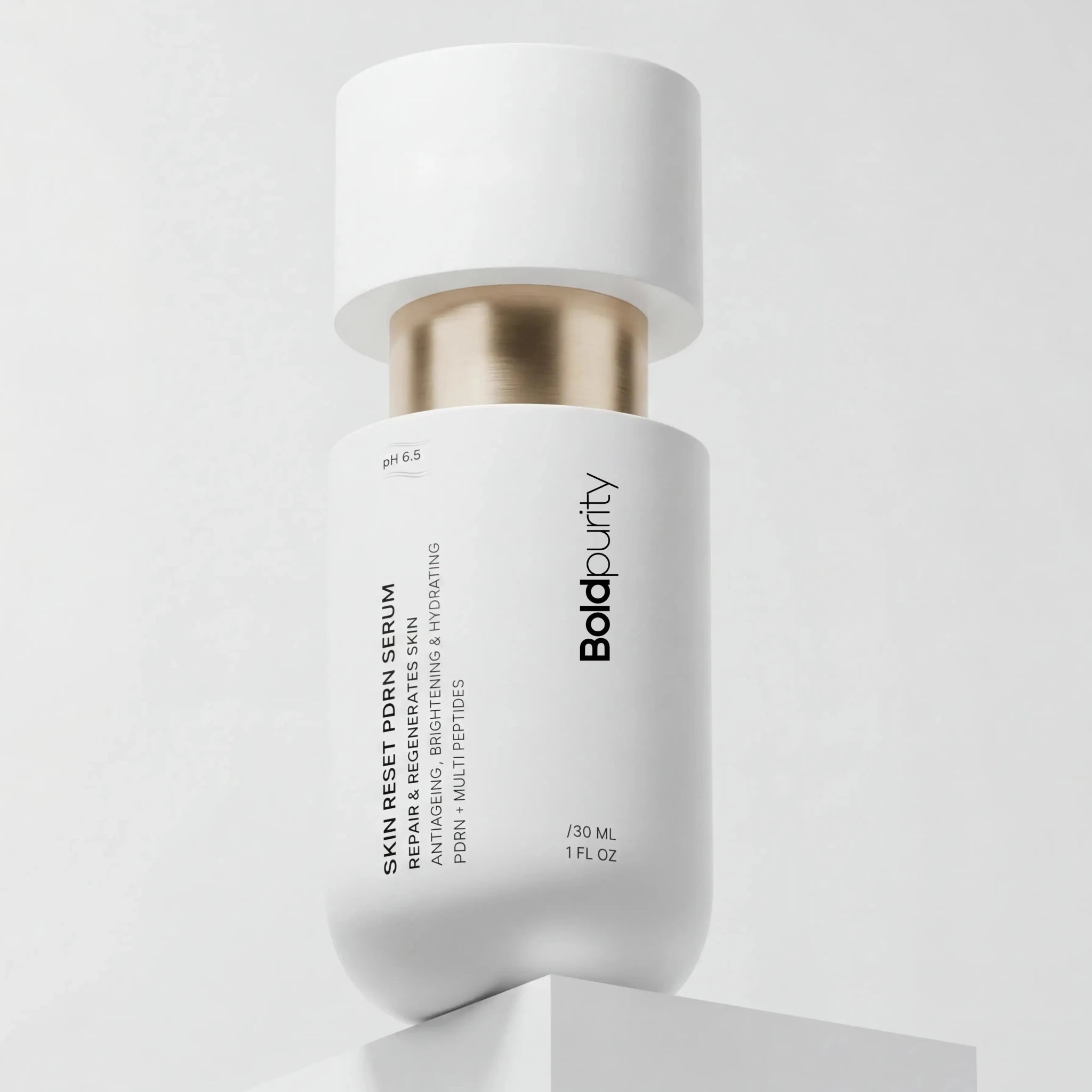
Since antioxidants are the evidence-based answer to pollution, SkinReset™ brings niacinamide, an antioxidant-rich white lily complex, and PDRN together to support the appearance of even, resilient-looking skin in demanding urban conditions. Best paired with gentle cleansing and daily sun protection. Supports appearance only; no therapeutic claims.
Discover SkinReset™References
- Krutmann, J., Liu, W., Li, L., et al. (2014). Pollution and skin: From epidemiological and mechanistic studies to clinical implications. Journal of Dermatological Science, 76(3), 163–168.
- Vierkötter, A., Schikowski, T., Ranft, U., et al. (2010). Airborne particle exposure and extrinsic skin aging. Journal of Investigative Dermatology, 130(12), 2719–2726.
- Roberts, W. (2021). Air pollution and skin disorders. International Journal of Women's Dermatology, 7(1), 91–97.
- Mancebo, S. E., & Wang, S. Q. (2015). Recognizing the impact of ambient air pollution on skin health. Journal of the European Academy of Dermatology and Venereology, 29(12), 2326–2332.
- Puri, P., Nandar, S. K., Kathuria, S., & Ramesh, V. (2017). Effects of air pollution on the skin: A review. Indian Journal of Dermatology, Venereology and Leprology, 83(4), 415–423.
- Schikowski, T., & Hüls, A. (2020). Air pollution and skin aging. Current Environmental Health Reports, 7(1), 58–64.
- Lefebvre, M. A., Pham, D. M., Boussouira, B., et al. (2016). Consequences of urban pollution upon skin status. International Journal of Cosmetic Science, 38(3), 217–223.
- Pinnagoda, J., et al. (2020). Particulate matter and skin barrier function. Contact Dermatitis, 82(4), 201–210.
- Pullar, J. M., Carr, A. C., & Vissers, M. C. M. (2017). The roles of vitamin C in skin health. Nutrients, 9(8), 866.
- Lin, F. H., Lin, J. Y., Gupta, R. D., et al. (2005). Ferulic acid stabilizes a solution of vitamins C and E and doubles its photoprotection. Journal of Investigative Dermatology, 125(4), 826–832.
- Grether-Beck, S., Marini, A., Jaenicke, T., & Krutmann, J. (2015). Effective photoprotection of human skin against pollution. Photochemistry and Photobiology, 91(1), 248–250.
- Valacchi, G., Sticozzi, C., Pecorelli, A., et al. (2012). Cutaneous responses to environmental stressors. Annals of the New York Academy of Sciences, 1271(1), 75–81.
- Rawlings, A. V., & Harding, C. R. (2004). Moisturization and skin barrier function. Dermatologic Therapy, 17(S1), 43–48.
- Draelos, Z. D. (2018). The science behind skin care: Cleansers. Journal of Cosmetic Dermatology, 17(1), 8–14.
- Parrado, C., Mercado-Saenz, S., Perez-Davo, A., et al. (2019). Environmental stressors on skin aging: Mechanistic insights. Frontiers in Pharmacology, 10, 759.
- Purnamawati, S., Indrastuti, N., Danarti, R., & Saefudin, T. (2017). The role of moisturizers in addressing various kinds of dermatitis. Clinical Medicine & Research, 15(3–4), 75–87.
