Ferulic Acid Benefits for Skin: CE Ferulic Science, Vitamin C & How to Use It
⚡ The Short Answer
Ferulic acid is a plant-derived antioxidant that does two jobs: it neutralises free radicals itself, and it stabilises vitamins C and E so they stay active in the bottle and on skin.
The number worth knowing comes from the study that made it famous. Lin and colleagues at Duke reported that adding ferulic acid to a vitamin C and E solution stabilised the formula and roughly doubled its photoprotection — moving from about fourfold to about eightfold protection against UV-induced erythema.
Use it in the morning, under sunscreen. It supports sun protection; it does not replace it.
At a glance
Vitamin C gets the headlines. But the reason the most respected antioxidant serums are still working in month three often comes down to a quieter molecule — one whose main contribution is not what it does to your skin, but what it does to the other ingredients in the bottle.
In this article
What Ferulic Acid Actually Is
Ferulic acid is a hydroxycinnamic acid found in the cell walls of plants, where it defends seeds and grains against oxidative damage. In skincare it is sourced from rice bran, oats and wheat bran.
Two properties make it useful. It is a capable free-radical scavenger on its own. And — less obviously, but more importantly — it is a stabiliser that holds other antioxidants in a usable state. That second role is why it appears in serious antioxidant serums without ever taking top billing.
One useful number
At roughly 194 Daltons, ferulic acid sits comfortably below the ~500 Da threshold above which compounds struggle to cross intact skin. Plenty of celebrated actives fail that test. This one does not, which is a genuine point in its favour and almost never mentioned.
The Antioxidant Relay
Antioxidants are usually sold as individual heroes. In reality they work as a relay, and understanding the handoffs explains why this particular trio became a template.
Why this matters practically: an antioxidant serum is not a fixed thing. It is a system degrading from the day it is made. What ferulic acid buys you is not a stronger day-one formula so much as a formula that is still worth applying in month three.
The CE Ferulic Finding, With The Number
This is why ferulic acid is famous, and the headline figure is worth stating rather than gesturing at.
Lin et al., Duke University, 2005
A research group led by Sheldon Pinnell tested what happened when ferulic acid was added to a solution of L-ascorbic acid and alpha-tocopherol.
Two results. The formula became more chemically stable. And its photoprotection roughly doubled — from approximately fourfold to approximately eightfold protection against UV-induced erythema.1
That combination became the template now known as CE Ferulic. The title of the paper says it plainly: ferulic acid stabilises a solution of vitamins C and E and doubles its photoprotection.
A follow-up human study reported that a topical C, E and ferulic acid solution provided protection against UV-induced damage including thymine dimer formation — a direct measure of DNA damage — and p53 expression.2 That is meaningfully stronger evidence than most cosmetic antioxidants can point to.
What The Evidence Actually Shows
Ferulic acid has a better evidence base than most cosmetic antioxidants. Two honest caveats belong alongside that.
First, much of the mechanistic work is in vitro or instrumental. Radical-scavenging capacity measured in a test tube is a rationale, not a promised outcome on skin. The Murray human data is the exception and carries more weight for that reason.
Second, the findings belong to a formula, not to an ingredient. The doubling result describes a specific solution at a specific pH with specific partners. A product containing ferulic acid at an undisclosed level, at the wrong pH, in clear packaging, has not inherited that finding. The research supports the combination; it does not certify every product that lists the ingredient.
Stated fairly
A well-characterised, well-tolerated antioxidant with a genuinely strong stabilising rationale and one influential photoprotection finding — supported by research that is better than most, and still maturing on the large-scale clinical side.
How To Judge A Formula
Since the evidence attaches to the formula rather than the ingredient, four things are worth checking — and they are all visible before you buy.
| Check | What you want | Why |
|---|---|---|
| Packaging | Opaque, air-limiting | Vitamin C degrades with light and air — and ferulic acid is itself light-sensitive |
| Partner ingredients | All three present | The finding was about the combination, not any one component |
| pH | Low, if it uses L-ascorbic acid | L-ascorbic acid needs an acidic formula to stay stable |
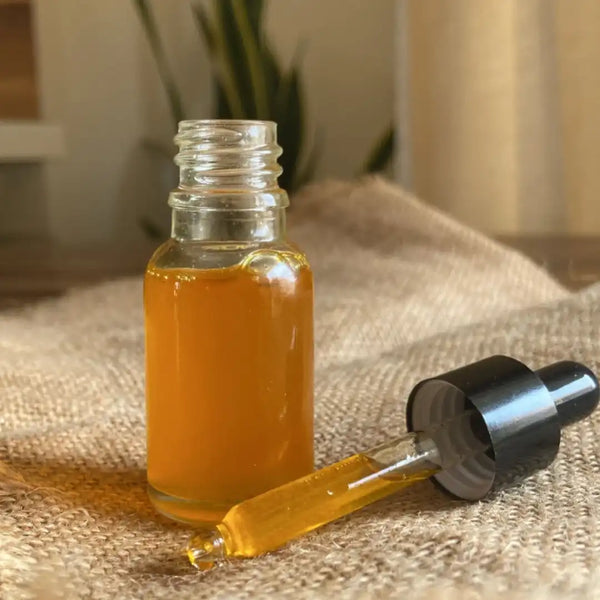
| Colour on arrival | Clear to pale straw | Deep yellow or brown means oxidation has already begun |
How To Use It
Ferulic acid is a morning ingredient. Its job is daytime defence.
Store away from heat and light, and replace the product if it darkens noticeably.


Myths, Examined
Safety And Sensitivities
Ferulic acid has a reassuring safety profile and is generally well tolerated. Where irritation occurs with a CE Ferulic serum, the low pH required by L-ascorbic acid is usually the cause rather than the ferulic acid itself.
- Patch test first — a small amount on the inner forearm for a couple of days, particularly if you also use exfoliating acids.
- Watch for oxidation. A serum that has turned deep yellow or brown has degraded and is best replaced.
- Pregnancy and breastfeeding: a topical antioxidant with a generally reassuring profile, but decisions about any ingredient during pregnancy should be made with a qualified healthcare provider.
- After in-clinic procedures: skin is more reactive after peels, microneedling or laser. Reintroduce low-pH antioxidant serums only on the advice of the practitioner who performed the procedure.
Frequently Asked Questions
What does ferulic acid do for skin?
It is a plant-derived antioxidant that neutralises free radicals from UV and pollution, and — more distinctively — stabilises vitamins C and E within a formula so they stay active longer. At roughly 194 Daltons it also sits well below the ~500 Da threshold above which compounds struggle to cross intact skin.
What is CE Ferulic and why does it matter?
It is a formulation approach combining vitamin C (L-ascorbic acid), vitamin E (alpha-tocopherol) and ferulic acid. A 2005 Duke study found that adding ferulic acid stabilised the solution and roughly doubled its photoprotection — from about fourfold to about eightfold against UV-induced erythema. A follow-up human study reported protection against UV-induced DNA damage including thymine dimer formation.
Why are vitamin C and vitamin E always paired?
Because one recycles the other. Vitamin E is lipid-soluble and works inside membranes; when it neutralises a radical it is oxidised into a tocopheroxyl radical. Vitamin C, working in the water phase at the membrane boundary, reduces it back to its active form. Ferulic acid then stabilises both, which is why the trio outlasts any of them alone.
Does ferulic acid replace sunscreen?
No. It supports antioxidant defence and the CE Ferulic combination has documented photoprotective effects, but it does not absorb or block UV the way a sunscreen does and carries no SPF rating. Use it under sunscreen, never instead of it.
Can you use ferulic acid every day?
Yes — once daily in the morning is the standard approach, applied before sunscreen. It is generally well tolerated. Where a CE Ferulic serum causes irritation, the low pH required by L-ascorbic acid is usually the reason rather than the ferulic acid.
How do I know if a ferulic acid serum is any good?
Check four things: opaque air-limiting packaging, all three antioxidants present rather than ferulic acid alone, a low pH if it uses L-ascorbic acid, and a clear-to-pale-straw colour on arrival. The published findings describe a specific combination — a product listing the ingredient has not automatically inherited them.
Is ferulic acid good for sensitive skin?
Ferulic acid itself is generally well tolerated across skin types. The complication is that it usually arrives inside a low-pH vitamin C formula, and that acidity is what reactive skin tends to object to. Patch test, introduce gradually, and consider a gentler vitamin C derivative if a traditional CE Ferulic serum stings.
The Bottom Line
Ferulic acid's real contribution is not to your skin directly — it is to the other ingredients in the bottle. Vitamin C regenerates vitamin E; ferulic acid keeps both usable. That relay is why the combination was worth studying, and adding ferulic acid roughly doubled the photoprotection of a C and E solution.
Buy it as part of a well-built combination in opaque packaging, use it in the morning, and put sunscreen over the top. The research supports a formula, not an ingredient list.
References
- Lin FH, Lin JY, Gupta RD, et al. Ferulic acid stabilizes a solution of vitamins C and E and doubles its photoprotection of skin. Journal of Investigative Dermatology. 2005;125(4):826–832.
- Murray JC, Burch JA, Streilein RD, et al. A topical antioxidant solution containing vitamins C and E stabilized by ferulic acid provides protection against ultraviolet-induced damage. Journal of the American Academy of Dermatology. 2008;59(3):418–425.
- Zduńska K, Dana A, Kolodziejczak A, Rotsztejn H. Antioxidant properties of ferulic acid and its possible application. Skin Pharmacology and Physiology. 2018;31(6):332–336.
- Saija A, Tomaino A, Trombetta D, et al. In vitro and in vivo evaluation of caffeic and ferulic acids as topical photoprotective agents. International Journal of Pharmaceutics. 2000;199(1):39–47.
- Packer JE, Slater TF, Willson RL. Direct observation of a free radical interaction between vitamin E and vitamin C. Nature. 1979;278:737–738. (Regeneration of the tocopheroxyl radical by ascorbate.)
- Graf E. Antioxidant potential of ferulic acid. Free Radical Biology & Medicine. 1992;13(4):435–448.
- Boldpurity in-house data: protocol SKIN-BPAG-2025-01, in-vivo study, MS Clinical Research Bangalore, IEC-ACE approved, N=30 completers, 8 weeks, Fitzpatrick III–V.
This article is provided for educational purposes only and does not constitute medical advice, diagnosis or treatment. Cosmetic ingredients support the appearance and surface condition of skin; they are not intended to diagnose, treat, cure or prevent any disease. Several mechanistic observations referenced here derive from in vitro or instrumental studies and may not translate directly to results on skin; findings describing the vitamin C, vitamin E and ferulic acid combination relate to the specific formulations tested rather than to any product containing the ingredient. Ferulic acid supports, but does not replace, the use of a broad-spectrum sunscreen. No Boldpurity product referenced here contains ferulic acid, vitamin C or vitamin E, none is an antioxidant serum, and no brightening, lightening, luminosity or pigmentation claim is made or implied for any product. Individual responses vary. For concerns specific to your skin, pregnancy, or use following an in-clinic procedure, consult a qualified healthcare provider or dermatologist. Aligned with the India CDSCO cosmetic framework, the Cosmetics Rules 2020 and the ASCI Code 2021.