Sensitive Skin Guide — Soothe & Build Resilience
Science Reviewed · Boldpurity Science Team
Last reviewed: July 2026
Quick Answer
Sensitive skin usually is often associated with increased skin reactivity and may be influenced by the condition of the skin barrier — the protective layer that keeps moisture in and irritants out. When it's disrupted, skin can become red, dry, tight, and reactive. A simpler routine with fewer, gentler products may be easier for sensitive skin to tolerate. Focus on a simple routine: gentle cleanser, barrier-supporting hydration, moisturiser, and daily SPF. Avoid over-exfoliating, harsh actives, hot water, and (for many) fragrance. Supporting the skin barrier may help improve comfort and reduce feelings of dryness or irritation.
Key Facts About Sensitive Skin
- Around 40% of people identify as having sensitive skin — but there's no single definition.
- Common signs: redness, irritation, dryness, flaking, tightness.
- It is often linked with changes in skin barrier function.
- Triggers include temperature, UV, humidity, pollution, and genetics.
- A weakened or disrupted barrier can contribute to a cycle: irritation → moisture loss → more sensitivity.
- The answer is a simpler, gentler routine — not more products.
- Barrier-supporting ingredients (ceramides, NMFs, HA) help break the cycle.
Key Takeaways
- Sensitive skin is often linked with changes in skin barrier function — support the barrier to calm it.
- Simplify: fewer, gentler products reduce the risk of irritation.
- Avoid over-exfoliating, harsh actives, and hot water.
- Look for barrier-supporting ingredients like ceramides, NMFs, and HA.
- Daily sunscreen use is an important part of daytime skincare for many people — UV worsens sensitivity.
- Patch test everything new.
What Is Sensitive Skin?
Sensitive skin isn't one specific condition — it's a general tendency toward irritation, redness, dryness, and discomfort. Around 40% of people worldwide identify as having it, though there's no universal medical definition. It's often connected to a compromised skin barrier — the protective outer layer that keeps moisture in and irritants out. When the barrier is disrupted, skin becomes more reactive and prone to the signs of sensitivity. Understanding and supporting the barrier is the key to managing it.
If your skin stings at new products, flushes easily, or feels tight and reactive, you're far from alone — a huge share of people describe their skin as sensitive. And while it can feel unpredictable and frustrating, there's usually a common thread underneath it: the skin barrier.
The good news? Sensitivity often improves dramatically once you stop overwhelming your skin and start supporting its barrier. Let's look at how.
The Skin Barrier — Your First Line of Defence
Your skin barrier is a protective shield that keeps the good stuff in (moisture) and the harmful stuff out (irritants, pollutants). It's sometimes called the "moisture barrier" because retaining water is one of its most important jobs. It's built from a few working parts:
Natural Moisturising Factors (NMFs)
Tiny "water magnets" that attach to water molecules and help hold moisture inside the skin.
Skin Lipids (Ceramides & Fatty Acids)
Waterproof-like layers that trap water inside and help block unwanted molecules from getting in.
Skin Cells
The physical "bricks" that form a strong final layer, making it harder for molecules to enter or exit.
When this barrier is compromised, it can kickstart the cycle of sensitivity and irritation. (For a deeper dive, see our skin barrier guide.)
The Cycle of Irritation
How Sensitivity Feeds Itself
A trigger causes irritation → irritation damages the barrier → a weakened or disrupted barrier loses more water and natural moisturising factors → skin feels drier, tighter, and more vulnerable → it reacts more easily to the next trigger. Breaking this cycle means calming the irritation and rebuilding the barrier.
A Gentle Routine for Sensitive Skin
The guiding principle: fewer, gentler products. Here's a simple Prep → Treat → Seal starting point.
Prep — Cleanse Gently
Choose a gentle cleanser that respects the barrier — cream or balm-based cleansers deliver moisture while they cleanse. Skip exfoliation when skin feels particularly sensitive; frequent exfoliation may not be suitable when skin feels reactive. Use cool to lukewarm water, never hot.
Treat — Support & Hydrate
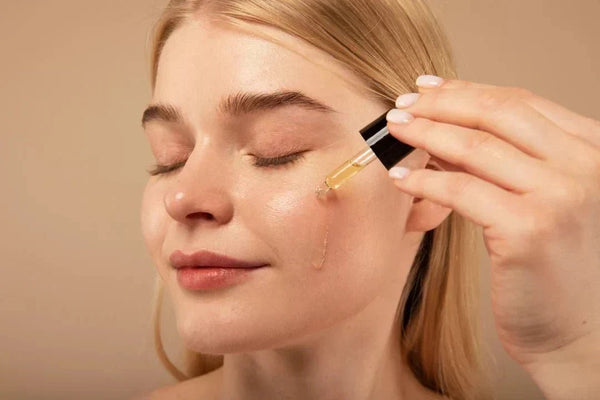
Use hydrating, barrier-supporting formulas. Ingredients such as hyaluronic acid, ceramides, and panthenol are commonly used in formulations designed to support skin hydration and comfort. Keep it minimal — you don't need many serums. SkinReset™ is formulated with PDRN and other ingredients selected for a lightweight hydration-focused routine. Always patch test new products.
Seal — Lock In & Protect
Finish with a nourishing moisturiser rich in ceramides, NMFs, and hyaluronic acid to lock in hydration and support the barrier. In the AM, always finish with broad-spectrum SPF 30+. Those prone to irritation often prefer mineral sunscreens (zinc oxide and/or titanium dioxide), which tend to be well tolerated.
A Note on Products
Boldpurity does not currently manufacture a cleanser, moisturiser, or sunscreen — those recommendations are generic. Choose gentle, barrier-supporting formulas suited to sensitive skin. SkinReset™ can offer hydration support in the Treat step. If your skin is actively irritated or your barrier is compromised, pause stronger actives — including CellMorph™ (a spicule-delivery serum that can tingle) — until your skin has recovered.
Common Mistakes to Avoid
Mistake
Over-Exfoliating
Exfoliation removes the top layer of dead skin — but too much disrupts the barrier those cells form. If your barrier is damaged, pause exfoliation entirely and focus on strengthening and hydrating.
Mistake
Using Harsh Actives
Potent actives like retinol, vitamin C, and strong acids are beneficial normally, but can irritate a compromised barrier. Pause them while skin settles, then reintroduce gradually — one at a time — once skin feels balanced.
Mistake
Using Hot Water
Hot water strips the skin's natural lipids and disrupts the barrier. Wash with cool to lukewarm water instead — a simple change that makes a real difference.
Mistake
Skipping SPF
UV exposure triggers a stress response and damages the barrier, increasing water loss. Daily broad-spectrum SPF is essential — some people with reactive skin may prefer mineral sunscreen formulas.
A Note on Fragrance
Fragrance & Sensitive Skin
For some people, fragrance — including naturally derived scents — can act as an irritant, especially on skin that's already dry or reactive. If your skin is highly sensitive or your barrier is compromised, choosing fragrance-free products may be preferred by some people with fragrance sensitivity.
In the spirit of transparency: our AquaBlur™ Bubble Toner Serum contains fragrance and is not marketed as fragrance-free. If you have significant fragrance sensitivity, patch test carefully or opt for fragrance-free alternatives in your Prep step. We believe you deserve that information clearly.
Don't Forget Your Lips
Lips are delicate and often neglected. A gentle, fragrance-free lip balm with hydrating ingredients (like squalane or amino acids) helps keep them comfortable — especially in dry or cold conditions.
Your Questions, Answered
What causes sensitive skin?
It is often linked with changes in skin barrier function, which can make skin more reactive. Triggers include temperature, UV, humidity, pollution, and genetics. There's no single cause or definition — it varies from person to person.
What's the best routine for sensitive skin?
A simple, gentle one: barrier-respecting cleanser, hydrating and barrier-supporting treatment, nourishing moisturiser, and daily SPF. Fewer, gentler products reduce irritation. Skip exfoliation and harsh actives while your skin is reactive.
Should sensitive skin avoid fragrance?
Not everyone needs to, but for highly reactive skin or a compromised barrier, fragrance-free may be preferred by some people with fragrance sensitivity — some fragrance molecules (even natural ones) can irritate. Note: AquaBlur™ contains fragrance, so patch test if you're sensitive.
Can I use retinol or vitamin C if I have sensitive skin?
When your barrier is compromised, pause them — they can irritate. Once skin feels balanced and calm, reintroduce gradually, one at a time, watching for reactions. Buffering with moisturiser and using lower frequencies helps.
Which sunscreen is best for sensitive skin?
Many with reactive skin prefer mineral sunscreens (zinc oxide and/or titanium dioxide), which tend to be well tolerated. Broad-spectrum SPF 30+ daily is essential regardless of formula.
When should I see a dermatologist?
If irritation is persistent, severe, or accompanied by symptoms that don't settle with gentle care, see a dermatologist. Ongoing redness or reactivity can sometimes indicate a condition that benefits from professional assessment.
Care, Confidently
Sensitive skin can feel unpredictable and frustrating — but it usually responds well to the same fundamentals: support the barrier, simplify your routine, avoid known irritants, and protect from the sun. Be patient and gentle with your skin, and over time, skin may feel more comfortable with consistent, gentle care over time.
References
- India Cosmetics Rules, 2020 — CDSCO
- ASCI Code for Self-Regulation in Advertising, 2021
- Berardesca E, et al. "Sensitive skin: an overview." Int J Cosmet Sci. 2013;35(1):2–8.
- Farage MA. "The prevalence of sensitive skin." Front Med. 2019;6:98.
Disclaimer
This article is for informational purposes only and is not medical advice. Boldpurity does not manufacture a cleanser, moisturiser, or sunscreen; those recommendations are generic. AquaBlur™ contains fragrance and is not fragrance-free. Persistent or severe skin irritation should be assessed by a dermatologist. All cosmetic claims refer to the appearance of the skin. In line with ASCI Code 2021 and India Cosmetics Rules, 2020. Results may vary. Patch test before use.