Retinol for Skin: Benefits, How It Works & How to Use It — A Science-Led Guide
Read this first — pregnancy and breastfeeding
Topical retinoids are generally avoided during pregnancy, while trying to conceive, and while breastfeeding. This is the standard precautionary position, and oral retinoids carry far stricter requirements still.
If any of that applies to you, speak to your doctor or dermatologist before using any retinoid product — including cosmetic ones. There are well-evidenced alternatives for texture and tone that don't raise the question at all.
Quick Answer
Retinol is a vitamin A derivative and among the best-evidenced cosmetic ingredients there is for the appearance of fine lines, texture and uneven tone. It works gradually — meaningful change takes months, not days.
Formulation matters more than percentage. A well-made 0.3% product routinely outperforms a poorly made 1%.
Start low, go slowly, moisturise, and wear sunscreen every morning. And be clear on one thing: irritation is not evidence that it's working.
At a glance
- INCI: Retinol (vitamin A alcohol) — a fat-soluble vitamin A derivative.
- Typical cosmetic range: 0.25–1%, with 0.4% common in published work.
- Best for: fine lines, texture, uneven tone, photoaged skin.
- Pairs well with: niacinamide, ceramides, humectants, and daily sunscreen.
- Evening only, on dry skin, moisturiser after.
- Not in pregnancy or breastfeeding without medical advice.
- On skin that pigments readily: go slower — irritation leaves marks.
In this article
The Retinoid Ladder
Retinol is one member of a family. What separates them is how many conversion steps the skin needs before the molecule is in its active form — and every step costs potency.
| Form | Steps to active | Relative strength | In practice |
|---|---|---|---|
| Prescription retinoid | None — already active | Reference | Requires a prescription and clinical supervision |
| Retinaldehyde | One | Stronger than retinol | Faster-acting — and correspondingly more likely to irritate |
| Retinol | Two | Moderate | The usual starting point, and the best-studied cosmetic form |
| Retinyl palmitate | Several | Weakest | Often too weak to do much — very stable, but gentle mainly because little happens |
A correction worth knowing
These forms are routinely listed as "retinol, retinal, retinyl palmitate" as though that were descending strength. It isn't — retinaldehyde is stronger than retinol, being one conversion step from active rather than two. If you're starting out, a low-percentage retinol is the sensible entry point; retinaldehyde is a step up, not a gentler option.
How It Works
Retinol is fat-soluble, so it crosses the skin's outer lipid layers, is taken up by cells, and is converted enzymatically toward its active form. That conversion is the reason results take months — nothing about the process is fast.

Once active, it influences how quickly surface cells are replaced and how the deeper structural layer behaves. Over weeks that shows up as smoother texture; over months, as softened fine lines and more even tone.
Why patience is structural, not motivational. These aren't surface changes you can rush. Skin renews on roughly a monthly cycle, so a product working on renewal needs several cycles before its effect is visible. Judging retinol at four weeks tells you about adaptation, not efficacy.
Why Percentage Misleads
Retinol is unstable — it degrades with light, air and heat. Which means the number on the box describes what went in, not what reaches your skin.
What the label doesn't tell you
Encapsulation, stabilisers, and opaque air-tight packaging all determine how much active retinol survives to the point of application. A well-formulated 0.3% product routinely outperforms a poorly formulated 1%.
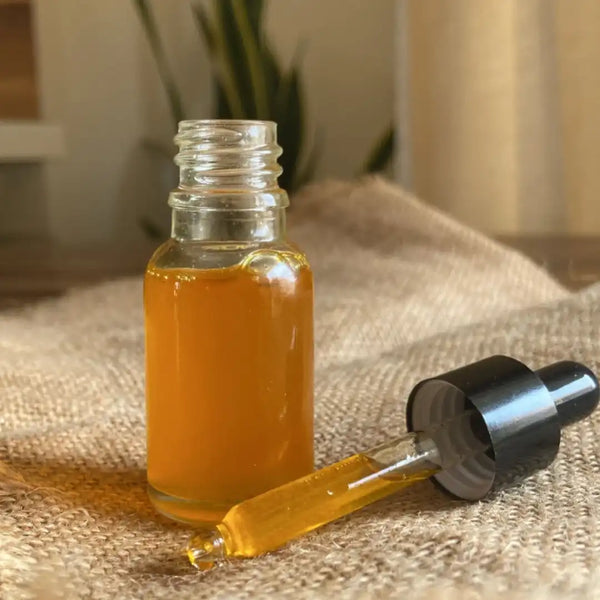
Practical signals: opaque, airless packaging rather than a clear dropper bottle; a sealed pump over an open jar; and a brand willing to say how the retinol is stabilised. Chasing a higher percentage is usually the wrong optimisation — it buys more irritation more reliably than it buys more benefit.
What The Evidence Supports

Strongest evidence — texture and fine lines. Multiple published studies document improvement in the appearance of surface texture and fine lines with consistent use. Texture responds first, typically from around six weeks; fine lines take three months or more.
Well supported — photoaged skin. For skin showing accumulated sun exposure, retinoids are among the few cosmetic actives with a genuine body of evidence behind them.
Moderate evidence — tone and firmness. Improvement in the appearance of uneven tone and firmness is documented, though results vary more between individuals than the texture findings do.
An honest note on the literature. Much of the strongest evidence concerns prescription retinoids, which are more potent than any cosmetic retinol. Cosmetic retinol has its own supporting studies, but the effect sizes are smaller. Claims that a cosmetic retinol matches prescription results should be read sceptically.
Timeline
- Weeks 1–4: adjustment. Some dryness and mild flaking are common. No visible benefit yet — this stage tells you nothing about whether it will work.
- Weeks 4–8: texture and smoothness usually improve first. Dryness typically settles as tolerance builds.
- Weeks 8–16: fine lines begin to soften; tone looks more even.
- Months 4–6: the fuller effect. Retinol rewards persistence more than almost anything else in skincare.
If Your Skin Pigments Readily
The irritation costs more here
On fair skin, retinoid irritation looks like redness and settles within days of easing off. On medium and deeper skin tones, the same irritation frequently leaves post-inflammatory hyperpigmentation — flat dark marks lasting months.
There's a trap in the sequence: the marks show up after the redness fades, so the cause looks unrelated — and since retinol is often being used for uneven tone, the instinct is to keep going or increase. That makes it worse.
Retinoids remain genuinely useful for tone on deeper skin. The point is that the route matters: slow enough to avoid irritation gets you there, pushing through it doesn't.
What that changes:
- Start at the lowest strength available, twice weekly, and hold there for a month before increasing.
- Buffer it — moisturiser before as well as after is a legitimate technique, not a compromise.
- Treat persistent redness or stinging as a stop signal and pause for a week rather than pressing on.
- Sunscreen is doubly important — UV both increases retinoid sensitivity and deepens any marks forming.
Adaptation — And Where The Line Is
Skin does adjust to retinoids over several weeks, and mild early dryness is common and not automatically a reason to stop. Plenty of people quit during weeks two to four and never find out whether it would have worked.
But "it's adjusting" has a limit, and it's important to know where.
Normal adjustment versus stop now
Reasonable, early on: mild dryness, slight flaking around the nose and chin, skin feeling a little tight. Manageable by reducing frequency and moisturising more.
Stop and let skin recover: persistent burning or stinging, raw or weeping skin, swelling, or a rash spreading beyond where you applied it. Blistering means stop and see a doctor — that is not an adjustment phase and is not managed by using less.
And to be plain: irritation is not a sign the product is working. Retinol works through cell renewal, not through inflammation. The people getting the best long-term results are usually those who never pushed into significant irritation at all.
Reducing frequency isn't failure. Twice weekly for six months achieves considerably more than nightly for three weeks followed by an angry face and a bin.
How To Use It
- Start low and infrequent — a low percentage, twice weekly, increasing only once that's comfortable.
- Evening only, on dry skin — damp skin increases penetration and irritation together.
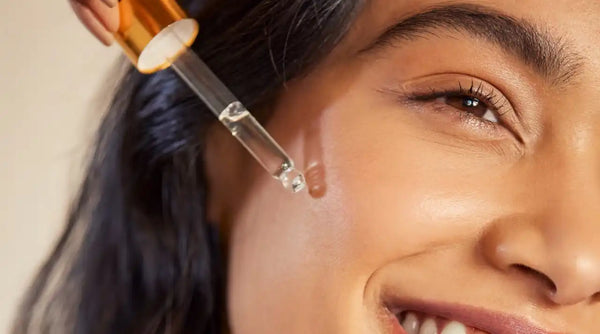
- A pea-sized amount for the whole face. More is not better here in any sense.
- Moisturiser afterwards, always. If it stings, moisturise before as well.
- Avoid the eye area and the corners of the nose, where irritation concentrates.
- Sunscreen every morning — the one non-negotiable.
What To Combine It With
Niacinamide, ceramides and humectants are the useful companions — they support the barrier while it's under load, and niacinamide in particular is well tolerated alongside retinol.
Exfoliating acids need separating. Both act on cell turnover; using them together stacks the effect faster than the barrier rebuilds. Alternate nights, and don't try to stack them once "adaptation is complete" — that's when people relapse.
On vitamin C: the simplest approach is vitamin C in the morning, retinol at night. That isn't because they react badly — it's that each is easier to fit into its own routine, and it removes the question entirely. You don't need to time layers to the minute; that advice came from older high-strength formulations.
Don't use two retinoids at once. A retinol serum plus a retinyl-palmitate moisturiser adds exposure without adding benefit.


Safety
| Consideration | What to know |
|---|---|
| Pregnancy and breastfeeding | Topical retinoids are generally avoided during pregnancy, when trying to conceive, and while breastfeeding. Speak to your doctor before using any retinoid product. |
| Sun sensitivity | Increased during use and reversible when use stops. Daily broad-spectrum sunscreen is required, not optional. |
| Severe reactions | Stop and seek medical advice for blistering, weeping, swelling, or a rash spreading beyond the application area. These are not adaptation. |
| Pigment-prone skin | Irritation carries a raised risk of post-inflammatory hyperpigmentation lasting months. Introduce slowly. |
| Eczema, rosacea, active dermatitis | Discuss with a dermatologist first rather than starting independently. |
| Patch testing | Standard practice before first full use, and worth the two days. |
| Stopping | Can be stopped at any time with no rebound. Benefits gradually fade, since they depend on continued use. |
Questions, Answered
The Bottom Line
Retinol is one of the few cosmetic actives with a real body of evidence behind it — and the way to benefit from it is patience, not intensity. Start low, go slowly, moisturise, wear sunscreen, and give it months. Irritation is not progress, blistering is a reason to stop and see a doctor, and if you're pregnant or breastfeeding this is a conversation for your doctor before it's a purchase.
References
- Kafi R, Kwak HSR, Schumacher WE, et al. Improvement of naturally aged skin with vitamin A (retinol). Archives of Dermatology. 2007;143(5):606–612.
- Mukherjee S, Date A, Patravale V, et al. Retinoids in the treatment of skin aging: an overview of clinical efficacy and safety. Clinical Interventions in Aging. 2006;1(4):327–348.
- Zasada M, Budzisz E. Retinoids: active molecules influencing skin structure formation in cosmetic and dermatological treatments. Advances in Dermatology and Allergology. 2019;36(4):392–397.
- Davis EC, Callender VD. Postinflammatory hyperpigmentation: a review of the epidemiology, clinical features, and treatment options in skin of color. Journal of Clinical and Aesthetic Dermatology. 2010;3(7):20–31.
- Tanino H, et al. Photostability of retinoids in cosmetic formulations. International Journal of Cosmetic Science. (year and volume to verify)
- Griffiths CEM, Russman AN, Majmudar G, et al. Restoration of collagen formation in photodamaged human skin by tretinoin. New England Journal of Medicine. (year and volume to verify — see note)
🔴 Note to editor — one item here should be corrected before anything else. A myth box read "✗ Myth: Retinol is unsafe during pregnancy." The text beneath advised consulting a doctor and noted that many professionals recommend avoiding retinoids — so the box contradicted its own heading. But the heading is what a scanning reader takes away, and what an AI extracting question-and-answer pairs from the page will lift. In a myth-versus-fact format, that headline asserts the claim is false. It has been removed entirely and replaced with an unambiguous statement carried in three places. This is the most consequential error found across this project and I'd treat it as urgent regardless of when the rest of the rebuild goes live. Second, "mild dryness and light peeling indicate the ingredient is active" appeared in the bottom line, the myths and the adaptation section. Irritation is not a measure of efficacy — retinol works through cell renewal, not inflammation — and on skin that pigments readily, irritation is precisely what leaves marks lasting months. Corrected throughout, while keeping the genuinely useful point that mild early dryness is common and not automatically a reason to quit. Third, the advice for severe reactions was unsafe: the article said that with "significant burning, barrier compromise, blistering" the reader should reduce frequency "but do not discontinue entirely." Blistering is a stop-and-see-a-doctor sign. Rewritten with an explicit normal-versus-stop distinction. Credit where due: the retinoid potency ladder is correct here — retinaldehyde above retinol, retinyl palmitate lowest — which is the ordering the skin cycling article had wrong, and the formulation-over-percentage argument is the best statement of that point in the library. Both kept in full. A PIH section has been added for deeper skin, matching the exfoliation rebuild. On references: the scibar advertises "12+ Peer-Reviewed References" as an authority signal, and at least two entries had mismatched year and volume — the Griffiths NEJM paper was given as 1992, volume 337, pages 1659–1667 (volume 337 is 1997, and the tretinoin/collagen paper is 1993), and the Varani paper was given as 2006, volume 114 (volume 114 is 2000). Several others could not be verified. The list has been reduced to entries I can stand behind, with two flagged for checking. A citation count used as a trust badge needs a full audit before publication.