Retinoids Explained — Types, Strengths & How to Start
Reviewed by · Boldpurity Science Team
Last reviewed: August 2026
Evidence base: 10 peer-reviewed sources, cited inline
The Short Answer
Retinoids are vitamin A derivatives. Only one form is biologically active — retinoic acid — and every other form has to be converted into it by enzymes in your skin. The number of conversion steps is the entire story. Retinyl esters need three, retinol needs two, retinaldehyde needs one, and tretinoin needs none because it already is retinoic acid. Each step loses potency, which is why fewer steps means stronger and more irritating. Choose your position on that ladder, start at two nights a week, and wear sunscreen every morning.
Key Findings
- Retinol requires two enzymatic conversions to reach retinoic acid; retinaldehyde requires one; retinyl esters require three.2,8
- Retinoic acid binds nuclear retinoic acid receptors and regulates the expression of over 3,000 genes in keratinocytes and fibroblasts — it is a gene-signalling ingredient, not a scrub.7
- Retinaldehyde is approximately ten times more potent than retinol at the same concentration, because less is lost in transit.8
- In comparative work, 0.05% retinaldehyde produced effects on wrinkles and roughness approaching retinoic acid, with substantially better tolerability.4,5
- Retinaldehyde is the only naturally occurring retinoid with documented antibacterial activity against C. acnes.9
- Retinoids inhibit matrix metalloproteinases and support procollagen synthesis — they act on the structures beneath the surface, not only turnover.7,1
- Retinoids are not recommended during pregnancy or breastfeeding. See the safety section below before starting.
- On Fitzpatrick III–V skin, retinoid irritation carries a specific downstream risk — post-inflammatory hyperpigmentation — that changes how you should ramp.10
If there is one ingredient family dermatologists and cosmetic scientists broadly agree on, it is retinoids. Decades of research, thousands of published studies, and a mechanism that is genuinely understood rather than inferred.
The confusion is not about whether they work. It is about which one to use. Retinol, retinal, retinyl palmitate, tretinoin, adapalene — the names sound interchangeable and are not. There is one organising principle underneath all of them, and once you have it, every product decision becomes straightforward.
How Do Retinoids Actually Work?
The usual explanation — "they speed up cell turnover" — is true but describes a symptom rather than the mechanism. What actually happens is more interesting, and it is why retinoids sit in a different category from exfoliating acids.
Retinoids talk to your DNA
Retinoic acid does not act on the skin surface. It enters the cell, crosses into the nucleus, and binds to a family of nuclear receptors — retinoic acid receptors (RAR) and retinoid X receptors (RXR). Those receptors are transcription factors: once activated, they switch gene expression on and off.7
All-trans retinoic acid regulates the expression of more than 3,000 genes in keratinocytes and fibroblasts. Downstream, that raises cell turnover and motility, increases synthesis of procollagen and glycosaminoglycans, and inhibits matrix metalloproteinases — the enzymes that break collagen down.7,1
This is the difference that matters. An exfoliating acid works on the stratum corneum — a physical and chemical action at the surface. A retinoid changes what your skin cells are instructed to produce. That is why retinoids take months rather than days, and why the results persist differently.
The practical consequence: retinoids act on both sides of the collagen equation — increasing what is built and reducing what is broken down. No exfoliating acid does the second part. If you want to see how the acid category compares, our guide to PHAs covers what surface acids do and do not do.
The Conversion Ladder — The One Thing to Understand
Your skin can only use one form of vitamin A: retinoic acid. Every over-the-counter retinoid is a precursor that has to be enzymatically converted into it, step by step:
Retinyl ester → Retinol → Retinaldehyde → Retinoic acid
(3 steps away) · (2 steps) · (1 step) · (active)
Every conversion step loses a fraction of the dose. The enzymes are not perfectly efficient, and some of the molecule never completes the journey. This single fact explains everything else about retinoids: why retinaldehyde is roughly ten times more potent than retinol at the same percentage,8 why tretinoin needs a prescription, and why potency and irritation rise together rather than independently.
A correction worth making
You will frequently see it written that retinol requires "one conversion" to become active. It requires two: retinol is first oxidised to retinaldehyde, and retinaldehyde is then oxidised to retinoic acid.2,8 Retinaldehyde is the form that requires one. If a source tells you retinol and retinal are both one step from active, it cannot then explain why they differ in strength — and they do, substantially.
Retinol vs Retinal vs Tretinoin: The Comparison
| Form | Steps to active | Relative potency | Typical strength | Irritation | Availability |
|---|---|---|---|---|---|
|
Retinyl palmitate and other retinyl esters |
3 | Lowest | 0.1–2% | Minimal | OTC |
| Retinol | 2 | Baseline reference | 0.1–1% | Moderate | OTC |
|
Retinaldehyde "retinal" |
1 | ~10× retinol8 | 0.01–0.1% | Moderate | OTC |
|
Adapalene synthetic retinoid |
0 | Receptor-selective | 0.1–0.3% | Lower than tretinoin | Varies by market |
|
Tretinoin all-trans retinoic acid |
0 — already active | Highest | 0.01–0.1% | Highest | Prescription only |
The retinaldehyde case
Retinaldehyde is the most interesting position on the ladder and the least discussed. Comparative work found 0.05% retinaldehyde delivering effects on wrinkle depth and skin roughness approaching those of retinoic acid, with a markedly better tolerance profile.4,5 It sits close to prescription strength without the prescription.
It also has a property no other natural retinoid has: documented antibacterial activity against Cutibacterium acnes.9 Retinol has none. For congested skin, that is a meaningful difference that percentage comparisons hide entirely.
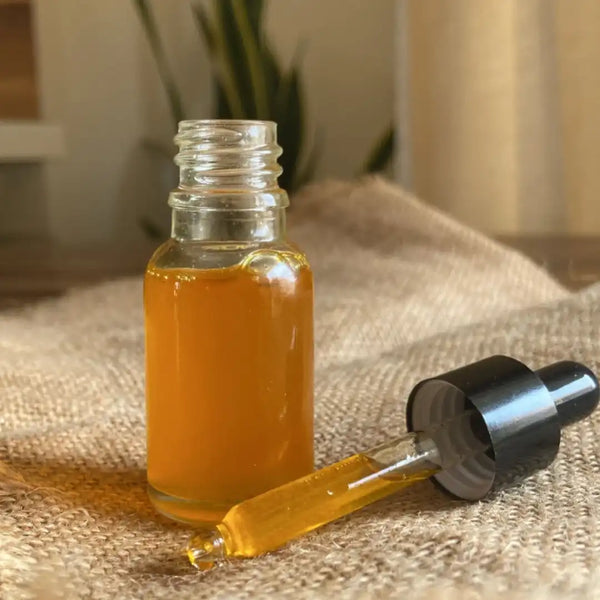
The trade-off: retinaldehyde is difficult to stabilise and light-sensitive. Opaque, air-restrictive packaging is not a nice-to-have for this molecule. A retinaldehyde serum in a clear dropper bottle is a formulation problem you are paying for.
For a deeper look at retinol specifically, see our science-led guide to retinol.
Safety First: Who Should Not Use Retinoids
Pregnancy and breastfeeding
Retinoids are not recommended during pregnancy or while breastfeeding. Oral retinoids are established teratogens, and while topical absorption is far lower, the standard clinical position is to avoid all retinoids — prescription and over-the-counter — for the duration. This includes retinol, retinaldehyde, retinyl esters, tretinoin and adapalene.
If you are pregnant, planning a pregnancy, or breastfeeding, stop and speak to your doctor or dermatologist before using any vitamin A derivative. This is not a cautious-sounding disclaimer; it is the one genuinely non-negotiable rule in this article.
Also speak to a dermatologist first if you:
- Have an active inflammatory skin condition — eczema, rosacea, psoriasis, or a compromised barrier
- Are using prescription acne or pigmentation treatments already
- Have had a recent procedure — peel, laser, microneedling, waxing on the treatment area
- Have a history of severe reactions to actives
Retinoids on Indian Skin: The Pigmentation Question
Most retinoid guidance is written for lighter skin, where the worst case of over-doing it is redness that fades in a week. On Fitzpatrick III–V skin — which covers most of the Indian population — the calculus is different, and this is the single most important adjustment to make.
Why irritation costs more on deeper skin tones
In skin of colour, cutaneous inflammation of almost any kind can trigger post-inflammatory hyperpigmentation — the darker marks that persist long after the inflammation itself has resolved.10 Melanocytes in more pigmented skin respond to inflammatory signalling by producing more melanin, and depositing it where the irritation occurred.
This creates an unpleasant loop. Many people start a retinoid because of uneven tone. If they ramp too fast, the resulting irritation can produce exactly the marks they were trying to address — and those marks can take months to fade. The retinoid was never the wrong choice. The ramp rate was.
What to change if your skin is Fitzpatrick III–V:
- Start lower than the standard advice — the bottom of the concentration range, not the middle
- Twice weekly for the first month, not the first fortnight
- Treat visible redness as a stop signal rather than a phase to push through
- Buffer from night one instead of adding it once irritation appears (see below)
- Be stricter about daily SPF, since UV compounds pigmentation risk on already-irritated skin
The general principle: on deeper skin tones, the cost of going too fast is measured in months, while the cost of going too slow is measured in weeks. That asymmetry should decide your pace.
The 12-Week Retinoid Ramp
"Start low, go slow" is correct and unhelpfully vague. Here is what it means as a schedule. Do not advance a stage until the current one has produced no persistent irritation for a full week.
| Stage | Weeks | Frequency | What you're watching for |
|---|---|---|---|
| 1 — Introduce | 1–4 | 2 nights per week | Any stinging that outlasts the night |
| 2 — Build | 5–8 | Alternate nights | Flaking, tightness, sensitivity to other products |
| 3 — Consolidate | 9–12 | 5 nights per week | Whether tolerance is holding at higher frequency |
| 4 — Maintain or step up | 12+ | Nightly, if comfortable | Only now consider a higher strength or a step up the ladder |
The non-negotiables at every stage:
- Night only. Retinoids degrade in light and increase UV sensitivity.
- A pea-sized amount for the whole face. More product does not mean more result; it means more irritation.
- Apply to dry skin. Wait 10–20 minutes after cleansing. Damp skin increases absorption and, with a retinoid, that means increased irritation rather than increased benefit.
- Moisturiser afterwards, always.
- Broad-spectrum SPF every morning. Non-negotiable, all year, indoors near windows included.
If you use a skin cycling structure
Retinoids belong on Night 2 — after exfoliation night, before the two recovery nights. That sequence gives the barrier scheduled time to recover between actives, which is exactly what a ramping retinoid routine needs.
What Is Retinisation?
Retinisation is the adjustment period when starting a retinoid: dryness, flaking, tightness, redness, and heightened sensitivity to products that never bothered you before. It typically runs two to six weeks.
Mechanically, it is a temporary barrier disruption. The retinoid is accelerating turnover in the epidermis faster than the barrier can reorganise, so transepidermal water loss rises and the stratum corneum is briefly less cohesive. Understanding it as a barrier event rather than a mysterious "purge" tells you what to do about it: support the barrier, do not power through.
Retinisation is normal. These are not:
- Severe or painful irritation, or irritation that has not improved after six weeks
- Rash, blistering, weeping, or swelling
- Skin that feels raw or burning rather than tight
- New dark patches appearing where irritation occurred — stop and consult a dermatologist
The Buffering Methods That Reduce Irritation
Two techniques reduce retinoid irritation without reducing the dose. Both work by slowing delivery rather than cutting it, so you keep the benefit while making the ramp survivable. On Fitzpatrick III–V skin, start with one of these from night one rather than waiting for trouble.
Method 1 — Buffering
Apply moisturiser first, wait for it to absorb, then apply the retinoid on top. The moisturiser slows the rate at which the retinoid reaches the living epidermis. Useful for the first four weeks, or permanently if your skin is reactive.
Method 2 — The sandwich
Moisturiser, then retinoid, then moisturiser again. The gentlest approach available short of reducing frequency. Commonly recommended for sensitive skin starting a stronger retinoid, and the method most likely to get someone through week three without abandoning the product.
Neither method meaningfully reduces effectiveness in practice — because the retinoid you actually keep using beats the one you stopped after ten days.
What Not to Combine with Retinoids
| Avoid on the same night | Why | What to do instead |
|---|---|---|
| AHAs and BHAs | Both accelerate turnover; stacking over-exfoliates and compounds barrier disruption | Separate nights. A PHA is the gentlest acid to alternate with |
| Vitamin C (L-ascorbic acid) | Both potent; the low pH required by L-ascorbic acid also suits retinoids poorly | Vitamin C in the morning, retinoid at night |
| Benzoyl peroxide | Oxidising agent; can degrade certain retinoids on contact | Different times of day, or different days |
| A second retinoid | They converge on the same receptors — stacking multiplies irritation, not results | One retinoid product. Check ingredient lists for hidden retinyl esters |
| Physical scrubs | Abrasion on a barrier already in flux | Drop them entirely while ramping |
What pairs well: niacinamide, panthenol, ceramides, hyaluronic acid, squalane, and centella. The pattern is barrier support — anything that helps the skin rebuild while the retinoid pushes turnover.
Where Retinoids Fit in Your Routine
Retinoids go in the Treat step, evening only — after cleansing and any prep, before moisturiser.
| Step | Retinoid nights | Recovery nights |
|---|---|---|
| Prep | Cleanser → AquaBlur™, allow to dry fully | Cleanser → AquaBlur™ |
| Treat | Retinoid, pea-sized, on dry skin | SkinReset™ — barrier and hydration support |
| Seal | Richer moisturiser | Regular moisturiser |
Common Retinoid Myths
Myth
"Retinoids thin the skin."
The opposite is documented. Retinoids thin the stratum corneum transiently while increasing epidermal thickness and supporting dermal collagen — they inhibit matrix metalloproteinases and increase procollagen synthesis.7,1 The myth likely originates from the peeling of the first few weeks, which is a surface event mistaken for a structural one.
Myth
"You can't use retinoids in summer."
You can, with consistent daily sunscreen. Retinoids increase UV sensitivity; they do not become dangerous in warmer months. Stopping seasonally guarantees you restart the retinisation period every year, which is worse than continuing.
Myth
"Higher percentage means better results."
Percentage is only meaningful within a single form. 0.05% retinaldehyde is more potent than 0.5% retinol despite the smaller number, because it is one conversion step from active rather than two.8 Comparing percentages across different retinoids tells you almost nothing. And a 1% retinol you tolerate once a fortnight will underperform a 0.3% you use four nights a week.
Myth
"Peeling means it's working."
Peeling means the barrier is disrupted. It frequently accompanies an effective retinoid routine, but it is not the mechanism and it is not the goal — retinoids act on gene expression, not on the flakes. People who never visibly peel are not getting less benefit. Chasing visible peeling is how ramps go wrong.
Frequently Asked Questions
What are retinoids?
Retinoids are a family of vitamin A derivatives. Only retinoic acid is biologically active; every other form must be enzymatically converted into it by the skin. They bind nuclear retinoic acid receptors and alter gene expression, which raises cell turnover, increases procollagen synthesis, and inhibits the enzymes that degrade collagen. Available over the counter as retinyl esters, retinol and retinaldehyde, and on prescription as tretinoin.
What is the difference between retinol and retinal?
Conversion distance. Retinol requires two enzymatic steps to become retinoic acid; retinaldehyde requires one. Because each step loses part of the dose, retinaldehyde is roughly ten times more potent than retinol at the same concentration. Retinaldehyde also has documented antibacterial activity against C. acnes, which retinol lacks. Retinol has the longer research record and is easier to formulate stably.
Can I use retinoids during pregnancy?
No. Retinoids are not recommended during pregnancy or breastfeeding. Oral retinoids are established teratogens, and although topical absorption is much lower, standard clinical guidance is to avoid all vitamin A derivatives — including over-the-counter retinol and retinaldehyde — for the duration. If you are pregnant, planning a pregnancy, or breastfeeding, speak to your doctor before using any retinoid.
What strength should I start with?
Retinol at 0.2–0.3%, or retinaldehyde at 0.01–0.05%, for most beginners. If your skin is very reactive, start with a retinyl ester. Percentages are only comparable within the same form — 0.05% retinaldehyde is stronger than 0.5% retinol. Begin at two nights a week and increase only after a full week without persistent irritation.
Is peeling and dryness normal?
Yes — it is called retinisation and it typically lasts two to six weeks. It reflects temporary barrier disruption as turnover outpaces barrier reorganisation. Reduce frequency, increase moisturiser, buffer the application, and pause other actives. Severe pain, blistering, or irritation persisting beyond six weeks is not retinisation and warrants a dermatologist.
Are retinoids safe for Indian and deeper skin tones?
Yes, and they are widely used — but the ramp should be slower. On Fitzpatrick III–V skin, inflammation can trigger post-inflammatory hyperpigmentation, meaning irritation can leave marks that persist for months. Start at the lower end of the range, stay at two nights weekly for the first month, buffer from the beginning, and treat visible redness as a signal to pause rather than push through.
Can I use retinoids with AHAs or BHAs?
Not on the same night. Both accelerate turnover, and combining them compounds barrier disruption without adding benefit. Use them on separate nights — a skin cycling structure handles this well, with the exfoliant on night one, retinoid on night two, and recovery on nights three and four. A PHA is the gentlest acid to alternate with a retinoid.
Do I need sunscreen when using retinoids?
Yes, always. Retinoids increase UV sensitivity and the molecules themselves degrade in light, which is why they are applied at night. Broad-spectrum SPF 30 or higher every morning, year-round. On deeper skin tones this matters twice over, since UV compounds pigmentation risk on skin that is already inflamed.
How long before I see results?
Texture and smoothness often shift first, around four to eight weeks. Tone follows. Changes attributable to collagen — fine lines, firmness — generally require three to six months of consistent use, because they depend on gene-level changes in fibroblast activity rather than surface turnover. Retinoids are a twelve-month ingredient measured in twelve-week increments.
Start Low, Go Slow, Stay Consistent
Everything about choosing a retinoid reduces to one question: how many conversion steps away from retinoic acid are you willing to be? Fewer steps means faster and harsher. More steps means slower and easier. There is no correct answer, only the one your skin will tolerate for long enough to matter — and on Fitzpatrick III–V skin, tolerance is worth protecting more carefully than speed is worth chasing.

References
- Mukherjee S, Date A, Patravale V, Korting HC, Roeder A, Weindl G. Retinoids in the treatment of skin aging: an overview of clinical efficacy and safety. Clinical Interventions in Aging. 2006;1(4):327–348.
- Zasada M, Budzisz E. Retinoids: active molecules influencing skin structure formation in cosmetic and dermatological treatments. Postępy Dermatologii i Alergologii. 2019;36(4):392–397.
- Kong R, Cui Y, Fisher GJ, et al. A comparative study of the effects of retinol and retinoic acid on histological, molecular, and clinical properties of human skin. Journal of Cosmetic Dermatology. 2016;15(1):49–57.
- Saurat JH, Didierjean L, Masgrau E, et al. Topical retinaldehyde on human skin: biologic effects and tolerance. Journal of Investigative Dermatology. 1994;103(6):770–774.
- Fluhr JW, Vienne MP, Lauze C, et al. Tolerance profile of retinol, retinaldehyde and retinoic acid under maximized and long-term clinical conditions. Dermatology. 1999;199(Suppl 1):57–60.
- Kafi R, Kwak HSR, Schumacher WE, et al. Improvement of naturally aged skin with vitamin A (retinol). Archives of Dermatology. 2007;143(5):606–612.
- Fisher GJ, Voorhees JJ. Molecular mechanisms of retinoid actions in skin. The FASEB Journal. 1996;10(9):1002–1013.
- Sorg O, Kuenzli S, Kaya G, Saurat JH. Proposed mechanisms of action for retinoid derivatives in the treatment of skin aging. Journal of Cosmetic Dermatology. 2005;4(4):237–244.
- Pechère M, Germanier L, Siegenthaler G, Pechère JC, Saurat JH. The antibacterial activity of topical retinoids: the case of retinaldehyde. Dermatology. 2002;205(2):153–158.
- Davis EC, Callender VD. Postinflammatory hyperpigmentation: a review of the epidemiology, clinical features, and treatment options in skin of color. Journal of Clinical and Aesthetic Dermatology. 2010;3(7):20–31.
Boldpurity in-house data cited: protocol SKIN-BPAG-2025-01, in-vivo study on SkinReset™ PDRN Serum, MS Clinical Research, Bangalore; IEC-ACE ethics approval; N=30 completers; 8 weeks; Fitzpatrick III–V.
Regulatory framework: India Cosmetics Rules 2020 (CDSCO); ASCI Code for Self-Regulation in Advertising 2021.
Disclaimer
This article is for informational purposes only and is not medical advice. Retinoid guidance here is generic and educational, and does not refer to any specific product. Retinoids are not recommended during pregnancy or breastfeeding — consult your doctor before use if you are pregnant, planning a pregnancy, or breastfeeding. Prescription retinoids including tretinoin require assessment and a prescription from a qualified dermatologist. All cosmetic claims refer to the appearance and feel of skin. If you experience severe or persistent irritation, blistering, or new areas of darkening, stop use and consult a qualified dermatologist. In line with the ASCI Code 2021 and India Cosmetics Rules 2020. Results may vary. Patch test before use.