Combination or Oily Skin? How to Tell the Difference
People mix these up constantly — but combination and oily skin are two different types. The difference comes down to where the oil is.
Oily skin shines all over. Combination skin shines mainly in the T-zone (forehead, nose, chin) while the cheeks stay normal or dry.
The easiest way to know? The one-hour test: cleanse, wait an hour with nothing on, and see where the shine shows up. Here's the full guide.
This article is for educational purposes only and is not medical advice. Persistent breakouts or skin concerns should be assessed by a dermatologist.
The difference between oily and combination skin is all about where the oil is. Oily skin produces excess sebum across the whole face, so it shines all over with visible pores everywhere. Combination skin is oily mainly in the T-zone (forehead, nose, chin) while the cheeks are more normal or dry. To find out which you are, try the one-hour test: cleanse, wait an hour with nothing on, and see where shine appears.
- Oily skin = excess sebum across the entire face; even, all-over shine.
- Combination skin = oily T-zone, with normal or dry cheeks and temples.
- The essential difference is the distribution of sebum, not just its amount.
- The easy one-hour test tells you which: cleanse, wait, observe where the shine lands.
- Oily skin can also be dehydrated — oil and water are different things.
- Both types do best with gentle, balanced care — not harsh over-stripping.
Combination and oily skin get confused all the time — and it matters, because the right routine looks quite different for each. Knowing your type is the genuine first step to a routine that works with your skin instead of against it.
Happily, telling them apart is simple once you know what to look for. Let's walk through it.
What Defines Oily Skin
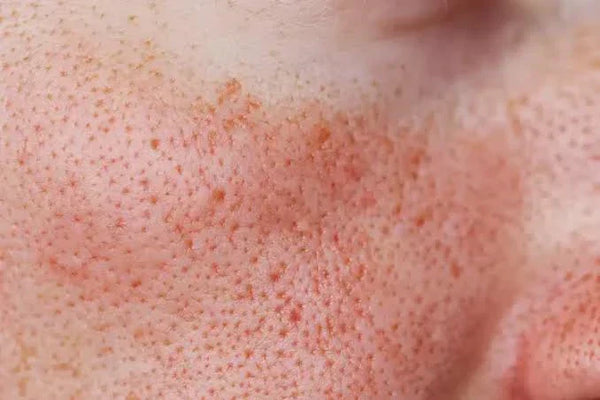
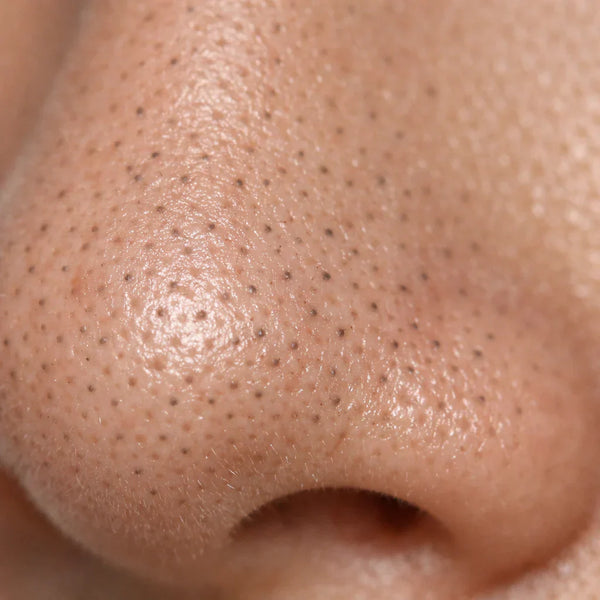
Oily skin is defined by excess sebum production across the whole face. Sebum — the natural oil made by your sebaceous glands — is genuinely useful: together with sweat it forms the skin's protective "hydrolipidic film." But in excess, it leads to an all-over shine, especially on the forehead, nose, and chin, and can contribute to enlarged-looking pores, congestion, and the appearance of blemishes across the face.
It's largely down to genetics and hormones — often driven by androgens (which stimulate oil production) or by sebaceous glands that are especially responsive to them — and can be nudged along by stress, diet, and unsuitable products.
Here's a common surprise: oily skin can also be dehydrated. Oiliness is about oil; dehydration is about water — and that abundant oil film doesn't replace the water your skin's surface needs. So it's entirely possible to be oily and dehydrated, which is why even oily skin benefits from lightweight hydration.
What Defines Combination Skin
Combination skin is the ambivalent one: it combines oilier areas with drier or normal ones. Typically the T-zone (forehead, nose, chin) is shiny, with enlarged-looking pores and the occasional localised blemish — while the cheeks and temples tell a different story, with less oil, finer texture, and sometimes dryness or tightness.
Biologically, this comes down to the uneven distribution of sebaceous glands: they're more numerous and active in the T-zone and less so on the cheeks. That's why combination skin can feel like caring for two skin types at once — and it's often considered the trickiest to look after.
The One-Hour Test
The simplest way to tell your type: cleanse your face, then wait about one hour without applying any products. Then look closely at where shine appears.
Only the T-zone shines? You're likely combination. The whole face develops an even sheen? You're likely oily.
It's low-tech, free, and genuinely reliable — because it lets your skin reveal its natural behaviour without any product masking it. Try it on a normal day, not straight after exercise or in extreme heat, for the truest read.
Side by Side
| Criterion | Oily Skin | Combination Skin |
|---|---|---|
| Oil distribution | Excess across the whole face | Excess limited to the T-zone |
| Appearance | All-over shine | Localised shine in the T-zone |
| Pores | Enlarged-looking across the face | Mainly enlarged-looking in the T-zone |
| Blemishes | Can appear across the face | Mainly localised in the T-zone |
| Cheeks | Also oily | Normal or dry — sometimes tight |
| Routine | Purifying yet gentle, whole face | Zone-by-zone: purify T-zone, nourish dry areas |
Caring for Each
If your skin is oily
Aim for a gentle, balanced routine across the whole face — purifying care that supports the appearance of oil balance without harsh over-stripping (which can disrupt the barrier and, ironically, backfire). Don't skip lightweight hydration, since oily skin can be dehydrated too. And daily SPF, always.
If your skin is combination
Think zone by zone: gentle, purifying care for the oilier T-zone, and lightweight nourishment and hydration for the drier cheeks and temples. The goal is balance — supporting the whole face without over-stripping the oily bits or neglecting the dry ones.
"Whether oily or combination, the winning approach is the same in spirit: gentle and balanced. Harsh stripping is the fast route to unhappy skin."
Boldpurity Science TeamCommon Myths
Oiliness is about oil; hydration is about water — and oily skin can absolutely be dehydrated. Skipping hydration can even prompt skin to feel tighter and less comfortable. Lightweight hydration suits oily skin well.
Fact: Even oily skin benefits from lightweight hydration. Oil ≠ water.
A shiny T-zone alone often points to combination skin, not oily. The distinction is whether the shine is localised (T-zone only) or all over. The one-hour test settles it.
Fact: T-zone-only shine usually means combination. All-over shine means oily.
Harsh, stripping routines can disrupt the skin barrier and sometimes prompt skin to feel worse. Gentle, balanced care that supports the appearance of oil balance is the smarter, more sustainable route for both oily and combination skin.
Fact: Gentle beats harsh. Over-stripping can backfire on oily and combination skin alike.
Frequently Asked Questions
- Youn, S.W. et al. Regional and seasonal variations in facial sebum secretions: a proposal for the definition of combination skin type. Skin Research and Technology (2005).
- Maibach, H.I. et al. Oily skin: an overview. Skin Pharmacology and Physiology (2012).
- Richard, M.A. et al. Skin characteristics from the Objectifs Peau study. Annales de Dermatologie et de Vénéréologie (2017).
© 2026 Boldpurity · For educational purposes only · Not to be reproduced without permission.