

Key Points
- PCOS is a common hormonal/medical condition, not a skin condition — but it often has visible skin effects
- Published research associates PCOS with hormonal acne (often jaw and chin), oiliness, excess facial/body hair, and scalp hair thinning
- Published dermatology literature links PCOS with acanthosis nigricans — dark, velvety skin patches connected to insulin resistance, which should be medically assessed
- Because the drivers are internal (androgens, insulin), published research indicates skincare cannot treat PCOS or its root skin causes
- Published dermatology literature indicates medical management (with a doctor) is the foundation; skincare is supportive comfort only
- Gentle, non-stripping skincare can support the appearance and comfort of PCOS-affected skin alongside medical care
- Published research indicates irritation-driven approaches can worsen marks, especially on deeper Indian skin
- The single most useful step for suspected PCOS is a consultation with a qualified healthcare professional
In This Article
- What PCOS Is (In Brief)
- How PCOS Can Show Up on Skin
- Why the Skin Signs Happen
- Acanthosis Nigricans: Get This Checked
- Why Skincare Alone Isn't the Answer
- Medical Care vs Cosmetic Support
- The Boldpurity See-Support-Not-Substitute Framework
- Gentle, Supportive Skincare Alongside Medical Care
- Common PCOS & Skin Myths
- Frequently Asked Questions
What PCOS Is (In Brief)
Published medical literature describes PCOS as a common hormonal condition affecting people with ovaries, involving some combination of irregular ovulation, higher levels of androgens ("male-type" hormones that everyone has in some amount), and often insulin resistance. It is diagnosed medically, using specific criteria, by a qualified doctor — not from a skincare blog and not from skin signs alone. Its effects reach beyond skin, which is exactly why it needs professional care.
How PCOS Can Show Up on Skin
Published research associates PCOS with several skin and hair signs: persistent hormonal acne (often along the jawline, chin, and lower face, and often resistant to ordinary measures), increased oiliness, excess facial or body hair (hirsutism), scalp hair thinning, and — in some people — acanthosis nigricans (dark, velvety patches). Published dermatology literature stresses these are associations: having one does not mean you have PCOS, and only a doctor can determine that.
Why the Skin Signs Happen
Published research indicates the skin signs of PCOS are largely driven by hormones — particularly higher androgen activity, which can increase oil (sebum) production and influence hair follicles — and, in many cases, by insulin resistance. Published dermatology literature connects raised androgens to the oiliness and jaw-line acne pattern, and insulin resistance to acanthosis nigricans. This is covered more generally in our article on how hormones affect your skin.
Why This Points to Medical Care
Published dermatology literature indicates that because these signs are downstream of internal hormonal and metabolic factors, addressing them meaningfully usually involves managing those internal factors — which is medical territory. Published research indicates topical skincare works on the skin surface and cannot change the underlying hormones or insulin dynamics driving the signs. That's the core reason skincare is supportive, not curative, here.
Acanthosis Nigricans: Get This Checked
Published dermatology literature describes acanthosis nigricans as darkened, thickened, velvety patches of skin — often in body folds such as the neck, underarms, or groin. It is important because it is frequently a visible sign of insulin resistance, which is medically significant well beyond appearance. Published research indicates it should prompt a medical assessment, not a search for a cream to lighten it.
Why Skincare Alone Isn't the Answer
Published dermatology literature is clear that skincare cannot treat PCOS or reverse its hormonal drivers. What good skincare can do is support the comfort and appearance of the skin — for example, gentle care for oily or blemish-prone skin, and supporting the appearance of post-inflammatory marks left by acne — always as a companion to medical management, never a replacement. See why skincare is not medicine.
Medical Care vs Cosmetic Support
It helps to be clear about what each is actually for:
| Medical care (with a doctor) | Cosmetic skincare (supportive) | |
|---|---|---|
| Addresses | The underlying condition, hormones, insulin | Skin surface appearance & comfort only |
| Can treat PCOS? | Manages it medically | No — cannot treat or cure PCOS |
| Hormonal acne | May be treated medically | Gentle support for skin comfort/appearance |
| Acanthosis nigricans | Assessed & addressed medically | Not a skincare issue — see a doctor |
| Role | The foundation | A companion, never a substitute |
The Boldpurity See-Support-Not-Substitute Framework
For skin affected by PCOS, we summarise the sensible approach as a simple named framework.
The See–Support–Not-Substitute Framework
- See a professional first — get PCOS assessed and managed medically; this is the foundation.
- Support gently — use kind, non-stripping skincare for comfort and the appearance of skin, alongside that care.
- Never substitute — don't let skincare (or diet fads or supplements) replace medical management of a medical condition.
This is an educational framework, not medical advice or a treatment plan. Decisions about PCOS belong with your healthcare professional.
Gentle, Supportive Skincare Alongside Medical Care
If a professional is managing your PCOS, published dermatology literature commonly discusses the following gentle, supportive skincare habits. See also combination or oily skin and when to see a dermatologist for acne.
Commonly discussed supportive habits (alongside medical care)
- Cleanse gently, twice daily — support oily/blemish-prone skin without harsh stripping.
- Keep the barrier healthy — hydration matters even for oily skin; over-drying can backfire.
- Be gentle with blemishes — avoid picking; irritation can leave marks, especially on deeper skin.
- Wear daily sun protection — helps limit the darkening of post-acne marks.
- Don't chase harsh "fixes" — aggressive actives can irritate hormonally-active skin.
- Keep your medical team informed — let your doctor guide treatment; skincare is the supporting act.
General educational information, not a treatment plan; individual needs vary and should be guided by a professional.
The Boldpurity Science Team's view
PCOS is close to many of our customers' lives, and we think the kindest thing a skincare brand can do here is stay in its lane honestly. In our view, the wellness internet does people with PCOS a real disservice — selling "PCOS skin" routines, teas, and miracle products as if the right serum could fix a hormonal condition. It can't, and implying otherwise can delay the medical care that actually helps. Our take: see a doctor for the PCOS, and let gentle skincare do the modest, genuine thing it's good at — keeping skin comfortable and supporting its appearance while the real work happens with your medical team. Support, never substitute.
— An editorial opinion from the Boldpurity Science Team, offered for discussion. Not medical advice.
Common PCOS & Skin Myths
Published dermatology literature indicates PCOS acne is driven by internal hormonal factors that topical skincare cannot change. Published research indicates skincare can support skin comfort and appearance, but PCOS-related acne is best addressed with medical care.
Published dermatology literature indicates skin signs like jaw-line acne or oiliness have many causes and are only associations. Published medical literature indicates PCOS is diagnosed by a doctor using specific criteria, not from skin alone.
Published dermatology literature indicates acanthosis nigricans can signal insulin resistance and is medically significant. Published research indicates it warrants a doctor's assessment, not a cosmetic lightening approach.
Published dermatology literature indicates over-stripping and aggressive actives can irritate skin and worsen marks, especially on deeper Indian skin. Published research indicates gentle, consistent care is more supportive.
Published dermatology literature indicates PCOS skin signs persist because their cause is internal — so escalating products misses the point. Published research indicates the productive next step is medical assessment, not a stronger cream.
Published medical literature indicates PCOS is a whole-body condition with health implications beyond skin. Published research indicates skin signs can be an important prompt to seek care for the broader condition.
Frequently Asked Questions
Explore Boldpurity
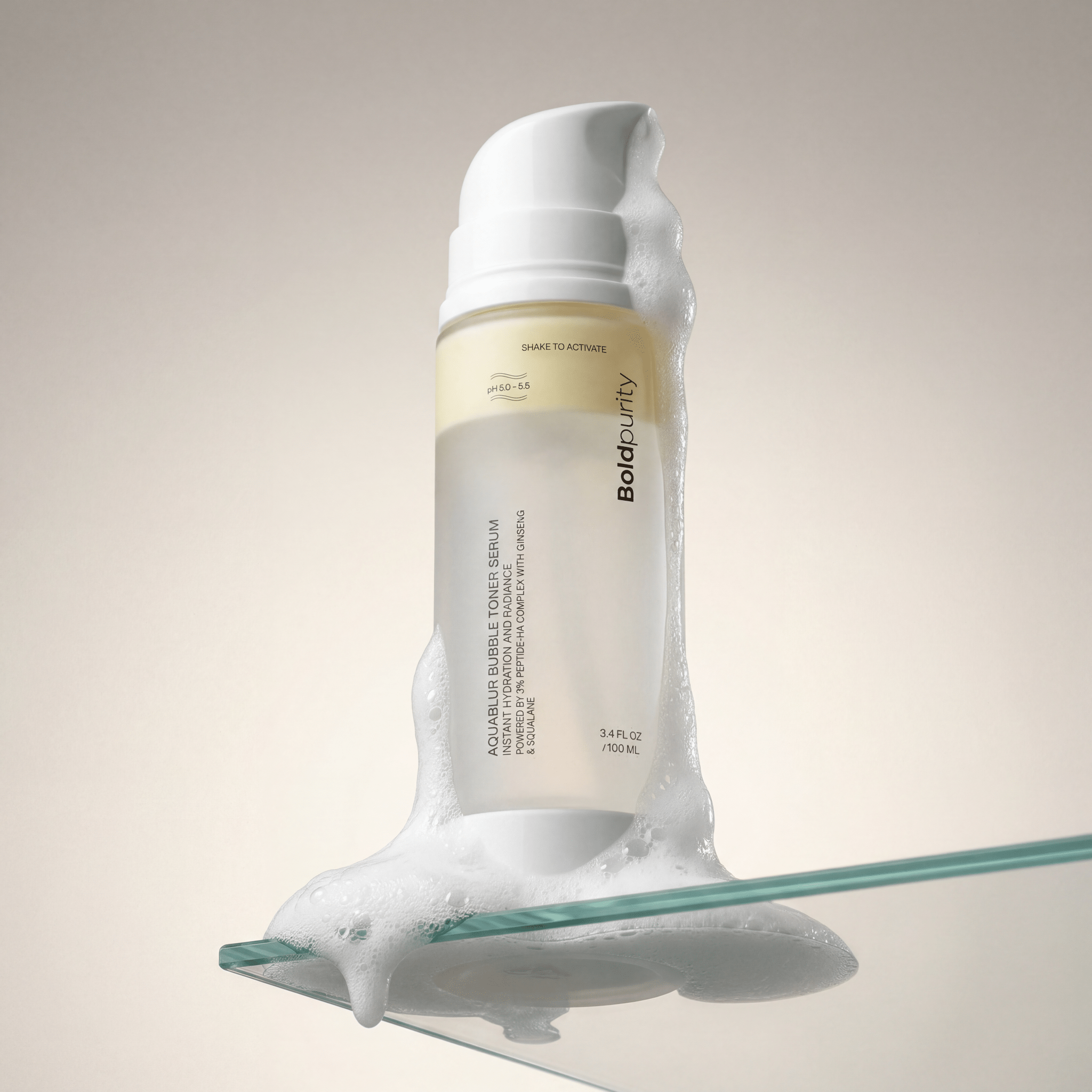
If a professional is managing your PCOS, gentle, non-stripping hydration can keep skin comfortable alongside that care. AquaBlur™ is a lightweight toner-serum (hyaluronic acid, peptides, squalane) that supports the appearance of hydrated, comfortable skin. It is a cosmetic product only — not a treatment for PCOS, acne, or any medical condition. Please see a doctor for PCOS. Supports appearance only; no therapeutic claims.
Discover AquaBlur™References
- Azziz, R., Carmina, E., Chen, Z., et al. (2016). Polycystic ovary syndrome. Nature Reviews Disease Primers, 2, 16057.
- Teede, H. J., Misso, M. L., Costello, M. F., et al. (2018). Recommendations from the international evidence-based guideline for the assessment and management of PCOS. Human Reproduction, 33(9), 1602–1618.
- Housman, E., & Reynolds, R. V. (2014). Polycystic ovary syndrome: A review for dermatologists. Journal of the American Academy of Dermatology, 71(5), 847.e1–847.e10.
- Schmidt, T. H., & Shinkai, K. (2015). Evidence-based approach to cutaneous hyperandrogenism in women. Journal of the American Academy of Dermatology, 73(4), 672–690.
- Lause, M., Kamboj, A., & Fernandez Faith, E. (2017). Dermatologic manifestations of endocrine disorders. Translational Pediatrics, 6(4), 300–312.
- Zaenglein, A. L., Pathy, A. L., Schlosser, B. J., et al. (2016). Guidelines of care for the management of acne vulgaris. Journal of the American Academy of Dermatology, 74(5), 945–973.
- Karrer-Voegeli, S., et al. (2009). Androgen dependence of hirsutism, acne, and alopecia in women. Medicine, 88(1), 32–45.
- Phiske, M. M. (2014). An approach to acanthosis nigricans. Indian Dermatology Online Journal, 5(3), 239–249.
- Sinha, S., & Schwartz, R. A. (2007). Juvenile acanthosis nigricans. Journal of the American Academy of Dermatology, 57(3), 502–508.
- Bansal, P., et al. (2019). Cutaneous manifestations of PCOS in Indian women. Indian Journal of Dermatology, 64(6), 475–480.
- Davis, E. C., & Callender, V. D. (2010). Postinflammatory hyperpigmentation in skin of color. Journal of Clinical and Aesthetic Dermatology, 3(7), 20–31.
- Ananthapadmanabhan, K. P., et al. (2004). Cleansing without compromising the skin barrier. Dermatologic Therapy, 17(S1), 16–25.
- Del Rosso, J. Q., & Levin, J. (2011). The clinical relevance of maintaining the functional integrity of the stratum corneum. Journal of Clinical and Aesthetic Dermatology, 4(9), 22–42.
- Rawlings, A. V., & Harding, C. R. (2004). Moisturization and skin barrier function. Dermatologic Therapy, 17(S1), 43–48.
- Lim, S. S., Hutchison, S. K., Van Ryswyk, E., et al. (2019). Lifestyle changes in women with polycystic ovary syndrome. Cochrane Database of Systematic Reviews, 3, CD007506.
- Barrea, L., et al. (2019). Nutrition and PCOS: A review. Critical Reviews in Food Science and Nutrition, 59(19), 3050–3061.
