

Key Research Findings
- Published research indicates cold causes blood vessels to constrict (vasoconstriction), producing temporary de-puffing and a tightened, refreshed look
- Published dermatology literature indicates icing can briefly reduce the appearance of redness and soothe a warm, irritated feeling
- Published research indicates these effects are short-lived and reverse as the skin rewarms
- Published dermatology literature indicates icing does not permanently shrink pores, which are largely genetic and oil-related
- Published research indicates icing is not an acne treatment and does not address the causes of breakouts
- Published dermatology literature warns that ice applied directly or for too long can cause an ice burn (cold injury)
- Published research indicates redness-prone and sensitive skin (e.g. rosacea) may react poorly to extreme cold
- Published literature indicates icing is a pleasant temporary ritual, not a replacement for evidence-based skincare; individual response varies
In This Article
- What Skin Icing Actually Is
- The Real Science: Cold & Blood Vessels
- What Icing Genuinely Does (Temporarily)
- What Icing Doesn't Do
- The Safety Bit: Ice Burn & Sensitive Skin
- Temporary Effects vs Permanent Claims
- The Boldpurity Enjoy-the-Refresh Framework
- How to Ice Your Skin Safely
- Common Skin-Icing Myths
- Frequently Asked Questions
What Skin Icing Actually Is
Published commentary describes skin icing (or an "ice facial") as gently applying cold — an ice cube wrapped in cloth, a chilled roller, or cold water — to the face for a short time. Published dermatology literature notes the practice is old (cold has long been used to reduce swelling) and has resurfaced as a viral trend promising everything from "shrunk pores" to "glass skin." As with most trends, some of that is real and some is hype.
The Real Science: Cold & Blood Vessels
Published research indicates the main mechanism is vasoconstriction: cold makes the small blood vessels near the skin surface narrow. This temporarily reduces blood flow and fluid in the area, which is why iced skin can look less puffy, less red, and feel tighter and refreshed. Published dermatology literature indicates the same principle is why a cold compress helps a swollen area — it's real physiology, just temporary.
Published Research on the Cold Response
Published dermatology literature indicates that once you stop icing and the skin rewarms, the vessels dilate again and blood flow returns — often with a rebound flush. Published research indicates this is why icing's benefits are measured in minutes, not lasting change: it's a temporary shift in blood flow and fluid, not a structural change to the skin. See our guide on under-eye puffiness and drainage.
What Icing Genuinely Does (Temporarily)
Published research supports a few real, short-lived benefits: temporary de-puffing (helpful for morning puffiness or tired eyes), a brief reduction in the look of redness, a tightened, refreshed sensation, and a pleasant, calming ritual that many find soothing. Published dermatology literature indicates these are genuine — just understand they last minutes to maybe an hour, not days.
What Icing Doesn't Do
Published dermatology literature is clear on the limits. Icing does not permanently shrink or close pores (they may look smaller briefly as skin tightens, then return); it is not an acne treatment and doesn't address what causes breakouts; it doesn't "boost circulation" for lasting glow (the rewarming flush is temporary); and it can't replace hydration, sun protection, or actives. Published research indicates lasting skin-quality change comes from consistent skincare, not cold.
The Safety Bit: Ice Burn & Sensitive Skin
Published dermatology literature flags a genuine risk: ice applied directly to skin, or left on too long, can cause an ice burn (cold injury) — damaging the skin much like a heat burn. Published research indicates this is avoidable with a barrier (a cloth) and short contact times. It also notes that people with redness-prone or sensitive skin, or conditions like rosacea, may react poorly to extreme temperature swings.
Temporary Effects vs Permanent Claims
| Claim | Reality (published research) |
|---|---|
| De-puffing / less morning puffiness | Real, but temporary (vasoconstriction) |
| Calms the look of redness briefly | Real, but temporary |
| Refreshed, tightened feel | Real, but temporary |
| "Permanently shrinks pores" | No — pores return as skin rewarms |
| "Cures acne" | No — not an acne treatment |
| "Replaces your skincare" | No — it's an add-on, not a routine |
The Boldpurity Enjoy-the-Refresh Framework
Published dermatology literature suggests a simple way to keep icing useful and safe. We summarise it as a named framework.
The Enjoy-the-Refresh Framework
- Enjoy the temporary — use icing for a quick de-puff, calm, or refresh, and value it as exactly that.
- Skip the permanent claims — don't expect it to shrink pores, cure acne, or replace skincare.
- Ice safely — always use a barrier, keep it brief and moving, and be cautious with sensitive or redness-prone skin.
This is an educational framework, not a prescriptive regimen or a medical claim. Individual response varies.
How to Ice Your Skin Safely
If you enjoy icing, published dermatology literature commonly discusses the following.
Commonly discussed steps
- Never use bare ice on skin — wrap the cube in a clean, soft cloth, or use a chilled (not frozen-solid) tool.
- Keep it brief — a short time, gliding gently, not held on one spot.
- Cleanse first — ice clean skin; keep tools and cloths clean to avoid transferring bacteria.
- Follow with hydration — apply your usual hydration and moisturiser after, since ice doesn't hydrate.
- Be cautious if sensitive — rosacea, reactive skin, or broken capillaries: go gentle or skip; check with a professional.
- Keep expectations realistic — a refresh and de-puff, not a permanent transformation.
A commonly discussed approach; individual response varies.
The Boldpurity Science Team's view
Skin icing is one of those trends we're happy to let people enjoy — it's cheap, it feels lovely on a hot Indian morning, and the quick de-puff before a video call is real. Where we roll our eyes is the "ice shrinks your pores forever" and "ice cures acne" content, which takes a pleasant minutes-long effect and dresses it up as a treatment. Our honest take: ice your face if you like how it feels, do it safely with a cloth, and then do your actual skincare — because the ice cube isn't going to hydrate, protect, or treat anything once your skin warms back up. A nice ritual, not a routine.
— An editorial opinion from the Boldpurity Science Team, offered for discussion. Individual response varies.
Common Skin-Icing Myths
Published dermatology literature indicates cold can make pores look smaller briefly as skin tightens, but they return as skin rewarms; pore size is largely genetic and oil-related. Published research indicates no permanent shrinking from ice.
Published dermatology literature indicates icing is not an acne treatment and doesn't address the causes of breakouts. Published research indicates it may briefly calm the look of an inflamed spot, but it doesn't treat acne.
Published research indicates the post-ice rewarming flush is temporary, not a lasting circulation "boost." Published dermatology literature indicates any glow fades quickly as normal blood flow resumes.
Published dermatology literature warns that direct or prolonged ice contact can cause an ice burn (cold injury). Published research indicates a cloth barrier and short contact are essential; colder and longer is not better.
Published dermatology literature indicates icing doesn't hydrate, protect, or treat — it's a temporary appearance tool. Published research indicates it's an add-on, not a substitute for cleansing, hydration, sun protection, or actives.
Published dermatology literature indicates redness-prone, sensitive, or rosacea-affected skin may react poorly to extreme cold and temperature swings. Published research indicates caution — or skipping it — is wise for these skin types.
Frequently Asked Questions
Explore Boldpurity
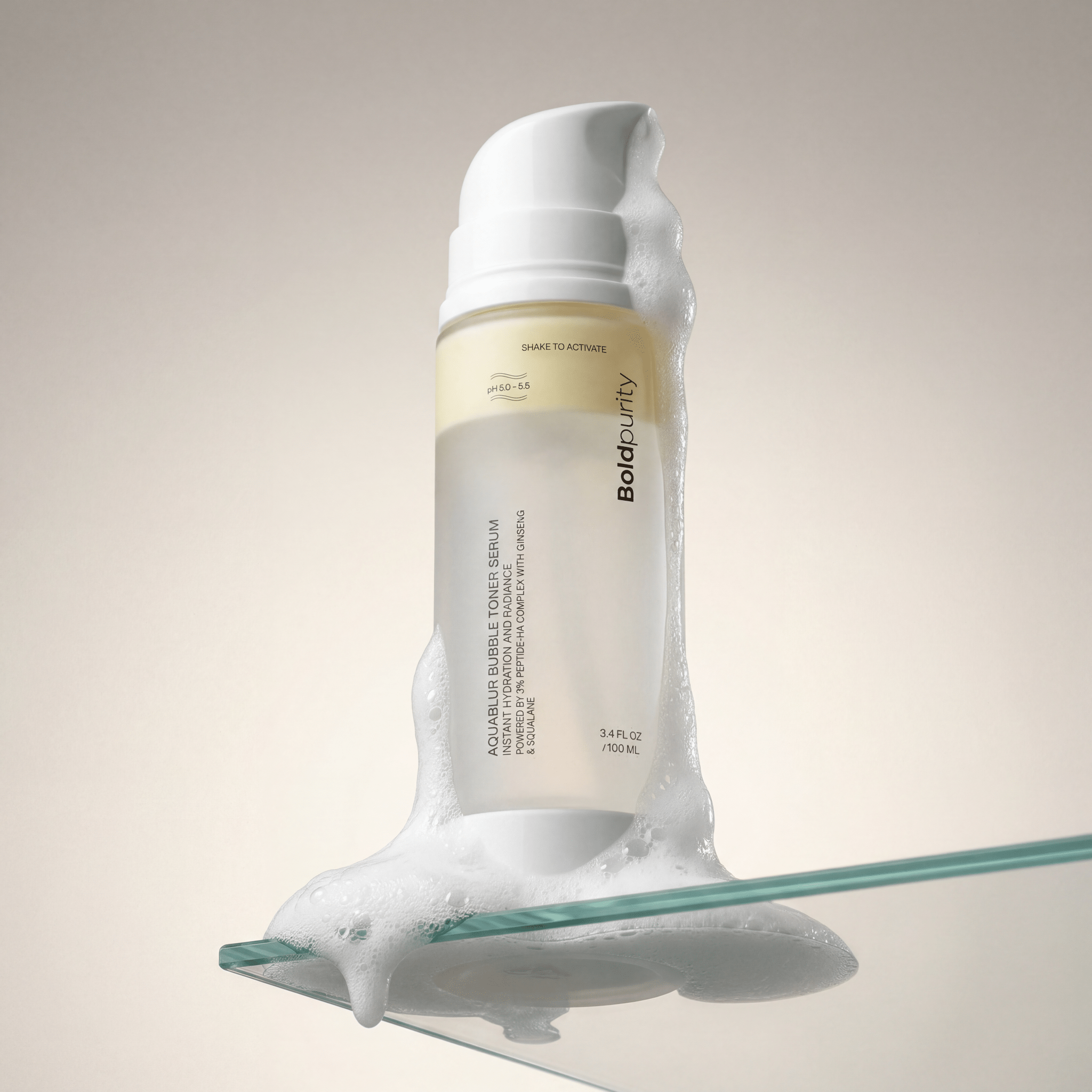
Ice gives a quick refresh; hydration gives lasting comfort. Since icing doesn't moisturise, follow it with AquaBlur™ — multi-molecular hyaluronic acid, peptides, and squalane to support the appearance of hydrated, calm-looking skin. The routine that keeps working after the cold wears off. Supports appearance only; no therapeutic claims.
Discover AquaBlur™References
- Daanen, H. A. M., & Van Marken Lichtenbelt, W. D. (2016). Human whole body cold adaptation. Temperature, 3(1), 104–118.
- Charkoudian, N. (2003). Skin blood flow in adult human thermoregulation. Mayo Clinic Proceedings, 78(5), 603–612.
- Lee, C. M., & Jeong, H. J. (2018). Cryotherapy in dermatology: A review. Journal of Dermatological Treatment, 29(4), 424–432.
- Nagai, N., et al. (2017). Effects of facial cooling and massage on skin blood flow. Skin Research and Technology, 23(4), 553–559.
- Petrofsky, J. S., et al. (2013). The effect of local cooling on skin blood flow and skin temperature. Physiology & Behavior, 118, 44–50.
- Bleakley, C. M., & Hopkins, J. T. (2010). Is it possible to achieve optimal levels of tissue cooling in cryotherapy? Physical Therapy Reviews, 15(4), 344–350.
- Roh, M., Han, M., Kim, D., & Chung, K. (2006). Sebum output as a factor influencing pore appearance. British Journal of Dermatology, 155(5), 890–894.
- Flament, F., et al. (2015). Facial skin pores: A multiethnic study. Clinical, Cosmetic and Investigational Dermatology, 8, 85–93.
- Two, A. M., et al. (2015). Rosacea: Part I. Introduction, categorization, and pathophysiology. Journal of the American Academy of Dermatology, 72(5), 749–758.
- O'Toole, E. A., et al. (2000). Cold injury of the skin: Mechanisms and management. Clinics in Dermatology, 18(1), 79–85.
- Sundelin, T., Lekander, M., Kecklund, G., et al. (2013). Cues of fatigue: Effects of sleep deprivation on facial appearance. Sleep, 36(9), 1355–1360.
- Rawlings, A. V., & Harding, C. R. (2004). Moisturization and skin barrier function. Dermatologic Therapy, 17(S1), 43–48.
- Draelos, Z. D. (2018). The science behind skin care: Moisturizers. Journal of Cosmetic Dermatology, 17(2), 138–144.
- Hussein, R. S., et al. (2020). Lymphatic drainage and facial puffiness. Journal of Cosmetic Dermatology, 19(5), 1043–1049.
- Del Rosso, J. Q., & Levin, J. (2011). The clinical relevance of maintaining the functional integrity of the stratum corneum. Journal of Clinical and Aesthetic Dermatology, 4(9), 22–42.
- Draelos, Z. D. (2015). Cosmeceuticals: What's real, what's not. Dermatologic Clinics, 33(4), 715–724.
