

Key Research Findings
- Published research defines hard water as water high in dissolved minerals, mainly calcium and magnesium — widespread across many Indian regions
- Published dermatology literature indicates hard water can leave mineral residue and interact with soaps/cleansers to form deposits that may irritate skin
- Published research associates hard water with increased skin dryness and, in some studies, higher reactivity and disruption of the skin barrier
- Published research has investigated an association between hard water exposure and eczema (atopic dermatitis), particularly in early childhood — evidence is associative, not proof of cause
- Published dermatology literature indicates the practical issue is often the cleanser–water interaction, not the water alone
- Published research indicates barrier support and gentle cleansing help more reliably than assuming a water softener is essential
- Published literature indicates evidence on the skin benefit of home water softeners is mixed and not conclusive
- Published research emphasises individual response varies; those with sensitive or eczema-prone skin may notice hard water more
In This Article
- What Hard Water Actually Is
- What Hard Water Does to Skin
- The Cleanser Interaction (the Real Culprit)
- Hard Water, Sensitive Skin & Eczema
- Do Water Softeners Actually Help Skin?
- Hard Water Myths vs Facts
- The Boldpurity Cleanse-Rinse-Rebuild Framework
- How to Protect Skin in Hard-Water Areas
- Common Hard-Water Myths
- Frequently Asked Questions
What Hard Water Actually Is
Published research defines hard water as water with a high concentration of dissolved minerals — primarily calcium and magnesium — picked up as groundwater moves through rock and soil. Published commentary indicates large parts of India have moderately to very hard water, so for many readers this is a daily reality rather than an abstract issue. Hardness is a normal property of water, not a contaminant.
What Hard Water Does to Skin
Published research indicates hard water can affect skin in a few ways: mineral residue left on the surface after washing, interference with how well cleansers rinse off, and — in some studies — measurable effects on the skin barrier and higher transepidermal water loss. Published dermatology literature associates these with the tight, dry, sometimes itchy feeling many people report in hard-water areas.
Published Research on Residue and Dryness
Published dermatology literature indicates calcium and magnesium can deposit on skin and hair, contributing to a filmy or rough feel and, for some, dryness. Published research indicates this is usually a matter of comfort and appearance rather than harm — but for reactive skin it can be enough to tip the barrier into discomfort. Learn the warning signs in our article on the signs of a damaged skin barrier.
The Cleanser Interaction (the Real Culprit)
Published research indicates a key mechanism is not the water alone but how it interacts with cleansers. Hard-water minerals react with many soaps to form an insoluble "soap scum" that can cling to skin, and hard water can also drive people to use more product and scrub harder — both of which stress the barrier. Published dermatology literature indicates switching to a gentler, low-residue cleanser often helps more than treating the water itself. See our guide on choosing a cleanser.
Hard Water, Sensitive Skin & Eczema
Published research has investigated an association between hard water exposure and eczema (atopic dermatitis), with several studies — particularly in infants and children — reporting a link between harder water and higher eczema risk or flares. Published dermatology literature is careful to note this is an association, not established proof that hard water causes eczema, and that findings are still being studied.
For general reactive-skin comfort, see our dry, sensitive skin guide.
05 —Do Water Softeners Actually Help Skin?
Published research on whether home water softeners meaningfully improve skin is mixed and not conclusive. Some studies and user reports describe softer-feeling skin and easier rinsing; other controlled research has not found a clear skin benefit — for example, trials in children with eczema have shown limited or no significant improvement from softeners alone. Published dermatology literature therefore frames softeners as a possible comfort aid, not a guaranteed skin fix.
Hard Water Myths vs Facts
A quick reality-check on the most common beliefs:
| Common belief | What published research indicates |
|---|---|
| "Hard water is harmful/toxic to skin" | No — it's safe; the issue is comfort, residue, and barrier stress |
| "Hard water alone dries skin" | Partly — the cleanser interaction and over-washing often matter more |
| "A softener will fix my skin" | Mixed evidence; possible comfort aid, not a guaranteed fix |
| "Hard water causes eczema" | Associated in studies, not proven to cause it; eczema is medical |
| "Nothing can be done without changing the water" | Gentle cleansing + barrier support help regardless of water |
The Boldpurity Cleanse-Rinse-Rebuild Framework
Published dermatology literature points to three practical levers for hard-water skin — most of which don't require changing your water at all. We summarise them as a simple named framework.
The Cleanse–Rinse–Rebuild Framework
- Cleanse gently — use a mild, low-residue cleanser that reacts less with hard-water minerals than traditional soap.
- Rinse and finish smart — rinse thoroughly, avoid very hot water, and consider a final splash of softer (e.g. filtered) water on the face where practical.
- Rebuild the barrier — follow with humectant hydration and a moisturiser to counter residue-related dryness.
This is an educational framework reflecting commonly discussed practice, not a prescriptive regimen or a medical treatment. Individual response varies.
How to Protect Skin in Hard-Water Areas
Consistent with the framework, published dermatology literature commonly discusses the following for hard-water regions. See also skin hydration explained.
Commonly discussed steps
- Switch to a gentle, low-residue cleanser — often the single most effective change.
- Don't over-wash or over-scrub — hard water tempts people to scrub harder; resist it.
- Use lukewarm, not hot, water — heat compounds dryness.
- Hydrate and seal after washing — apply humectant hydration to damp skin, then moisturiser.
- Consider a shower filter if you're keen — a lower-cost option than a whole-home softener, though skin evidence is limited.
- Get medical care for eczema — treat hard-water steps as comfort support, not a substitute for treatment.
A commonly discussed approach; individual response varies, and diagnosed conditions need professional care.
The Boldpurity Science Team's view
As a brand formulating for Indian homes, hard water is something we take seriously — it's a genuine, everyday factor across much of the country. But in our view, the conversation often jumps straight to expensive water softeners when the cheaper, better-evidenced fixes are sitting in the bathroom cabinet: a gentler cleanser, less scrubbing, lukewarm water, and proper barrier support afterward. Hard water is real, but it's rarely the whole story — the harsh soap and the vigorous face-scrubbing it encourages usually do more damage than the minerals themselves. Fix the routine first; consider the plumbing second.
— An editorial opinion from the Boldpurity Science Team, offered for discussion. Individual response varies.
Common Hard-Water Myths
Published research indicates hard water is safe to use; the issue is cosmetic — residue, comfort, and barrier stress — not harm. Published dermatology literature frames it as a stressor for reactive skin, not a poison.
Published research indicates the cleanser–water interaction and over-washing often matter more than the water alone. Published dermatology literature indicates a gentler cleanser frequently helps more than blaming the water.
Published research on softeners and skin is mixed and not conclusive; some eczema trials found limited or no benefit from softeners alone. Published dermatology literature frames them as a possible comfort aid, not a guaranteed fix.
Published research reports an association between hard water and eczema in some studies, but published dermatology literature is clear this is not established causation. Eczema is a medical condition needing professional care.
Published dermatology literature indicates gentle cleansing, lukewarm water, and barrier support improve hard-water skin comfort regardless of the water supply. Published research indicates routine changes are the first, most accessible lever.
Published dermatology literature indicates aggressive scrubbing disrupts the barrier and worsens dryness and reactivity. Published research indicates gentle cleansing plus thorough rinsing is more effective and less damaging.
Frequently Asked Questions
Explore Boldpurity
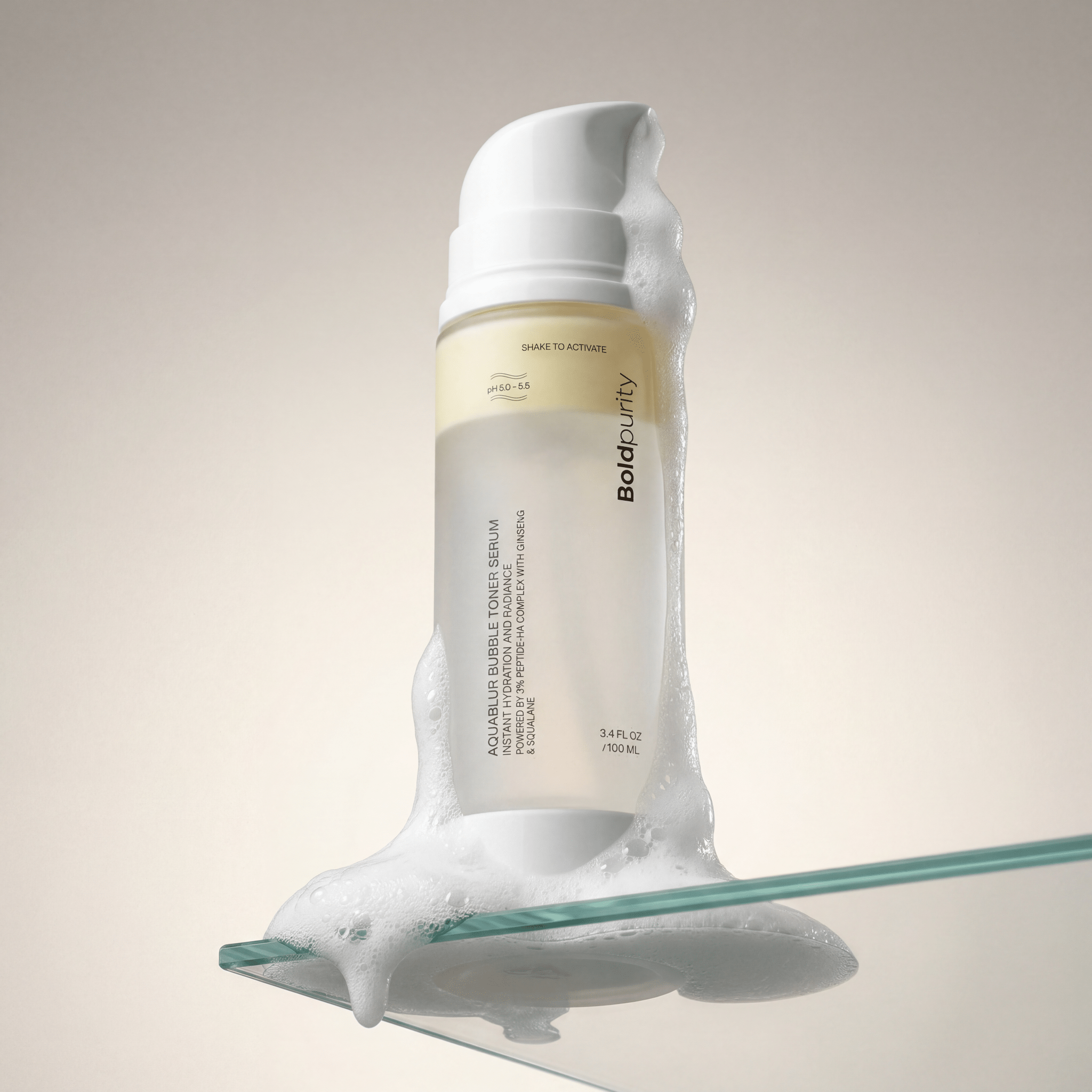
Engineered in-house for Indian conditions — including hard water — AquaBlur™ pairs multi-molecular hyaluronic acid, peptides, and squalane to support the barrier and rehydrate after cleansing. A practical post-wash step for hard-water areas. Supports the appearance of hydrated, comfortable skin; no therapeutic claims.
Discover AquaBlur™References
- Perkin, M. R., Craven, J., Logan, K., et al. (2016). Association between domestic water hardness, chlorine, and atopic dermatitis in infants. Journal of Allergy and Clinical Immunology, 138(2), 509–516.
- Jabbar-Lopez, Z. K., Craven, J., Logan, K., et al. (2020). Longitudinal analysis of domestic water hardness and skin barrier function in infancy. Journal of Allergy and Clinical Immunology, 145(3), 1049–1051.
- Danby, S. G., Brown, K., Wigley, A. M., et al. (2018). The effect of water hardness on surfactant deposition and skin barrier function. Journal of Investigative Dermatology, 138(1), 68–77.
- Togawa, Y., et al. (2019). Water hardness and skin: A review. Journal of Cosmetic Dermatology, 18(1), 26–31.
- Thomas, K. S., Dean, T., O'Leary, C., et al. (2011). A randomised controlled trial of ion-exchange water softeners for children with eczema (SWET). PLoS Medicine, 8(2), e1000395.
- Warren, R., Ertel, K. D., Bartolo, R. G., et al. (1996). The influence of hard water on skin. Journal of the American Academy of Dermatology, 35(3), 337–343.
- Rawlings, A. V., & Harding, C. R. (2004). Moisturization and skin barrier function. Dermatologic Therapy, 17(S1), 43–48.
- Ananthapadmanabhan, K. P., Moore, D. J., Subramanyan, K., et al. (2004). Cleansing without compromising the skin barrier. Dermatologic Therapy, 17(S1), 16–25.
- Del Rosso, J. Q., & Levin, J. (2011). The clinical relevance of maintaining the functional integrity of the stratum corneum. Journal of Clinical and Aesthetic Dermatology, 4(9), 22–42.
- Mukhopadhyay, P. (2011). Cleansers and their role in various dermatological disorders. Indian Journal of Dermatology, 56(1), 2–6.
- Draelos, Z. D. (2018). The science behind skin care: Cleansers. Journal of Cosmetic Dermatology, 17(1), 8–14.
- WHO. (2011). Hardness in drinking-water. Background document for development of WHO Guidelines for Drinking-water Quality.
- Sarkar, R., et al. (2019). Environmental factors and Indian skin. Indian Dermatology Online Journal, 10(5), 499–506.
- Fluhr, J. W., Darlenski, R., & Surber, C. (2008). Glycerol and the skin. British Journal of Dermatology, 159(1), 23–34.
- Purnamawati, S., Indrastuti, N., Danarti, R., & Saefudin, T. (2017). The role of moisturizers in addressing various kinds of dermatitis. Clinical Medicine & Research, 15(3–4), 75–87.
- Chandar, P., et al. (2018). Surfactant–skin interactions and mildness. International Journal of Cosmetic Science, 40(1), 1–11.
