

Key Research Findings
- Published research indicates the "glass skin" look is driven by hydration, an intact barrier, smooth surface texture, and how skin reflects light
- Published dermatology literature indicates well-hydrated, smooth skin reflects light more evenly, which reads as luminous or "glassy"
- Published research indicates pores cannot be permanently closed or erased; their appearance can be softened, not eliminated
- Published dermatology literature indicates a large part of the "flawless" glass-skin images online is lighting, makeup, camera, and digital filters
- Published research indicates genetics strongly influence baseline pore size, skin texture, and natural luminosity
- Published literature indicates gentle, consistent care supports the look better than aggressive routines, which can damage the barrier and backfire
- Published dermatology literature indicates over-exfoliating in pursuit of "glass skin" can cause the opposite — dullness and reactivity
- Published research emphasises individual results vary; the achievable goal is healthy, radiant-looking skin, not a filtered ideal
In This Article
- What "Glass Skin" Actually Is
- The Science of a "Glassy" Look
- What's Achievable vs What's Filtered
- The Poreless Myth
- Why Aggressive Routines Backfire
- Skincare Levers vs Illusion Factors
- The Boldpurity Hydrate-Smooth-Reflect Framework
- How to Support a Glass-Skin Look
- Common Glass-Skin Myths
- Frequently Asked Questions
What "Glass Skin" Actually Is
Published commentary describes "glass skin" as a K-beauty aesthetic ideal: skin that looks poreless, smooth, translucent, and luminous — like a clear pane of glass. Published dermatology literature frames it as a description of an appearance, not a skin type or a medical state. That distinction matters, because it means the goal is about how skin looks and reflects light, and only some of that is within skincare's reach.
The Science of a "Glassy" Look
Published research indicates the "glassy" appearance comes down to how light interacts with the skin surface. Well-hydrated, smooth skin reflects light more evenly and looks luminous; rough, dry, or flaky skin scatters light and looks dull. Published dermatology literature links this to hydration and a healthy skin barrier.
Published Research on Light and Skin Surface
Published dermatology literature indicates that a smooth, hydrated surface produces more uniform light reflection, which the eye reads as radiance or "glow". Published research indicates this is why hydration and gentle smoothing — not harsh stripping — are the genuine skincare levers behind a glassy look. The glow is real optics, achievable through skin health.
What's Achievable vs What's Filtered
Published research and media commentary indicate that much of the "perfect" glass skin seen on social platforms is produced by factors that have nothing to do with skincare: soft or ring lighting, camera smoothing, makeup ("glass skin" makeup techniques exist), and digital filters that erase pores and texture entirely. Published dermatology literature indicates real skin, even very healthy skin, has visible pores and texture up close.
The Poreless Myth
Published dermatology literature is clear: pores are functional openings for oil and are a normal, permanent feature of skin. Published research indicates you cannot close, shrink permanently, or erase pores — you can only soften their appearance temporarily (through hydration, smoothing, and sometimes makeup). Baseline pore size is strongly influenced by genetics and oil production. See our guide on enlarged pores.
Why Aggressive Routines Backfire
Published research indicates one of the most common glass-skin mistakes is over-doing it — layering many actives, over-exfoliating, or chasing the look with harsh products. Published dermatology literature indicates this can disrupt the barrier and produce the opposite of glass skin: dullness, flaking, redness, and reactivity. Our article on exfoliation damage covers this failure mode in detail.
Skincare Levers vs Illusion Factors
It helps to separate what skincare controls from what it doesn't:
| Factor | Category | Can skincare change it? |
|---|---|---|
| Hydration & smoothness | Skincare lever | Yes — genuinely supports the look |
| Barrier health | Skincare lever | Yes — supports even light reflection |
| Surface texture | Skincare lever | Partly — gentle smoothing over time |
| Pore size / erasure | Mostly genetics | Appearance only, temporary |
| Lighting & camera | Illusion factor | No — not skincare |
| Makeup & filters | Illusion factor | No — not skincare |
The Boldpurity Hydrate-Smooth-Reflect Framework
Published dermatology literature points to three skin-health levers that produce a genuine glassy look. We summarise them as a simple named framework.
The Hydrate–Smooth–Reflect Framework
- Hydrate — well-hydrated skin plumps slightly and reflects light more evenly (humectants + sealing).
- Smooth — gentle, non-aggressive care supports smoother surface texture over time.
- Reflect — a healthy barrier and daily sun protection keep skin even-toned and luminous, so light reflects cleanly.
This is an educational framework for the appearance of skin, not a promise of a filtered ideal. Individual response varies.
How to Support a Glass-Skin Look
Consistent with the framework, published dermatology literature commonly discusses the following for supporting radiant, hydrated-looking skin.
Commonly discussed steps
- Prioritise hydration — humectants applied to damp skin, then sealed, for a plumped, even surface.
- Be gentle — cleanse mildly; avoid over-exfoliation, which dulls and inflames.
- Support the barrier — a strong barrier reflects light evenly and looks healthiest.
- Exfoliate sparingly — if at all, gently and infrequently, to smooth texture without damage.
- Wear daily sun protection — protects tone and clarity, which underpin luminosity.
- Set realistic expectations — aim for your healthiest, dewiest skin, not a filtered image.
A commonly discussed approach; individual response varies.
The Boldpurity Science Team's view
In our view, "glass skin" is a beautiful goal and a slightly cruel one — because the versions people screenshot as inspiration are often 30% skincare and 70% lighting, makeup, and filters. We think the honest reframe is liberating: you can absolutely achieve hydrated, smooth, radiant skin that catches light beautifully, and that's a genuinely worthwhile goal. What you can't do is out-skincare a ring light and a filter, and chasing that usually means over-exfoliating your way to duller skin. Aim for healthy and dewy, not flawless and filtered — your real skin, at its best, is the actual glow-up.
— An editorial opinion from the Boldpurity Science Team, offered for discussion. Individual response varies.
Common Glass-Skin Myths
Published dermatology literature indicates pores are normal and permanent, and real skin has visible texture up close. Published research indicates the flawless, poreless look online is largely lighting, makeup, and filters — not a skincare-achievable state.
Published research indicates pores cannot be permanently closed or erased; only their appearance can be softened, temporarily. Published dermatology literature indicates baseline pore size is largely genetic and oil-related.
Published dermatology literature indicates over-layering and over-exfoliation disrupt the barrier and cause dullness and reactivity — the opposite of the goal. Published research indicates gentle consistency works better than aggression.
Published research indicates much of that content uses lighting, makeup, and filters. Published dermatology literature indicates comparing bare skin to edited images sets an impossible benchmark, not a skincare failure.
Published research indicates the glassy look comes from overall skin health — hydration, barrier, smooth texture, protection — not a single hero product. Published dermatology literature indicates consistency across basics matters more than any one item.
Published dermatology literature indicates a hydrated, healthy barrier improves light reflection on any skin type, including oily and textured skin. Published research indicates the achievable radiant look is not limited to one genetic starting point.
Frequently Asked Questions
Explore Boldpurity
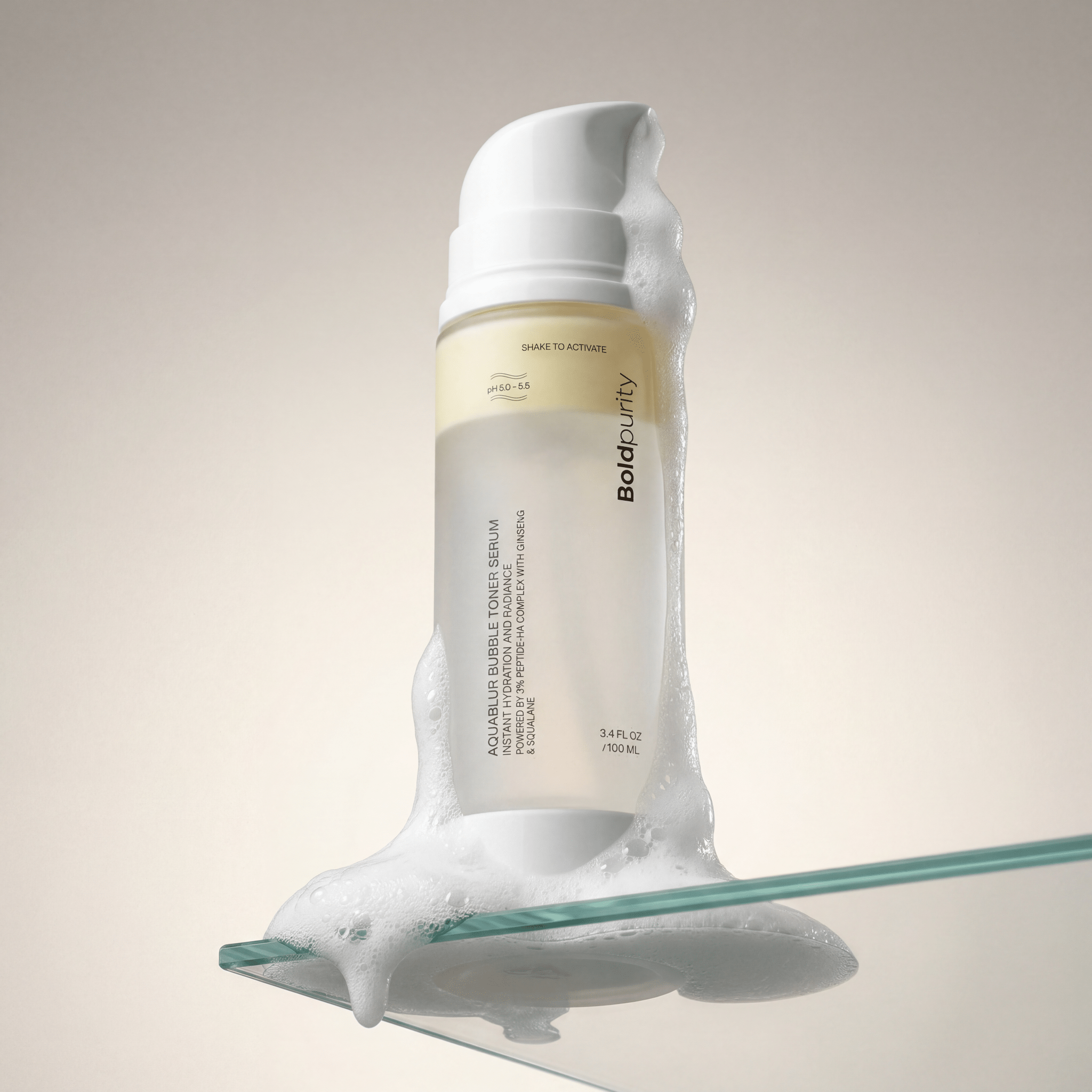
Since a glassy look starts with even, hydrated skin, AquaBlur™ layers multi-molecular hyaluronic acid, peptides, and squalane to support a plumped, smooth, light-catching surface — the achievable, real-skin side of the trend. Supports the appearance of hydrated, radiant-looking skin; no therapeutic claims.
Discover AquaBlur™References
- Verdier-Sévrain, S., & Bonté, F. (2007). Skin hydration: A review on its molecular mechanisms. Journal of Cosmetic Dermatology, 6(2), 75–82.
- Rawlings, A. V., & Harding, C. R. (2004). Moisturization and skin barrier function. Dermatologic Therapy, 17(S1), 43–48.
- Matsubara, A. (2010). Differences in the surface and optical properties of skin. International Journal of Cosmetic Science, 32(6), 397–404.
- Kim, E., et al. (2016). Skin surface topography and optical appearance. Skin Research and Technology, 22(2), 145–152.
- Fluhr, J. W., Darlenski, R., & Surber, C. (2008). Glycerol and the skin. British Journal of Dermatology, 159(1), 23–34.
- Roh, M., Han, M., Kim, D., & Chung, K. (2006). Sebum output as a factor influencing pore appearance. British Journal of Dermatology, 155(5), 890–894.
- Flament, F., et al. (2015). Facial skin pores: A multiethnic study. Clinical, Cosmetic and Investigational Dermatology, 8, 85–93.
- Del Rosso, J. Q., & Levin, J. (2011). The clinical relevance of maintaining the functional integrity of the stratum corneum. Journal of Clinical and Aesthetic Dermatology, 4(9), 22–42.
- Draelos, Z. D. (2018). The science behind skin care: Moisturizers. Journal of Cosmetic Dermatology, 17(2), 138–144.
- Purnamawati, S., Indrastuti, N., Danarti, R., & Saefudin, T. (2017). The role of moisturizers in addressing various kinds of dermatitis. Clinical Medicine & Research, 15(3–4), 75–87.
- Tagami, H. (2008). Location-related differences in structure and function of the stratum corneum. Archives of Dermatological Research, 300(Suppl 1), S1–S6.
- Fink, B., Grammer, K., & Matts, P. J. (2006). Visible skin colour distribution plays a role in the perception of age, attractiveness, and health. Evolution and Human Behavior, 27(6), 433–442.
- Samson, N., Fink, B., & Matts, P. J. (2010). Visible skin condition and perception of human facial appearance. International Journal of Cosmetic Science, 32(3), 167–184.
- Choi, C. W., et al. (2013). The influence of skin surface hydration on the optical appearance of skin. Skin Research and Technology, 19(1), e349–e355.
- Kligman, A. M. (2011). Cosmeceuticals and the future of skin appearance. Dermatologic Clinics, 29(2), 155–160.
- Draelos, Z. D. (2015). Cosmeceuticals: What's real, what's not. Dermatologic Clinics, 33(4), 715–724.
