

Key Research Findings
- Published research indicates facial massage produces mostly temporary effects: short-term de-puffing, a circulation-driven glow, and relaxation
- Published dermatology literature indicates massage can improve how evenly products spread and how relaxed facial muscles feel, but not permanent structural change
- Published research on face yoga (facial exercises) is very limited; one small study suggested modest appearance improvement with months of daily practice
- Published dermatology literature indicates the claim that facial exercises "lift" or "tone" the face like a facelift is largely unsupported
- Published research indicates gua sha and rollers mainly move fluid and boost circulation temporarily — they do not "sculpt" bone or permanently reshape the face
- Published dermatology literature indicates over-aggressive massage or tool use can irritate skin and, on deeper skin, contribute to post-inflammatory marks
- Published research indicates lasting changes in skin quality come from evidence-based ingredients, sun protection, and procedures — not exercises
- Published literature indicates massage's stress-reduction and enjoyment benefits are genuine and worthwhile in their own right; individual response varies
In This Article
- Face Yoga vs Facial Massage: Two Different Things
- What Facial Massage Genuinely Does
- What the Evidence Says About Face Yoga
- The "Facial Exercises Lift Your Face" Myth
- Gua Sha, Rollers & Sculpting Claims
- Temporary Effects vs Permanent Claims
- The Boldpurity Real-vs-Temporary Framework
- How to Do It Safely and Realistically
- Common Face Yoga & Massage Myths
- Frequently Asked Questions
Face Yoga vs Facial Massage: Two Different Things
Published commentary indicates "face yoga" and "facial massage" are often lumped together but are distinct. Facial massage (including gua sha and rollers) means manipulating the skin and soft tissue — mostly about circulation, fluid movement, and relaxation. Face yoga means repeated facial exercises intended to "work" the facial muscles, on the theory that toning them changes facial appearance. The evidence for each is quite different, so it helps to separate them.
What Facial Massage Genuinely Does
Published research indicates facial massage has several real, mostly short-term effects: it boosts local circulation (a temporary flush and glow), helps move lymphatic fluid (temporary de-puffing, especially under-eye and morning puffiness), relaxes tense facial muscles, and helps spread products more evenly. Published dermatology literature also notes a genuine stress-reduction and wellbeing benefit from the ritual itself.
Published Research on Temporary De-Puffing
Published dermatology literature indicates that gently moving lymphatic fluid can visibly reduce puffiness for a while — which is why a morning gua sha or massage can make the face look less swollen. Published research is clear this is temporary fluid movement, not fat loss or permanent contouring. See our guide on under-eye drainage, puffiness and dark circles. Massage can also aid even product spreading.
What the Evidence Says About Face Yoga
Published research on facial exercises specifically is limited. One frequently cited small study reported that a structured programme of daily facial exercises over several months produced a modest improvement in the appearance of fullness in the upper and lower cheeks. Published dermatology literature stresses this was a small, single study with limitations, and that it does not establish face yoga as a proven anti-ageing method.
The "Facial Exercises Lift Your Face" Myth
Published dermatology literature indicates the popular claim that facial exercises can "lift" the face or replace a facelift is largely unsupported — and may even be counter-intuitive. Facial ageing is driven mainly by changes in collagen and elastin, fat pad shifts, and bone changes (see how skin ages) — not by "untoned" muscles. Published research notes that repeated strong facial expressions can, over time, contribute to expression lines, so aggressive exercising is not obviously beneficial for wrinkles.
Gua Sha, Rollers & Sculpting Claims
Published research indicates gua sha and facial rollers mainly move fluid and stimulate circulation, giving a temporary de-puffed, glowing look. Published dermatology literature is clear they do not "sculpt" the face's bone structure, permanently slim the jawline, or reshape features — the "before and after" difference is temporary fluid movement and lighting, not structural change.
Temporary Effects vs Permanent Claims
The clearest way to judge these practices is to sort what's temporary from what's claimed to be permanent:
| Claim | Reality (published research) |
|---|---|
| De-puffing / less morning swelling | Real, but temporary (fluid movement) |
| Glow / radiance right after | Real, but temporary (circulation) |
| Relaxation & stress relief | Real and worthwhile in its own right |
| Better product spreading | Real |
| "Lifts" sagging / replaces facelift | Not supported |
| "Sculpts" bone / permanently slims face | Not supported |
| Replaces actives & sun protection | Not supported |
The Boldpurity Real-vs-Temporary Framework
Published dermatology literature suggests a simple way to keep expectations honest. We summarise it as a named framework.
The Real-vs-Temporary Framework
- Enjoy the temporary — de-puffing, glow, and relaxation are real, immediate perks; value them as such.
- Don't expect the permanent — lifting, toning, and sculpting are not supported; treat those claims with scepticism.
- Anchor lasting results elsewhere — for durable skin-quality changes, rely on evidence-based ingredients, sun protection, and (if desired) professional procedures.
This is an educational framework, not a prescriptive regimen or a medical claim. Individual response varies.
How to Do It Safely and Realistically
If you enjoy facial massage or face yoga, published dermatology literature commonly discusses the following to get the real benefits without the risks.
Commonly discussed principles
- Always use slip — a serum or oil so tools/fingers glide; never drag on dry skin.
- Be gentle — light-to-moderate pressure; more is not better and can irritate.
- Protect deeper skin — avoid aggressive friction that can leave marks on melanin-rich skin.
- Keep it clean — clean tools and hands to avoid transferring bacteria.
- Enjoy it as a ritual — the relaxation and glow are the honest wins; expect those, not a facelift.
- Pair with real actives — let massage support, not replace, evidence-based skincare and sun protection.
A commonly discussed approach; individual response varies.
The Boldpurity Science Team's view
In our view, facial massage is genuinely lovely and genuinely oversold at the same time. The de-puffed, glowing face after five minutes of gua sha is real — and also gone by afternoon. That's not a criticism; a temporary glow and a moment of calm are worth having. What we'd gently push back on is the "facelift in your hands" marketing, because it sets people up to expect permanent lifting from a practice that mostly moves fluid around. Our honest take: do it because it feels good and looks nice for a while, not because you think it's rebuilding your face. For lasting skin quality, the boring evidence-based stuff still wins.
— An editorial opinion from the Boldpurity Science Team, offered for discussion. Individual response varies.
Common Face Yoga & Massage Myths
Published dermatology literature indicates facial ageing is driven by collagen, elastin, fat pad, and bone changes — not untoned muscle — so exercises don't "lift" sagging. Published research indicates the facelift comparison is unsupported.
Published research indicates gua sha and rollers move fluid and boost circulation temporarily. Published dermatology literature indicates they do not reshape bone or permanently slim the face; the visible change is temporary de-puffing.
Published dermatology literature indicates repeated strong facial expressions can contribute to expression lines over time, so aggressive facial exercising is not clearly anti-wrinkle. Published research does not support "more reps = fewer wrinkles."
Published research indicates massage offers temporary circulation and de-puffing benefits, not the lasting effects of evidence-based actives or sun protection. Published dermatology literature frames it as a complement, not a replacement.
Published dermatology literature indicates aggressive pressure and dragging can irritate skin, break surface capillaries, and — on deeper skin — contribute to marks. Published research indicates gentle technique with slip is safer and sufficient.
Published research indicates such photos usually capture temporary de-puffing, flushing, and lighting differences. Published dermatology literature indicates they do not demonstrate permanent structural change.
Frequently Asked Questions
Explore Boldpurity
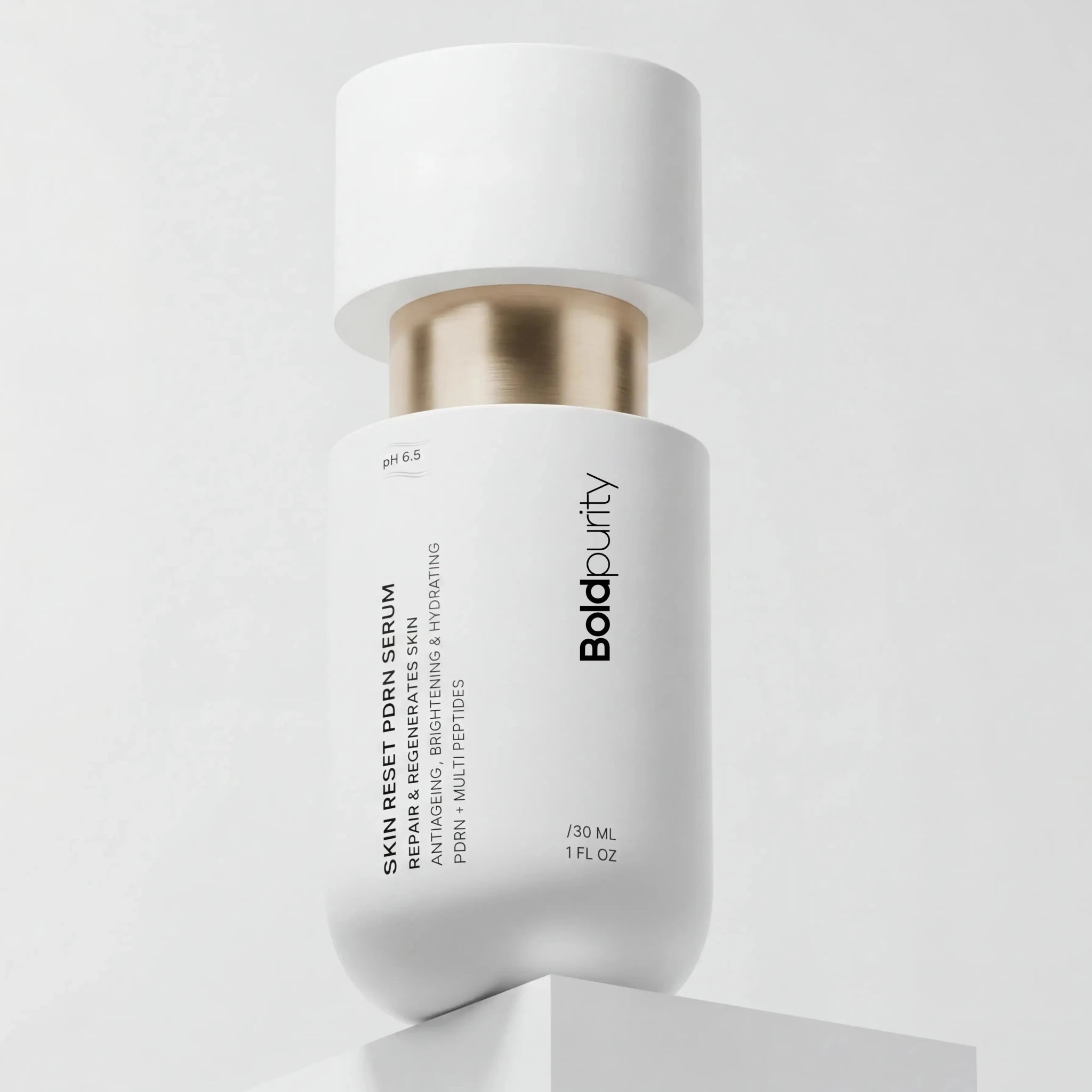
Since lasting skin-quality changes come from evidence-based actives — not facial exercises — SkinReset™ supports the appearance of firmer, more even-looking skin with PDRN, niacinamide, and peptides. It also makes a smooth base to apply before a gentle facial massage. Supports appearance only; no therapeutic claims. Avoid the immediate eye area.
Discover SkinReset™References
- Alam, M., Walter, A. J., Geisler, A., et al. (2018). Association of facial exercise with the appearance of aging. JAMA Dermatology, 154(3), 365–367.
- Miyaji, A., Sugimori, K., & Hayashi, N. (2018). Short- and long-term effects of using a facial massage roller on facial skin blood flow and vascular reactivity. Complementary Therapies in Medicine, 41, 271–276.
- Nagai, N., et al. (2017). Effects of facial massage on skin properties and blood flow. Skin Research and Technology, 23(4), 553–559.
- Caberlotto, E., Ruiz, L., Miller, Z., et al. (2017). Effects of a facial massage routine on skin using an automated device. PLoS ONE, 12(3), e0172624.
- Nilforoushzadeh, M. A., et al. (2019). Skin care and rejuvenation by cosmetic massage. Journal of Cosmetic Dermatology, 18(1), 46–55.
- Marchese, C. (2018). Gua sha: A review of the literature. Journal of Traditional and Complementary Medicine, 8(1), 1–5.
- Hussein, R. S., et al. (2020). Lymphatic drainage and facial puffiness: Mechanisms and interventions. Journal of Cosmetic Dermatology, 19(5), 1043–1049.
- Zhang, S., & Duan, E. (2018). Fighting against skin aging: The way from bench to bedside. Cell Transplantation, 27(5), 729–738.
- Mendelson, B., & Wong, C. H. (2012). Changes in the facial skeleton with aging. Aesthetic Plastic Surgery, 36(4), 753–760.
- Farage, M. A., Miller, K. W., Elsner, P., & Maibach, H. I. (2008). Intrinsic and extrinsic factors in skin ageing. International Journal of Cosmetic Science, 30(2), 87–95.
- Mukherjee, S., Date, A., Patravale, V., et al. (2006). Retinoids in the treatment of skin aging. Clinical Interventions in Aging, 1(4), 327–348.
- Davis, E. C., & Callender, V. D. (2010). Postinflammatory hyperpigmentation in skin of color. Journal of Clinical and Aesthetic Dermatology, 3(7), 20–31.
- Draelos, Z. D. (2018). The science behind skin care: Moisturizers. Journal of Cosmetic Dermatology, 17(2), 138–144.
- Sarkar, R., Arora, P., & Garg, V. K. (2013). Cosmeceuticals for hyperpigmentation. Journal of Cutaneous and Aesthetic Surgery, 6(1), 4–11.
- Byrd, A. L., Belkaid, Y., & Segre, J. A. (2018). The human skin microbiome. Nature Reviews Microbiology, 16(3), 143–155.
- Draelos, Z. D. (2015). Cosmeceuticals: What's real, what's not. Dermatologic Clinics, 33(4), 715–724.
