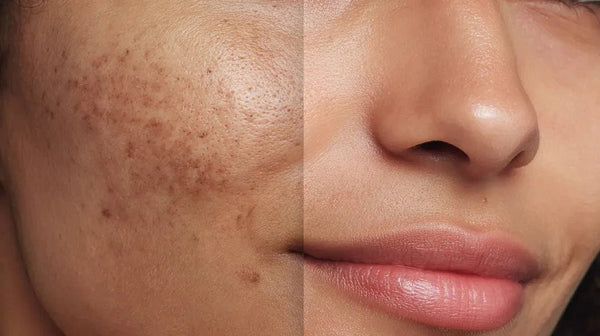
Nonapeptide-1 in Skincare: Science, Benefits & How It Works for Skin Tone | Boldpurity
Nonapeptide-1: What It Is, How It Works & Why It Matters for Uneven Skin Tone
Nonapeptide-1 is a small synthetic peptide associated with modulation of the melanogenesis signalling pathway — specifically the alpha-MSH / MC1R axis that is associated with how melanocytes regulate melanin production. For Indian and South Asian skin, where post-inflammatory hyperpigmentation is among the most common and persistent concerns, understanding this pathway is central to choosing actives that address the root of the issue rather than its surface expression.
What Is Nonapeptide-1?
Nonapeptide-1 is a small synthetic peptide used in cosmetic formulations in association with support for the visible appearance of even skin tone. Its mechanism of action is documented in the dermatological literature as relating to the melanogenesis signalling pathway — the cascade of biological signals that instructs melanocytes, the melanin-producing cells of the skin, on how much pigment to synthesise.
Unlike actives that address pigmentation through chemical oxidation — such as vitamin C acting on the tyrosinase enzyme, or hydroquinone directly inhibiting melanin precursor formation — Nonapeptide-1 acts upstream, at the level of the signalling molecules that tell melanocytes what to do in the first place. This distinction in mechanism has meaningful implications for both tolerability and the type of skin tone support it provides.
It is formulated as part of CellMorph™ 500 — Boldpurity's spicule-based active serum — where it works alongside additional actives in a multi-pathway approach to skin texture and tone.
- INCI name: Nonapeptide-1 (also known as Melanostatine-5) — a synthetic nine-amino-acid peptide targeting melanogenesis signalling
- Associated with modulation of the alpha-MSH / MC1R receptor pathway in laboratory studies
- Acts upstream of melanin synthesis — at the signalling level rather than the enzymatic level
- Does not carry the irritation or systemic risk profile associated with high-concentration hydroquinone
- Particularly relevant for post-inflammatory hyperpigmentation — a primary concern in Indian and South Asian skin
- Formulated in CellMorph™ 500 alongside spicule-based delivery for enhanced surface availability
How Melanogenesis Signalling Works
To understand what Nonapeptide-1 does, it helps to understand the biological pathway it is associated with — because pigmentation is not simply a fixed property of skin. It is a dynamic, regulated response to signals from the skin's environment and immune system.
Melanocytes and the Production of Melanin
Melanin is produced by specialised cells called melanocytes, which reside in the basal layer of the epidermis. Each melanocyte supplies melanin-containing organelles called melanosomes to surrounding keratinocytes — forming the pigmentation network visible at the skin surface. The rate and intensity of melanin production is not constant; it is regulated by a complex system of signalling molecules.
The Alpha-MSH / MC1R Axis
One of the most well-characterised regulatory pathways in melanogenesis is the alpha-melanocyte stimulating hormone (α-MSH) / melanocortin 1 receptor (MC1R) axis. Alpha-MSH is a neuropeptide released by keratinocytes and other skin cells — particularly in response to UV exposure and inflammation. When α-MSH binds to MC1R on melanocytes (PubMed: 11069016), it initiates a downstream signalling cascade associated with increased production of eumelanin — the darker, brown-black form of melanin responsible for most visible pigmentation.
This is the pathway that Nonapeptide-1 is associated with modulating. In laboratory studies, it is documented as acting at the level of this signalling axis — associated with influencing how melanocytes respond to the upstream signal, rather than chemically inhibiting the enzymes that produce melanin once the signal has already been received.
Most well-known skin tone actives — kojic acid, arbutin, vitamin C — work by inhibiting tyrosinase, the enzyme that converts tyrosine to melanin precursors. This is a downstream intervention. Nonapeptide-1's documented association with the α-MSH / MC1R pathway represents an upstream approach: modulating the signal that determines how much melanin the cell is instructed to produce. These are complementary strategies, not competing ones — which is why multi-pathway formulations are more comprehensively supported by dermatological research than single-active approaches.
What the Research Shows
Nonapeptide-1's mechanism connects to a well-established body of research on the α-MSH / MC1R signalling pathway in melanogenesis regulation.
MC1R and Melanogenesis Regulation
The role of MC1R in regulating melanin production is extensively documented. Research published via PubMed (PMID: 10651980) characterises the α-MSH / MC1R signalling pathway as a primary regulatory mechanism in determining both the quantity and quality (eumelanin vs phaeomelanin) of melanin produced by human melanocytes. Disruptions to this pathway — whether by UV exposure, inflammation, or hormonal factors — are associated with visible changes in skin tone distribution.
Peptide-Based Modulation of Melanogenesis
The use of synthetic peptides to modulate melanogenesis signalling is an established area of cosmetic active research. A review in the dermatological literature (PMC2763747) documents the regulatory role of MC1R-pathway peptides in melanocyte behaviour, noting that modulation of this pathway is associated in laboratory studies with altered melanin output — a finding that forms the scientific basis for the inclusion of pathway-targeting peptides such as Nonapeptide-1 in cosmetic formulations.
- MC1R as a primary regulatory receptor in human melanogenesis — extensively characterised in published literature
- α-MSH / MC1R pathway activation associated with increased eumelanin production in response to UV and inflammation
- Peptide-based modulation of this pathway associated with altered melanin output in laboratory studies
- Upstream signalling modulation documented as complementary to downstream tyrosinase-inhibiting approaches
- Individual results vary; formulation context, delivery system, and consistency of use are significant determinants
Relevance for Indian & South Asian Skin
Indian and South Asian skin sits predominantly in Fitzpatrick skin types III–V — skin tones characterised by higher baseline melanin content and, crucially, a significantly elevated tendency toward post-inflammatory hyperpigmentation (PIH).
PIH occurs when an inflammatory event — acne, friction, sun exposure, or even the use of an irritating active — triggers a cascade that includes α-MSH release from stressed keratinocytes. This α-MSH signal reaches MC1R on neighbouring melanocytes, where it is associated with a melanin production increase that outlasts the original inflammatory event by weeks to months. The result is the dark marks that persist long after a blemish has resolved — one of the most common and frustrating skin concerns reported by people with Indian and South Asian skin.
Nonapeptide-1's documented association with the α-MSH / MC1R pathway makes it directly relevant to this mechanism. Rather than addressing only the visible mark after it forms, a signalling-level approach is positioned to address the signalling processes by which the inflammatory event instructs melanocytes to overproduce in the first place.
The most persistent skin tone concerns in Indian and South Asian skin are not driven by excess melanocytes — the cell count is comparable across skin types. They are driven by the heightened reactivity of existing melanocytes to inflammatory and UV signals transmitted through pathways including the α-MSH / MC1R axis. This is why signalling-level peptide actives are a scientifically well-reasoned addition to skin tone formulations for this demographic — addressing the signalling environment rather than the output alone.
Nonapeptide-1 vs Other Skin Tone Actives
The comparison above illustrates why a multi-pathway approach to visible skin tone support is more comprehensively supported by dermatological research than reliance on a single mechanism. Nonapeptide-1 targets an upstream signalling point that tyrosinase inhibitors do not reach — and tyrosinase inhibitors address synthesis-level activity that Nonapeptide-1's signalling modulation does not replace. The two strategies work in parallel, not in competition.
Common Misconceptions
They do not. Vitamin C, kojic acid, and arbutin primarily inhibit tyrosinase — the enzyme that converts tyrosine to melanin precursors. Niacinamide inhibits melanosome transfer. Nonapeptide-1 is associated with modulating the upstream signalling that tells melanocytes how much melanin to produce. These are distinct intervention points along the same biological pathway, each with different implications for tolerability, timing, and the type of pigmentation they are most relevant to.
Post-inflammatory hyperpigmentation presents as discrete dark marks, but uneven skin tone is also driven by diffuse melanin overproduction in response to chronic low-level UV and environmental stress. Signalling-level modulation of the α-MSH / MC1R axis is relevant to both presentations — addressing the regulatory environment rather than only the visible outcome.
Correct. Research consistently documents that higher Fitzpatrick skin types do not simply have more melanocytes — they have melanocytes that respond more robustly to inflammatory and UV-mediated signals, including those transmitted via the α-MSH / MC1R pathway. This is why the signalling approach represented by Nonapeptide-1 is particularly well-reasoned for this skin population.
Skin Types & Suitability
- Indian and South Asian skin (Fitzpatrick III–V): high relevance due to elevated PIH tendency mediated in part through α-MSH / MC1R signalling
- Skin with post-inflammatory hyperpigmentation: targets the signalling environment associated with melanin overproduction following inflammation
- Skin experiencing sun-related uneven tone: UV exposure drives α-MSH release; signalling-level modulation is relevant to this pathway
- Sensitive skin: receptor-mediated signalling mechanism does not involve chemical exfoliation or oxidative activity — generally well tolerated
- Combination and oily skin: no occlusive or comedogenic properties; compatible with sebum-modulating formulation frameworks
Note on sun protection: No skin tone active — at any mechanism level — replaces SPF. The α-MSH signal that Nonapeptide-1 is associated with modulating is, in part, driven by UV exposure. Consistent broad-spectrum sun protection reduces the upstream trigger; Nonapeptide-1 addresses the signalling pathway that responds to it. Both are required for a comprehensive approach to visible skin tone management.
07 — Routine UseRoutine Use & Ingredient Combinations
Where It Sits in a Routine
Nonapeptide-1, as formulated in CellMorph™ 500, is applied at the active serum step — after cleansing and toning, before moisturising. Evening use is recommended as a primary application, consistent with the principle of allowing signalling-active peptides to work in the absence of ongoing UV exposure.
Multi-Pathway Combinations
- Nonapeptide-1 + Niacinamide: upstream signalling modulation (Nonapeptide-1) paired with downstream melanosome transfer inhibition (niacinamide) — a two-point intervention across the pigmentation pathway; niacinamide also supports skin barrier integrity, which is foundational to reducing the PIH-triggering inflammatory events
- Nonapeptide-1 + Vitamin C: complementary mechanisms; Nonapeptide-1 addresses upstream signalling; vitamin C addresses downstream tyrosinase activity and provides antioxidant protection against UV-induced pigmentation triggers
- Nonapeptide-1 + Apple Stem Cells: both present in CellMorph™ 500; stem cell bioactives associated with cellular renewal support alongside Nonapeptide-1's melanogenesis signalling modulation
- Nonapeptide-1 + SPF (morning): reducing the UV-driven α-MSH signal that triggers the pathway Nonapeptide-1 modulates — the most important combination for consistent visible results
08 — FAQ
Frequently Asked Questions
Nonapeptide-1 is a small synthetic peptide documented in dermatological research for its association with the melanogenesis signalling pathway — specifically the alpha-MSH / MC1R axis that governs melanin production in melanocytes. It is used in cosmetic formulations in association with support for the visible appearance of even skin tone.
In laboratory studies, Nonapeptide-1 is associated with activity at the MC1R receptor on melanocytes, influencing the alpha-MSH signalling pathway that governs melanin synthesis. This represents an upstream intervention — modulating the signal that instructs melanin production — as distinct from the downstream tyrosinase-inhibiting mechanisms of actives such as vitamin C, kojic acid, and arbutin.
Yes. Post-inflammatory hyperpigmentation is among the most common skin concerns in Indian and South Asian skin, and the alpha-MSH / MC1R pathway is one of the primary biological mechanisms through which inflammatory events trigger excess melanin production. Nonapeptide-1's documented association with this pathway makes it particularly relevant for skin tones where PIH is a persistent concern. Individual results vary.
Nonapeptide-1 and niacinamide address pigmentation at different points in the biological pathway. Nonapeptide-1 is associated with modulating the upstream signalling that governs melanin production. Niacinamide is documented to inhibit the downstream transfer of melanosomes from melanocytes to keratinocytes — how pigment reaches the skin surface. The two mechanisms are complementary and can be used together for a more comprehensive approach to visible skin tone support.
Nonapeptide-1 is formulated in CellMorph™ 500 — Boldpurity's spicule-based active serum for advanced skin texture and tone support.
Nonapeptide-1 acts via receptor-mediated signalling rather than chemical exfoliation or oxidative mechanisms, and does not carry the primary irritation risk profile of AHAs or high-concentration vitamin C. As with all actives, those with reactive or compromised barrier skin are advised to prioritise barrier health first and introduce active ingredients gradually.
CellMorph™ 500 combines Nonapeptide-1 with a spicule-based delivery system, apple stem cells (Malus Domestica Fruit Cell Culture Extract), and additional actives — formulated for those seeking a multi-pathway approach to visible skin texture and tone, particularly for Indian and South Asian skin concerns.
CellMorph™ 500
Nonapeptide-1 · Apple Stem Cells · Spicule Delivery System — a multi-pathway active serum for visible skin texture and tone support.
Explore CellMorph™ 500 →This article is written for educational purposes and reflects published scientific and dermatological research. It does not constitute medical advice. Individual results vary. The ingredient information presented relates to the active in isolation and in peer-reviewed literature; product performance depends on formulation, concentration, and delivery system. Boldpurity products are cosmetic formulations and are not intended to diagnose, treat, cure, or prevent any disease or medical condition.