Kojic Acid for Skin: How It Works, Evidence & What to Know | Boldpurity

Kojic Acid for Skin: How It Works, Evidence & What to Know | Boldpurity - Boldpurity Skincare


🔬
INCI NameKojic Acid (5-hydroxy-2-(hydroxymethyl)-4H-pyran-4-one)
⚗️
Ingredient ClassOrganic Acid · Tyrosinase Inhibitor (Copper Chelation)
📋
7 Peer-Reviewed ReferencesCited throughout
🧬
Science ReviewedBoldpurity Science Team · Cosmetic Scientist · MSc Pharmaceutical Analysis · Diploma Personal Care Science

This article is for educational purposes only and does not constitute medical advice. Individual results vary. Always patch test before use.

At a Glance
INCI name: Kojic Acid
Origin: Fermentation byproduct — Aspergillus oryzae; also found in sake, miso, soy sauce
Mechanism: Copper chelation at tyrosinase active site — reduces enzymatic melanin synthesis
Ester form: Kojic Dipalmitate — more stable; bioavailability on skin not fully characterised
EU concentration limit: 1% in leave-on face and hand creams (SCCS reviewed)
Evidence: Moderate to strong — published clinical brightening assessments at 1–2% concentrations
Key consideration: Stability — kojic acid oxidises readily; formulation quality determines shelf efficacy
Works well with: Niacinamide, Tranexamic Acid, Ceramides, SPF

If you are searching for what kojic acid does for dark spots, how it differs from Alpha-Arbutin, what kojic dipalmitate is and whether it works, why kojic acid products turn brown, or what concentration is safe — this guide covers the complete science with mechanism-level precision.

What Is Kojic Acid?

Kojic acid is a naturally occurring organic acid produced as a byproduct of fungal fermentation — particularly by Aspergillus oryzae, the fungus responsible for fermenting sake, miso, and soy sauce. In skincare, it functions as a tyrosinase inhibitor through copper chelation: it binds the copper ions in tyrosinase's active site that are essential for the enzyme's catalytic function, reducing melanin synthesis rate. Its mechanism is distinct from Alpha-Arbutin's competitive inhibition — which is why the two can be used together without direct redundancy.

The Bottom Line
  • Kojic acid inhibits tyrosinase through copper chelation — a mechanism distinct from competitive inhibitors like Alpha-Arbutin. This means the two address the same enzyme through different pathways and can be used together.
  • The EU SCCS has reviewed kojic acid and permits it at up to 1% in leave-on face and hand creams. Above this concentration, sensitisation potential is documented. Formulate and evaluate products accordingly.
  • Stability is the primary formulation challenge — kojic acid oxidises readily in the presence of light and oxygen, turning products pink or brown. An oxidised product has reduced activity. Packaging and antioxidant co-ingredients directly affect shelf stability.
  • Kojic dipalmitate is a more stable ester form, but its conversion to free kojic acid on skin is not fully characterised in the published literature — this is an important nuance when comparing product claims.
  • Compatible with niacinamide, tranexamic acid, ceramides, and SPF — the combination covers multiple distinct steps in the melanogenesis cascade.
  • Patch testing is recommended before use — sensitisation at higher concentrations is documented, and individual skin reactivity varies.

Kojic acid has a longer history in skincare than most consumers realise — its brightening properties were identified in the 1980s as a byproduct of fermentation research, and it has been the subject of published clinical brightening studies for over three decades. Understanding its specific mechanism — and the important questions around its stability and concentration limits — is what separates informed use from uninformed inclusion in a routine.


01 — The Ingredient

What Is Kojic Acid — Origin and Chemistry

Kojic acid (chemical name: 5-hydroxy-2-(hydroxymethyl)-4H-pyran-4-one) is a small, water-soluble organic acid with a pyranone ring structure. It is produced naturally during aerobic fermentation by several fungal species — most notably Aspergillus oryzae and Aspergillus flavus — and is found naturally in fermented foods including sake, miso, and Japanese soy sauce. The compound was first isolated in 1907 and identified for its skin-lightening properties in the late 1980s through tyrosinase inhibition research.

For cosmetic use, kojic acid is produced through controlled fermentation processes — the same biological pathway that produces it naturally, scaled for consistency and purity. Its naturally derived origin is genuine, though the distinction between naturally occurring and synthetically produced variants is less meaningful for efficacy than concentration, formulation stability, and delivery architecture.

"Kojic acid's brightening history begins in a sake brewery, not a laboratory. Its discovery as a tyrosinase inhibitor was a consequence of fermentation science, not synthetic chemistry — giving it one of the more unusual origin stories in cosmetic ingredient development."

Boldpurity Science Team

02 — The Mechanism

How Kojic Acid Works: The Copper Chelation Mechanism

Kojic acid inhibits tyrosinase through a mechanism fundamentally different from competitive inhibitors like Alpha-Arbutin. To understand why this matters, the enzyme's structure is the starting point.

Tyrosinase is a copper-containing enzyme. Its active site contains two copper ions (Cu²⁺) — designated CuA and CuB — that are directly involved in the catalytic reactions converting L-tyrosine to L-DOPA and L-DOPA to dopaquinone. These copper ions are not incidental to the enzyme's function; they are structurally integral to the catalytic mechanism. Removing or disabling these copper ions markedly reduces the enzyme's catalytic activity.

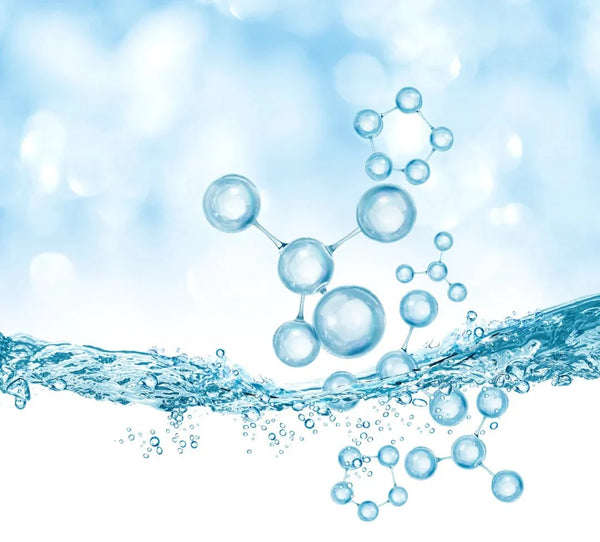
Kojic acid chelates these copper ions. The hydroxyl and carbonyl groups in kojic acid's pyranone ring structure have high affinity for copper — they form stable coordination complexes with the Cu²⁺ ions in tyrosinase's active site. By binding these copper ions, kojic acid reduces the enzyme's catalytic activity. Published in vitro studies document its mixed-type inhibition of both tyrosinase reactions — L-tyrosine hydroxylation and L-DOPA oxidation.

Copper Chelation vs Competitive Inhibition — Why the Distinction Matters

Alpha-Arbutin (competitive inhibition): competes with L-tyrosine and L-DOPA for the enzyme active site — the enzyme is structurally intact but its substrates cannot access it. Remove the inhibitor and full enzyme activity returns immediately.

Kojic acid (copper chelation): binds the copper ions in the active site that the enzyme requires for catalytic function. The enzyme is not blocked from its substrate — it is disabled at the functional level by removal of an essential cofactor. This mechanism operates through a different aspect of enzyme chemistry.

Practical implication: because the mechanisms are distinct, combining Alpha-Arbutin and kojic acid addresses the same enzyme through two independent pathways — without the direct redundancy of combining two competitive inhibitors. However, concentration management and formulation compatibility require careful consideration when combining the two.


03 — Kojic Dipalmitate

Kojic Acid vs Kojic Dipalmitate — The Stability Question

The formulation challenge with kojic acid is stability. Free kojic acid is hydrophilic and prone to oxidation — it reacts with oxygen and UV light to form coloured compounds, turning products pink or brown. This oxidation represents both an aesthetic and activity problem: an oxidised kojic acid formulation has reduced tyrosinase-inhibiting capacity.

Kojic dipalmitate was developed as a response to this instability. By attaching two palmitic acid chains to the kojic acid molecule, the ester becomes:

  • Significantly more stable — the esterification blocks the reactive groups most susceptible to oxidation
  • Oil-soluble — expanding formulation flexibility into anhydrous systems, creams, and oil-based serums
  • Less likely to cause sensitisation at comparable concentrations — relevant given the SCCS concentration limits on free kojic acid

The unresolved question: for kojic dipalmitate to inhibit tyrosinase, it must be converted back to free kojic acid on or in the skin — via esterase enzyme activity. The extent to which this hydrolysis occurs at cosmetically relevant concentrations, and whether the resulting free kojic acid reaches the stratum basale melanocytes at meaningful concentrations, is not fully characterised in the published literature. Some published assessments report comparable brightening outcomes; the mechanistic evidence base for kojic dipalmitate's in-skin conversion is less established than the clinical evidence base for free kojic acid.

How to Evaluate Kojic Acid Stability in a Product

Signs of oxidation: product has turned pink, orange, or brown from its original colour. This indicates degradation and reduced activity — not necessarily a safety concern, but a potency concern.

Signs of a stability-optimised formulation: opaque or UV-protective packaging; antioxidant co-ingredients (Vitamin E, Vitamin C derivatives, ferulic acid); airtight pump or sealed tube; no exposure to light during storage. Products in open jars are inherently higher risk for kojic acid stability.


04 — Evidence

Published Evidence

● Moderate to Strong — Tyrosinase Inhibition

Nakagawa et al. (1995) established early mechanistic evidence for kojic acid's tyrosinase inhibition in cell culture models. Subsequent in vitro studies have consistently confirmed copper chelation as the primary mechanism and documented inhibitory activity against both tyrosinase reactions. The mechanistic evidence base is well-established; the clinical evidence base at EU-compliant concentrations (1%) is more limited than at the higher concentrations (2–4%) used in older clinical trials.

● Moderate — Clinical Brightening at Cosmetic Concentrations

Lim et al. (1997) documented improvements in melasma-associated pigmentation in a comparative study of kojic acid combined with glycolic acid versus hydroquinone with glycolic acid — both combinations produced improvements, though the study used concentrations that exceed EU leave-on limits. More recent published assessments at 1% concentrations report improvements in skin tone evenness in studied populations, though the evidence base at the EU-compliant 1% level is less extensive than the historical literature at higher concentrations.

● Moderate — Combination Protocols

Published assessments consistently document improved outcomes when kojic acid is combined with complementary actives — particularly glycolic acid (cell turnover acceleration) and niacinamide (melanosome transfer inhibition). The combination rationale is mechanistically sound: addressing tyrosinase, cell turnover, and downstream melanin distribution simultaneously covers more of the cascade than any single active. Multi-active combination studies generally report improvements across hyperpigmentation markers in studied populations.


05 — Benefits

Benefits for Skin

Support for more even skin tone and reduced dark spot appearance

● Moderate to Strong Evidence

Consistent with its tyrosinase-inhibiting mechanism, kojic acid is associated with improvements in skin tone evenness and hyperpigmentation appearance in published clinical assessments. The evidence base is strongest at concentrations above the EU 1% limit — requiring careful evaluation of how published studies translate to EU-compliant cosmetic formulations.

Naturally derived fermentation origin

● Confirmed

Kojic acid's origin in fungal fermentation — the same biological process that produces sake and miso — is genuine and distinctive among brightening actives. For consumers prioritising naturally derived ingredients, this represents a meaningful differentiator. Cosmetic-grade kojic acid is produced through controlled fermentation rather than synthetic chemistry.

Complementary mechanism to competitive tyrosinase inhibitors

● Strong mechanistic basis

Because kojic acid's copper chelation mechanism operates independently of competitive inhibition, it can be combined with Alpha-Arbutin to address tyrosinase activity through two distinct biochemical pathways simultaneously. This multi-mechanism approach at the enzyme level is supported by the mechanistic literature, though robust clinical evidence for this specific combination at EU-compliant concentrations requires continued assessment.


06 — Concentrations

Concentration and Regulatory Context

Market Permitted Concentration Application Type Regulatory Body
European Union 1% maximum Leave-on face creams and hand creams only (per SCCS opinion 2021) EU Scientific Committee on Consumer Safety (SCCS)
Japan 2% maximum Quasi-drug classification for skin-lightening products MHLW (Ministry of Health, Labour and Welfare)
India Permitted cosmetic ingredient Cosmetic use — specific concentration limits aligned with international standards CDSCO
United States Permitted cosmetic ingredient Cosmetic use — no specific OTC monograph concentration cap, evaluated under general safety FDA (cosmetic framework)
GCC / ASEAN Variable by market Generally aligned with EU or Japan limits — check market-specific regulations Market-specific authorities
SCCS 2021 Opinion — What It Means

The EU Scientific Committee on Consumer Safety reviewed kojic acid in 2021 and concluded that it is safe at 1% in face creams and hand creams. The review noted concentration-dependent sensitisation potential and did not clear concentrations above 1% for leave-on use. When evaluating any product claiming kojic acid benefits for EU or export-to-EU markets, 1% is the maximum leave-on concentration with regulatory support. This concentration limit also applies to formulations exported to EU markets from India.


07 — Comparisons

Kojic Acid vs Other Brightening Ingredients

Ingredient Mechanism Cascade Position vs Kojic Acid
Kojic Acid Copper chelation at tyrosinase active site Tyrosinase — enzyme level (copper) Reference
Alpha-Arbutin Competitive tyrosinase inhibition Tyrosinase — enzyme level (substrate competition) Complementary — distinct mechanisms at same enzyme; can combine without direct redundancy. Alpha-Arbutin has broader EU SCCS review and more extensive evidence base at cosmetic concentrations
Tranexamic Acid Upstream plasminogen-melanocyte signalling block Upstream of tyrosinase Complementary — addresses trigger before kojic acid's enzyme-level intervention
Niacinamide Melanosome transfer inhibition Downstream — after melanin is produced Complementary — addresses distribution; no mechanism overlap with kojic acid
Vitamin C Dopaquinone reduction + copper chelation at tyrosinase Mid-pathway + copper chelation (shared with kojic acid) Partial overlap — both chelate copper at tyrosinase; Vitamin C adds mid-pathway dopaquinone reduction and antioxidant activity. Redundancy at copper chelation step; complementary at other steps
Azelaic Acid Tyrosinase inhibition + anti-inflammatory Enzyme level + upstream inflammation Some mechanism overlap at tyrosinase; azelaic acid adds anti-inflammatory action that kojic acid does not. A well-considered multi-active protocol would typically choose one tyrosinase inhibitor as primary and combine with actives at different cascade steps
Boldpurity Science Verdict

Kojic acid's copper chelation mechanism gives it a genuinely distinct position among tyrosinase inhibitors — complementary to Alpha-Arbutin's competitive inhibition rather than redundant with it. Its practical limitations are the EU 1% concentration cap and formulation stability requirements that demand careful packaging and antioxidant co-formulation. For Indian skin specifically, kojic acid is most relevant as a secondary brightening active within a multi-mechanism protocol — where its copper chelation adds coverage at the enzyme level alongside upstream blockers (Tranexamic Acid, Undecylenoyl Phenylalanine) and downstream actives (Niacinamide). Its sensitisation potential at higher concentrations warrants attention, particularly in skin already prone to reactivity.


08 — How to Use

How to Use Kojic Acid in a Skincare Routine

  • Apply to clean skin before heavier textures — kojic acid serums or treatments apply after cleansing, before moisturiser. Allow to absorb before applying subsequent layers.
  • Start with once-daily application — introduce gradually, particularly on sensitive or reactive skin. Assess tolerability over 1–2 weeks before building to twice-daily use.
  • Use in the evening initially — while kojic acid does not increase photosensitivity, limiting initial use to PM allows monitoring of any local skin response before AM use is introduced.
  • Pair with ceramide moisturiser — barrier support reduces the risk of irritation and supports the skin during acclimatisation. Apply a ceramide moisturiser after the kojic acid step.
  • SPF every morning without exception — UV stimulates the very pathway kojic acid is modulating. SPF does not manage photosensitivity from kojic acid specifically; it prevents UV from restimulating melanogenesis against which the brightening protocol is working.
  • Store correctly — kojic acid products should be stored in cool, dark conditions. Away from direct sunlight and bathroom heat where possible. Monitor product colour — discolouration indicates oxidative degradation.

09 — Safety

Safety and Side Effects

Concern Reality
Sensitisation Documented in published assessments at concentrations above 1% in leave-on products — one of the primary considerations in the SCCS 2021 review. At 1% and below, the sensitisation risk is regarded as acceptable based on current evidence, but patch testing is recommended and individual reactivity varies. Those with a known history of contact sensitisation should introduce with caution.
Irritation Generally mild at cosmetic concentrations — transient tingling or minor redness in some users on initial application. More pronounced at concentrations above EU limits. Reduce frequency if persistent redness or barrier disruption occurs.
Photosensitisation Not associated with increased photosensitivity at cosmetic concentrations in published assessments. Daily SPF is recommended for outcome reasons — UV stimulates melanogenesis — not due to photosensitisation risk from kojic acid.
Stability concerns Oxidation to coloured compounds is well-documented. A product that has turned pink, orange, or brown has degraded — reduced activity is the primary concern. Not a direct safety risk, but an efficacy concern. Choose products with protective packaging and antioxidant co-formulation.
Treatment-induced PIH At concentrations above EU limits or on sensitisation-prone skin, irritation can trigger new PIH — counterproductive when used for brightening. At 1% with gradual introduction, this risk is substantially reduced.
Use in pregnancy/breastfeeding Individuals who are pregnant or breastfeeding should consult their healthcare provider before using any active ingredient. This is not a cosmetic product recommendation context.

10 — Related Ingredients
Ingredient Cascade Position Relationship to Kojic Acid
Alpha-Arbutin Tyrosinase — competitive inhibition Complementary — distinct inhibitory mechanism at same enzyme; can be combined without direct redundancy
Tranexamic Acid Upstream — melanocyte activation signal Complementary — addresses trigger upstream before kojic acid's enzyme-level intervention
Niacinamide Downstream — melanosome transfer Complementary — no mechanism overlap; addresses melanin distribution after synthesis
Undecylenoyl Phenylalanine Upstream — α-MSH receptor Complementary — upstream signalling modulation before tyrosinase involvement
PIH Guide Skin concern — full cascade context Primary clinical application for kojic acid in Indian skin — read alongside this article
Melanogenesis Pillar Full cascade — science foundation Maps every brightening active to its cascade position — essential companion to this article
Pigmentation Cluster Complete: All eight pigmentation articles are now live — from the Melanogenesis science pillar to the PIH concern guide. The full brightening ingredient map is in the Melanogenesis article.

11 — Myths

Common Kojic Acid Myths

Myth vs Fact
Myth: Brown or pink kojic acid = stronger kojic acid

This is precisely backwards. Discolouration in a kojic acid product indicates oxidation — the compound has reacted with oxygen and light to form coloured degradation products. An oxidised kojic acid has reduced tyrosinase-inhibiting capacity. The colour change is a sign of instability and reduced activity, not potency. Products that remain clear or cream-coloured throughout their shelf life are better formulated and more likely to retain activity.

Fact: Discolouration indicates oxidative degradation and reduced efficacy. Clear or stable colour indicates better formulation. Protective packaging and antioxidant co-ingredients are markers of quality, not dilution.

Myth: More kojic acid means better brightening results

Above the EU 1% limit for leave-on products, sensitisation risk increases without a proportional increase in brightening efficacy that would justify the tolerability tradeoff. The SCCS 2021 review specifically addressed this dose-response relationship. In skin already sensitised or prone to reactivity — common in Indian skin managing PIH — higher concentrations of kojic acid risk triggering the very inflammatory response that creates new pigmentation. Precision at appropriate concentrations with a multi-active protocol outperforms high-concentration single-active approaches.

Fact: Above 1% in leave-on products, sensitisation risk increases. EU-compliant 1% with complementary actives (Tranexamic Acid, Niacinamide, SPF) produces a better risk-to-outcome profile than high-concentration single-active approaches.

Myth: Kojic dipalmitate is just as well-evidenced as kojic acid

Kojic dipalmitate is more stable than free kojic acid — that much is well-documented. What is less characterised in published literature is whether the ester is efficiently hydrolysed to free kojic acid on skin at cosmetically relevant concentrations. Some published assessments document comparable outcomes; the mechanistic evidence for in-skin conversion is thinner than the clinical evidence for free kojic acid's tyrosinase inhibition. When comparing products, clarity about which form is present and at what concentration is a legitimate evaluation criterion.

Fact: Kojic dipalmitate's stability advantage is documented. Its in-skin conversion to active free kojic acid is not fully characterised in published literature. Stability improvement does not automatically translate to equivalent efficacy evidence.


12 — FAQ

Frequently Asked Questions

What is kojic acid in skincare?
Kojic acid is a naturally occurring organic acid produced through fungal fermentation — primarily by Aspergillus oryzae, used in sake and miso production. In skincare, it inhibits tyrosinase through copper chelation: it binds the copper ions in tyrosinase's active site that are essential for catalytic function, reducing the enzyme's ability to synthesise melanin. Published studies have reported improvements in hyperpigmentation appearance with consistent topical use. The EU SCCS permits it at 1% in leave-on face and hand creams.
How does kojic acid work for dark spots?
Kojic acid chelates the copper ions in tyrosinase's active site — the same enzyme that Alpha-Arbutin inhibits through competitive inhibition, but through a mechanistically distinct pathway. By disabling the copper cofactors tyrosinase requires for its catalytic reactions, it reduces the rate of L-tyrosine to dopaquinone conversion and, consequently, melanin synthesis. Published in vitro studies document mixed-type inhibition of both tyrosinase reactions.
What is the difference between kojic acid and kojic dipalmitate?
Kojic dipalmitate is an ester of kojic acid — more stable, oil-soluble, and less prone to oxidative discolouration. The practical question is whether it is converted to free kojic acid on skin at concentrations sufficient for meaningful tyrosinase inhibition. Some published assessments report comparable outcomes; the mechanistic evidence for in-skin hydrolysis is less fully characterised than the direct evidence for free kojic acid's enzyme inhibition. Stability is a genuine advantage; equivalent efficacy is not as definitively established in the published literature.
Is kojic acid safe?
At 1% in leave-on face and hand creams, kojic acid is reviewed as safe by the EU SCCS based on the 2021 assessment. Above this concentration in leave-on products, sensitisation potential is documented. At the EU-permitted level with gradual introduction and patch testing, it is generally regarded as well-tolerated. Individuals with a history of contact sensitisation should introduce with particular caution. Avoid on broken or severely compromised skin.
Why does kojic acid turn brown or pink?
Kojic acid oxidises when exposed to oxygen and light, forming coloured degradation compounds. This is a stability issue — an oxidised product has reduced tyrosinase-inhibiting activity. It is not primarily a safety concern, but it is an efficacy concern. Stabilised formulations in opaque, airtight packaging with antioxidant co-ingredients degrade more slowly. Products that have changed colour significantly from their original appearance have likely experienced meaningful degradation.
Can kojic acid be used with niacinamide?
Yes — kojic acid and niacinamide are compatible at cosmetic concentrations and mechanistically complementary. Kojic acid inhibits tyrosinase via copper chelation; niacinamide inhibits melanosome transfer downstream. The combination addresses both melanin synthesis and distribution — two distinct steps in the cascade with no mechanism overlap. No documented chemical incompatibility exists between them at standard concentrations.
What concentration of kojic acid is safe and effective?
The EU SCCS 2021 opinion permits kojic acid at 1% in leave-on face and hand creams — this is the concentration with the most conservative regulatory backing for cosmetic use. Japan permits up to 2%. Older published clinical studies used concentrations of 1–4%, but these predate the SCCS concentration limits. For EU-aligned cosmetic use, 1% is the maximum for leave-on products. Concentrations above this require evaluation under pharmaceutical or quasi-drug frameworks depending on market.
How does kojic acid compare to alpha-arbutin?
Both inhibit tyrosinase but through distinct mechanisms — Alpha-Arbutin through competitive inhibition (blocking substrate access), kojic acid through copper chelation (disabling the enzyme's catalytic cofactor). This means they can be combined without direct mechanism redundancy. Alpha-Arbutin has a more extensive EU SCCS regulatory review and a broader published evidence base at cosmetically relevant concentrations. Kojic acid's evidence base is well-established but more concentration-sensitive in terms of tolerability and regulatory limits.
Pigmentation Cluster — Complete
SkinReset™ PDRN Serum
With the full pigmentation cascade now mapped — from upstream α-MSH signalling to downstream melanosome transfer — SkinReset™ addresses two of the most documented brightening steps: Undecylenoyl Phenylalanine (2%) for upstream MC1R modulation and Niacinamide (5%) for melanosome transfer inhibition, alongside PDRN and White Lily Extract for skin renewal support.
Explore SkinReset™ →

Scientific References
  1. Nakagawa, M., et al. (1995). A case of pigmented contact dermatitis from kojic acid. Contact Dermatitis, 32(1), 9–13.
  2. Lim, J.T. (1999). Treatment of melasma using kojic acid in a gel containing hydroquinone and glycolic acid. Dermatology, 199(3), 233–234.
  3. Nazzaro-Porro, M., & Passi, S. (1978). Identification of tyrosinase inhibitors in cultures of Pityrosporum. Journal of Investigative Dermatology, 71(3), 205–208.
  4. Saeedi, M., et al. (2019). The versatile role of kojic acid in cosmetic and pharmaceutical industries. Dermatology and Therapy, 9(4), 633–640.
  5. SCCS (Scientific Committee on Consumer Safety). (2021). Opinion on Kojic Acid. SCCS/1637/21. European Commission.
  6. Desai, S.R. (2014). Hyperpigmentation therapy: a review. Journal of Clinical and Aesthetic Dermatology, 7(8), 13–17.
  7. Solano, F., et al. (2006). Hypopigmenting agents: an updated review on biological, chemical and clinical aspects. Pigment Cell Research, 19(6), 550–571.
Important: This article is produced by Boldpurity for educational purposes only. It does not constitute medical advice. Kojic acid at concentrations above 1% in leave-on products falls outside EU-reviewed cosmetic use parameters — this article discusses only cosmetically compliant concentrations. No product referenced is intended to diagnose, treat, cure, or prevent any disease or medical condition. Individuals who are pregnant or breastfeeding should consult their healthcare provider before using any active ingredient. Compliant with EU Regulation (EC) No 1223/2009, US FTC guidelines, India CDSCO cosmetic framework, GCC technical regulations, and the ASEAN Cosmetic Directive. Individual results vary.

© 2026 Boldpurity · For educational purposes only · Not to be reproduced without permission.