Should You Pop Pimples? Scarring, Hyperpigmentation & Appearance Risks
Popping pimples risks permanent scarring and hyperpigmentation (dark marks).
Squeezing pushes bacteria deeper into skin, worsening inflammation and spreading infection to surrounding areas.
Safe alternatives: gentle cleansing, salicylic acid, benzoyl peroxide, bakuchiol, zinc. If breakouts persist, see a dermatologist.
This article is for educational purposes only and explains the appearance risks of popping pimples. It is not medical advice. If you experience persistent breakouts or severe inflammation, consult a dermatologist.
The urge to pop a pimple is universal, but the appearance consequences are real. Squeezing forces bacteria deeper into skin, triggering more inflammation, spreading infection across surrounding area, and damaging skin layers. The result: permanent scars, dark hyperpigmentation marks, increased redness, and a longer healing timeline. Modern dermatology has moved far beyond popping — evidence-based ingredients (salicylic acid, benzoyl peroxide, bakuchiol, zinc) tackle blemishes safely without the risk of scarring or spreading infection. Understanding why popping is risky helps you make smarter choices for your skin's appearance and long-term health.
- Squeezing pushes bacteria deeper → more swelling, redness, inflammation
- Damaged skin layers → scabbing → scarring → permanent marks
- Inflammation triggers excess melanin → post-inflammatory hyperpigmentation (dark marks)
- Infection spreads to surrounding skin → larger, more visible breakouts
- Cystic/deep pimples are highest risk for scarring and spreading
- Even "mature" pustules can cause marks if squeezed with pressure
- Safe alternatives exist: salicylic acid, benzoyl peroxide, bakuchiol, zinc
- Hands-off approach = better long-term appearance
The moment you see a pimple, especially one with a visible white head, the temptation to squeeze is strong. It feels like the fastest way to make it disappear. But what actually happens when you pop a pimple? The answer is more complex — and more damaging to your skin's appearance — than you might think. Understanding the appearance consequences helps you resist the urge and choose safer, evidence-based approaches instead.
WHY POPPING PIMPLES DAMAGES APPEARANCE
When you squeeze a pimple, you're applying external pressure to a lesion that's already inflamed and vulnerable. Here's what happens:
Bacteria Gets Pushed Deeper
Instead of extracting the pimple's contents cleanly, squeezing often forces bacteria, dead skin cells, and sebum deeper into the skin layers. This isn't healing — it's trauma.
The result: the inflammation zone expands, causing increased redness and swelling in the surrounding area. The pimple doesn't disappear; it gets worse before it gets better.
The Wound Effect
Popping creates an open wound on your skin. Even if you use clean hands or tools (which most people don't), this wound is now exposed to bacteria from your environment. The infected wound can then:
- Spread bacteria across surrounding healthy skin
- Trigger a chain reaction of new breakouts in the area
- Develop a scab, which then leaves a mark
In many cases, trying to pop a pimple actually creates more visible blemishes than the original one.
Popping a pimple under non-sterile conditions (which is almost always the case at home) means you're introducing additional bacteria to an already-inflamed lesion. This is why dermatologists strongly advise against it.
SCARRING: THE PERMANENT APPEARANCE RISK
One of the most serious consequences of popping pimples is permanent scarring. This is especially true for inflammatory pimples (papules, pustules, nodules, cysts).
How Pimple Scarring Happens
When you squeeze a pimple, you're not just damaging the surface — you're potentially damaging the skin's deeper layers (dermis and subcutaneous tissue). If the damage is deep enough, your skin's natural healing process may not fully repair the tissue architecture.
The result: a indented, pitted, or raised scar that remains visible long after the pimple has healed. Depending on scar type, this can be:
- Atrophic scars: Indented/pitted appearance (most common from popping)
- Hypertrophic scars: Raised, thick appearance
- Rolling or boxcar scars: Wave-like or crater-like depressions
These scars can persist for months, years, or permanently, especially in people with deeper skin tones (where scarring is more visible).
Deep cystic pimples are particularly dangerous to pop because they're located far beneath the skin surface. Squeezing them requires excessive pressure, which means greater tissue damage and higher scarring risk. This is why dermatologists are especially adamant about not popping cysts.
HYPERPIGMENTATION: DARK MARKS AFTER HEALING
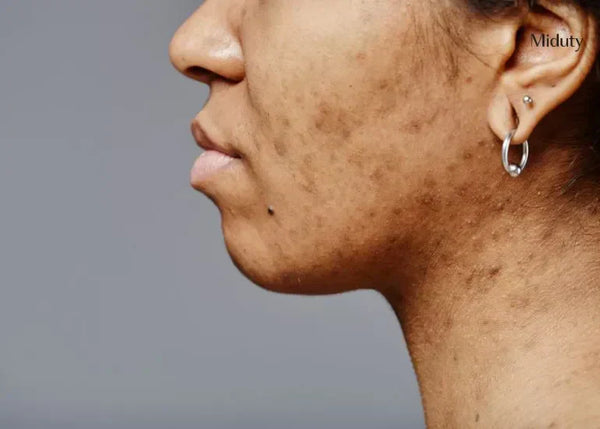
Even if a pimple doesn't scar, it often leaves behind a dark mark or discoloration. This is called post-inflammatory hyperpigmentation (PIH), and it's one of the most common appearance consequences of popping.
How Post-Inflammatory Hyperpigmentation Works
When you pop a pimple, the trauma triggers the skin's inflammatory response. Your skin responds by producing excess melanin (pigment) in that area to try to protect it. This creates a dark brown, purple, or red mark that sticks around even after the pimple has completely healed.
Key fact: PIH is different from a scar. It's a pigmentation issue that fades over time — but it can take weeks, months, or even longer depending on your skin tone and skin depth.
Dark Marks vs. Red Marks
Post-inflammatory hyperpigmentation (PIH): Dark brown or purple marks (most common in deeper skin tones, takes longest to fade)
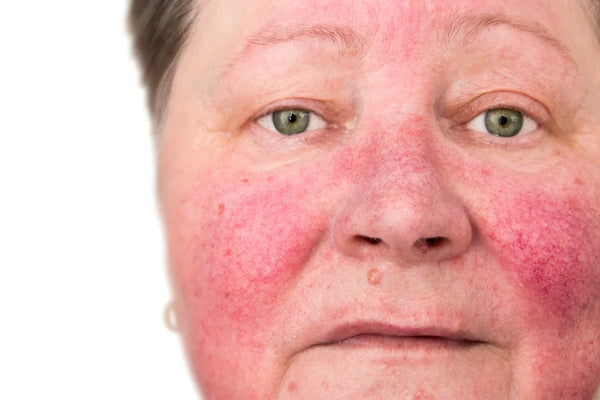
Post-inflammatory erythema (PIE): Red or pink marks (more common in lighter skin tones, fades faster)
Both are triggered by the inflammation of popping and are entirely preventable if you don't squeeze.
"Dark marks after popping a pimple aren't damage to repair — they're preventable. Don't pop, and you won't get the mark in the first place."
Boldpurity Science TeamINFECTION SPREAD & WORSENING BREAKOUTS
Here's what many people don't realize: popping one pimple can trigger multiple new breakouts.
How Infection Spreads
When you pop a pimple, the infected fluid doesn't just disappear. It spreads across the skin surface and into surrounding pores. This bacterial transfer can:
- Contaminate adjacent healthy skin
- Trigger inflammation in nearby follicles
- Cause a cascade effect — one pimple becomes five
This is especially true for cystic or deep pimples, whose contents are difficult to extract without professional equipment. Attempting to pop them often results in incomplete extraction, leaving infected material trapped in the skin that spreads further.
Studies show that squeezing inflammatory acne lesions (papules, pustules, nodules, cysts) directly correlates with worsening breakouts and increased scarring risk. Even dermatologists who acknowledge that certain pustules *can* be popped under controlled conditions emphasize that home popping is almost always performed under non-sterile, high-pressure conditions — which dramatically increases the risk of spread and scarring.
SAFE ALTERNATIVES TO POPPING
If popping is risky, what should you do instead? The good news: there are proven, evidence-based approaches that work without scarring, spreading, or dark marks.
Active Ingredients That Work
Salicylic Acid (BHA): A chemical exfoliant that penetrates pores and reduces blemish appearance without pressure or trauma. Regular use gradually diminishes breakout visibility.
Benzoyl Peroxide: Antimicrobial agent that targets bacteria-driven breakouts and reduces inflammation appearance. Available in various concentrations; start low and build tolerance.
Bakuchiol: A gentler retinol alternative that reduces breakout appearance and post-inflammatory marks while promoting skin cell turnover and healing.
Zinc: Reduces inflammation, calms redness appearance, and supports skin healing without harsh effects. Often combined with other actives for synergistic results.
Gentle Skincare Practices
- Cleanse gently with a non-abrasive, non-comedogenic cleanser twice daily
- Avoid touching your face — your hands transfer bacteria
- Use non-comedogenic moisturizers to support your skin barrier (healthy barrier = fewer breakouts)
- Apply sunscreen daily (SPF 30+) — sun exposure darkens post-inflammatory marks and prevents new damage
- Avoid overly hot water and harsh scrubbing, which aggravate inflammation
When to See a Dermatologist
If you have persistent breakouts, cystic pimples, or signs of infection (increased pain, warmth, swelling), consult a dermatologist. They can:
- Prescribe stronger actives (prescription-strength retinoids, azelaic acid)
- Perform safe professional extractions if medically indicated
- Offer treatments like chemical peels, laser therapy, or injectable options for existing scars or marks
- Rule out underlying hormonal or medical causes
Professional intervention is always safer than home popping.
Dermatologists advise letting pimples run their natural course or treating with active ingredients because these approaches respect your skin's structure and prevent lasting damage. A pimple that takes 2 weeks to heal naturally beats a pimple that creates a permanent scar in 10 seconds of squeezing.
FREQUENTLY ASKED QUESTIONS
- Aradhya, S., et al. Post Acne Hyperpigmentation: A Brief Review. Our Dermatology Online (2011).
- Schleehauf, B., et al. Acne: Tips for Managing. American Academy of Dermatology Association (2022).
- Dreno, B., et al. Why Squeezing Acne Lesions Causes Scarring. Journal of the European Academy of Dermatology and Venereology (2018).
- Zaenglein, A.L., et al. Guidelines of Care for the Management of Acne Vulgaris. American Academy of Dermatology (2016).
© 2026 Boldpurity · For educational purposes only · Not to be reproduced without permission.